Lessons of the Condors

IMGP3706-01
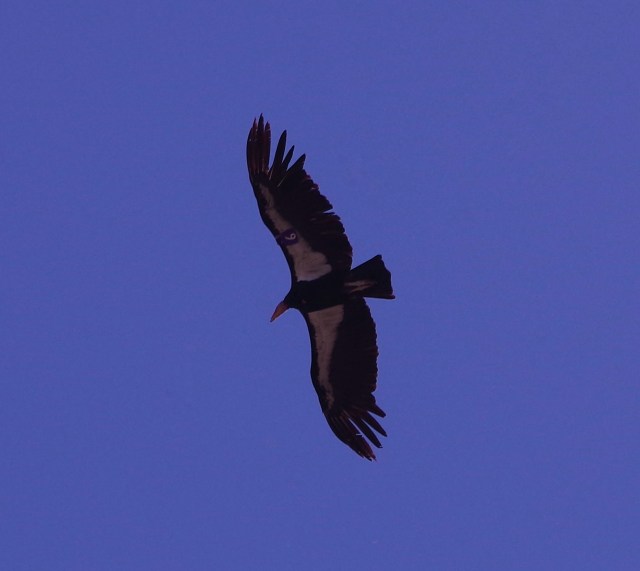
Condor 606 was born in Big Sur and regularly flies back and forth between there and Pinnacles.

Visiting Pinnacles National Park the other day, we were lucky to spot California condors several times. Their wingspan can reach up to 3 m. Their graceful flight is a sight to behold as they ride the warm updrafts of between the pinnacles of rock in the park, with their primary feathers bending up like a conductor’s fingers. Condors are the only remaining members of the genus Gymnogyps, which once contained five species. Four are only known from fossil specimens and went extinct at the end of the Pleistocene (~12,000 years ago), but Gymnogyps once ranged across the Americas. As such, the California condor (Gymnogyps californianus) is a relic species; a survivor of a long but mostly extinct lineage.

By 1987, poaching, lead poisoning and habitat destruction had reduced the population to 27 individuals, of which 22 were captured and put into an emergency captive breeding program. In the thirty years since this project began, the population has increased to around 450 individuals. The program was expensive, painstaking and a massive undertaking. To this day, all captive-bred individuals are individually numbered and continually monitored. They even have a very adorable directory on the Pinnacles site where you can look each bird up by its number. We saw #606 and #463, and a couple others from farther away that we couldn’t read.

IMGP3773crop-01.jpeg
Condor #463 was born at a breeding center in Idaho


California condors can be distinguished by the much more common turkey vultures by their underwing coloration, with large white patches at the front of the wings. I think that turkey vultures are fun to watch as they fly in circles over the highways searching for roadkill, but when you see a condor fly low over your head, it is awe-inspiring. Even the smaller juveniles have much larger, more pronounced heads than turkey vultures, and seem to fly even more effortlessly with a more gently curving V shape in their wings. We had stopped on the trail to discuss field markings for condors with another hiker when #463 soared over our heads, and we couldn’t help but jump for joy and hug each other at the privilege to see one of the famous condors ourselves.

IMGP3768-01.jpeg
Turkey vulture just checking if we were feeling ok as we sat in the shade.

As an advocate for invertebrate conservation, I have been known to unfairly poke fun at the human tendency to focus on large, charismatic megafauna for conservation as opposed to smaller and less exciting species that may make up more of an ecosystem’s biomass, or represent a more important link in the local food chain. Pandas have used up billions of conservation dollars, yet they are kind of an evolutionary oddball with their poorly evolved guts that can barely digest their chosen bamboo food, and their infamous failure to successfully mate. Koalas have a similar story. We reformed tuna fishing not out of concern for the fish, but because of concern for dolphins getting mistakenly caught. We tend to put a lot of time and effort into conserving species that we consider cute, or cool, or awe-inspiring. The condors are important decomposers of carcasses, ranging over huge distances in their search for food and efficiently returning the nutrients of dead animals back to the ecosystem. But the public outcry motivating their rescue was greatly helped by the fact that these creatures are incredibly impressive megafauna. If the turkey vulture was critically endangered, it might not get the same funding supporting its conservation.

IMGP3756-01.jpeg
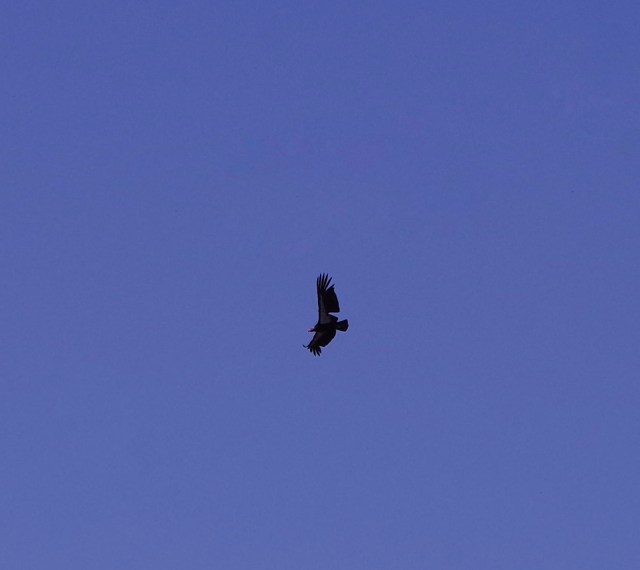
This condor was very far away, gracefully circling the canyon.

But looking at the condors, my skepticism melted away and I was left with only gratitude that I was able to witness the grandeur of these beasts as they soared through the air; gratitude that I was able to see them myself and not only read about them in a book. I will never see a Steller’s Sea Cow, or a Great Auk, or a thylacine, or a dodo, because they disappeared before we realized what we were doing, and that extinction is a real and irreversible loss. Perhaps Gymnogyps won’t be around in 10,000 years. Their lineage originally evolved to feed on the giant carcasses from a collection of North American megafauna that is believed to have been hunted to death by humans (though that is a topic of endless debate). But if we hadn’t intervened to save the condors, we would have had to live with the guilt of knowing that we as a species committed the killing blow and did nothing to stop when we knew the reality of our crime. Instead we went to extreme lengths to save these unusual and majestic creatures because we feel empathy for them. As I watched condor 463 soar over my head, I felt relief, and pride, and hope. Success stories are important motivators for conservation, and I couldn’t help but think his wings were spelling out a “V” for victory as he flew away.


Revenge of the Clams

primary_sfreeviana-1024x769
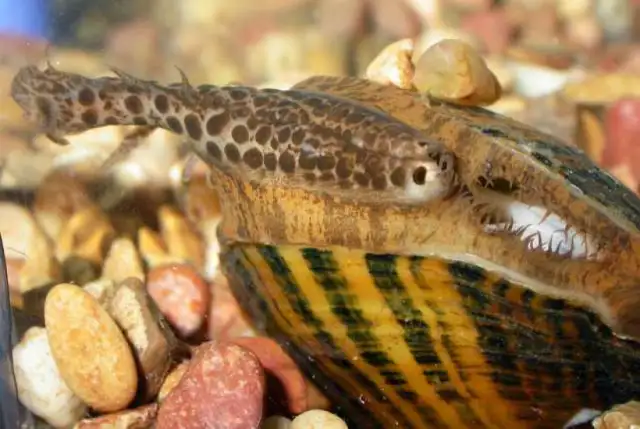
Lampsilis showing off its convincing fish-like lure. Photo: Chris Barnhart, Missouri State.

Clams are traditionally the victims of the aquatic realm. With some exceptions, clams are generally not predatory in nature, preferring to passively filter feed. When they are attacked, their defenses center around their protective shell, or swimming away, or just living in a place that is difficult for predators to reach. They are picked at by crabs, crushed in the jaws of fish, and pried apart by sea stars. But some clams are sick of being the victims. They have big dreams and places to be. For these clams, the rest of the tree of life is a ticket to bigger and better things. These clams have evolved to live inside of other living things.

Pocketbook mussels, for example, have a unique problem. They like to live inland along streams but their microscopic larvae would not be able to swim against the current to get upstream. The mussels have adapted a clever and evil strategy to solve this problem: they hitch a ride in the gills of fish. The mother mussel develops a lure that resembles a small fish, complete with a little fake eyespot, and invitingly wiggles it to attract the attention of a passing fish. When the foolish fish falls for the trick and bites the mussel’s lure, it explodes into a cloud of larvae which then flap up to attach to the gill tissue of the fish like little binder clips. They then encyst themselves in that tissue and feed on the fish’s blood, all the while hopefully hitching a ride further upstream, where they release and settle down to a more traditional clammy life of filter-feeding stuck in the sediment.

mytilus
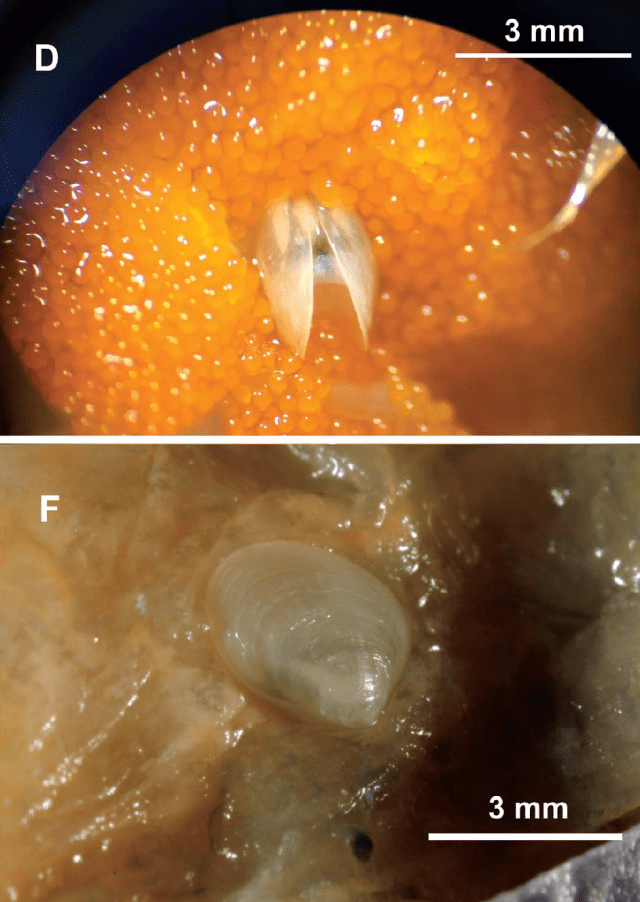
Very tiny Mytilus edulis living in the gills of a crab (Poulter et al, 2017)
crableg
The tiny 2.5 mm long Mimichlamys varia, living on the leg of a crab (Albano and Favero, 2011)


Clams live in the gills of all sorts of organisms. Because they broadcast spawn, any passing animal may breathe in clam larvae which find the gills a perfectly hospitable place to settle. Sure, it’s a bit cramped, but it’s safe, well oxygenated by definition and there is plenty of food available. They also may just settle on the bodies of other organisms. Most of these gill-dwelling clams are commensal: that means that their impact on the host organism is fairly neutral. They may cause some localized necrosis in the spot they’re living, but they’re mostly sucking up food particles which the host doesn’t really care about. In addition, in crabs and other arthropods, these clams will get shed off periodically when the crab molts away its exoskeleton, so they don’t build up too heavily.

kurtiella.PNG
Top: Kurtiella attached among the eggs of the mole crab. Bottom: aberrant Kurtiella living within the tissue of the crab (Bhaduri et al, 2018)

While being a parasite is often denigrated as taking the easy way out, it is actually quite challenging to pursue this unusual lifestyle. Parasitism has evolved a couple hundred times in 15 different phyla, but it is rare to find some organism midway in the process of becoming a true parasite. One team of researchers just published their observations of a commensal clam, Kurtiella pedroana, which may be flirting with true parasitism. These tiny clams normally live in the gill chambers of sand crabs on the Pacific coasts of the Americas. They attach their anchoring byssal threads to the insides of the chambers and live a comfortable life until the crabs molt, when they are shed away. The crabs mostly are unaffected by their presence, but the researchers noticed that some of the clams had actually burrowed into the gill tissue itself. This is an interesting development, because the clams would not be able to filter feed in such a location, so they must have been feeding on the crab’s hemocoel (internal blood). These unusual parasitic individuals are currently a “dead end” as they haven’t figured out how to get back out to reproduce, but if they ever do, they could potentially pass on this trait and become a new type of parasitic clam species. The researchers have potentially observed a rare example of an animal turning to the dark parasitic side of life, with some living in a neutral commensal way and other innovative individuals seeking a bit more out of their non-consensual relationship with their host crabs.  Considering the irritation that other bivalves suffer at the claws of pesky parasitic crabs, this seems a particularly sweet revenge.


The Snails that Farm

File:Marsh periwinkle 001.jpg
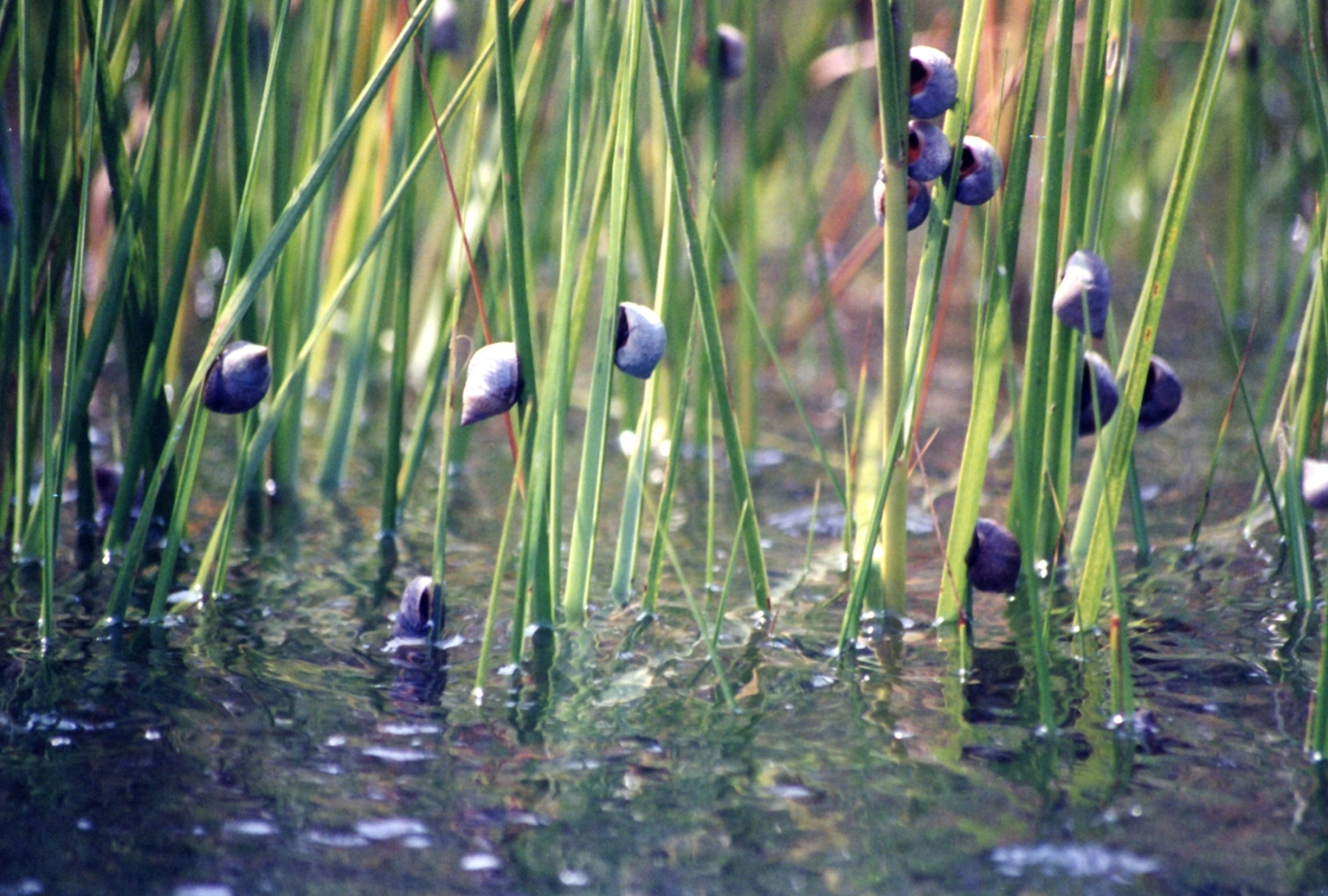
Littoraria grazing on Spartina marsh grass. (source)

Us humans really like to talk up our skills at farming. And while it’s true that we have domesticated animals and plants to a degree not seen in other life forms, the act of nurturing and harvesting food is actually not really that special, and is broadly observed throughout the animal kingdom. Perhaps the most iconic invertebrate farmers are insects. Leaf-cutter ants, termites, and some beetles have been observed to actively cultivate fungus by gathering plant material to feed it, growing the fungus, protecting the fungus from competition, and then harvesting the fungus to feed themselves and their young. Ants are also known to keep livestock in the form of aphids, which they lovingly protect and cultivate for the sweet nectar they excrete. Such practices are called “high-level food production” because, like human farmers with their seeds and fertilizer, insects have evolved a highly complex symbiosis with their fungus. The fungus has shaped their behavior as much as the ants cultivate the fungus. 

https://upload.wikimedia.org/wikipedia/commons/f/fc/Littoraria_irrorata.jpg
The marsh periwinkle Littoraria irrorata (source)

Less well understood is the “low-level food production” that may occur more broadly throughout the tree of life. There is less direct evidence of such behavior because it is more indirect and less specialized than high-level food production, but it may be equally advantageous for the cultivator and the cultivated. One study published in 2003 uncovered a simple but powerful relationship between marsh periwinkles of the genus Littoraria and fungus which they cultivate and harvest.

https://c1.staticflickr.com/8/7346/9871468314_19017d6484_b.jpg
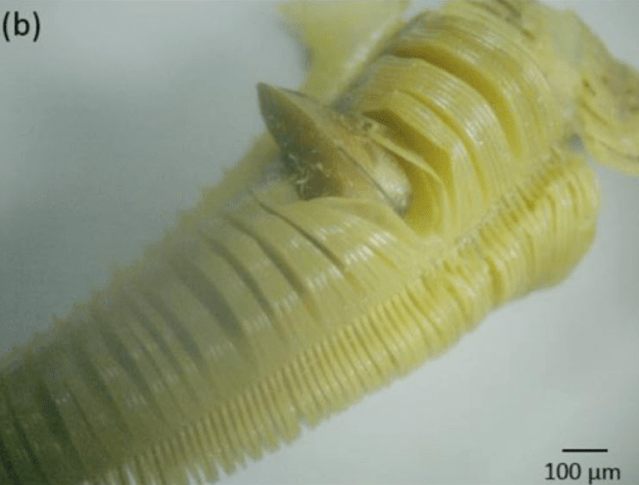
Close-up of a snail’s radula (source)

Marsh periwinkles are small and not particularly charismatic creatures. Like many snails, they are grazers with a shell, a fleshy foot and a rough, abrasive organ called a radula which they use like sandpaper to graze on pretty much whatever they can get into. Snails are not known as picky eaters. But researcher Brian Silliman of Brown University and Steven Newell of University of Georgia noticed that these innocuous snails regularly undertake the risky, low reward activity of grazing above the water on the blades of swamp grass, stripping off the surfaces of the blades of grass. The researchers were confused why the snails would expose themselves to predation and the harmful open air for such a low-nutrition food.


fungus
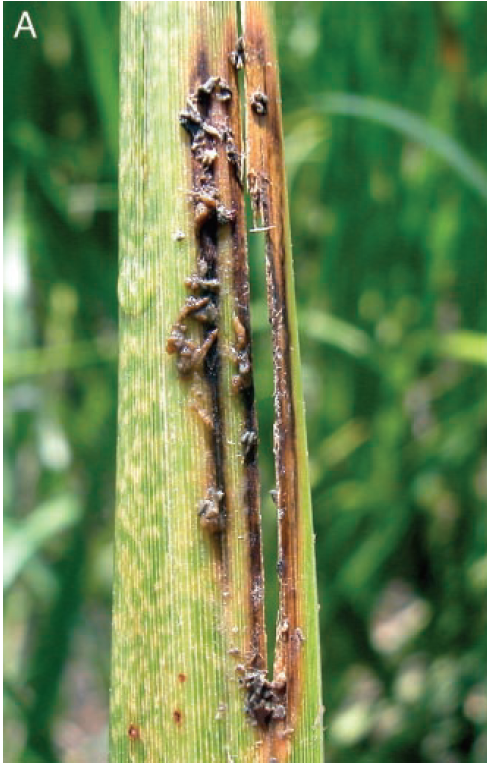
A typical snail farm, complete with liberally applied fertilizer. Yum.

They discovered that the snails were investing in the future. By stripping away the protective surface of the swamp grass blades and liberally fertilizing the surface of the grass with their droppings, the periwinkles are ensuring that the swamp grass will be infected with an active and very prolific fungal infection. The fungus, unlike the plant it lives on, is of high nutritional value. The researchers demonstrated the active partnership between the snails and fungus by conducting caged experiments where they showed that snails which grazed on grass but not the resulting fungus did not grow as large as snails which were allowed to return and chow down on the fungus. The fungus loves this deal as well. They grow much more vigorously on grass that is “radulated” (rubbed with the snail’s sandpapery radula) than uninjured grass. The fungus grows even faster if the snails are allowed to deposit their poop next to the wounds. The researchers found that this same relationship applies at 16 salt marshes along 2,000 km of the Eastern Seaboard.

The periwinkles don’t really know what they’re doing. They aren’t actively planting fungus and watching proudly like a human farmer as their crop matures. But over millions of years, the snails have been hard-wired to practice this behavior because it works. Snails that abrade a leaf of swamp grass, poop on the wound and come back later to eat the yummy fungus do a lot better than snails which just stick to the safe way of life below the surface of the water. The fungus loves this relationship too. The only loser is the swamp grass, which the researchers unsurprisingly found grows much more slowly when infected with fungus. But marsh grass is the largest source of biomass in swamp environments, and the snails that partner with fungus are able to more efficiently use this plentiful but low-nutrient food source, to the extent that it is now the dominant way of eating for swamp periwinkles on the East Coast of the US, and probably in a lot more places too. The researchers noted that there are likely far more examples of low-level food production that we simply haven’t noticed.

Since this work was published, other teams have discovered that some damselfish like to farm algae, fiddler crabs encourage the growth of mangrove trees, and even fungus get in on the action of farming bacteria. We love to talk up our “sophisticated” high-level food production techniques, but such relationships probably got started at a similarly low level. Our activities as hunter-gatherers encouraged the growth of certain organisms, we stumbled upon them, ate them, kept doing what we were doing and eventually our behavior developed into something more complex. Next time you see a snail munching its way up a blade of grass, consider to yourself whether it knows exactly what it’s doing. Come back later to see the fruits of its labor.

What is Conservation Paleobiology?

In undergrad, I felt like my school and internship were training me to be two different types of researcher. At USC, I was majoring in Environmental Studies with an emphasis in Biology. It was essentially two majors in one, with a year of biology, a year of chemistry, a year of organic chem, a year of physics, molecular biology, biochemistry, etc. On top of that, I took courses on international environmental policy and went to Belize to study Mayan environmental history. Meanwhile, I was working at Jet Propulsion Laboratory in Pasadena researching trends in historical rainfall data. I loved both sides of my studies, but felt like neither was exactly hitting the spot of what I would want to spend my career researching. I love marine biology but am not particularly interested in working constantly in the lab, looking for expression of heat shock protein related genes or pouring stuff from one tube into another. On the other hand, I was fascinated by the process of untangling the complex history of rainfall in California, but I yearned to relate this environmental history to the reaction of ecological communities, which was outside the scope of the project.

During my gap year post-USC, I thought long and hard about how I could reconcile these disparate interests. I read a lot, and researched a bunch of competing specialized sub-fields. I realized that paleobiology fit the bill for my interests extremely well. Paleobiologists are considered earth scientists because they take a macro view of the earth as a system through both time and space. They have to understand environmental history to be able to explain the occurrences of organisms over geologic time. I really liked the idea of being able to place modern-day changes in their geologic context. What changes are humans making that are truly unprecedented in the history of life on earth?

But it doesn’t have to be all zoomed out to million-year processes. A growing sub-field known as Conservation Paleobiology (CPB) is focused on quantifying and providing context of how communities operated before humans were around and before the agricultural and industrial revolutions, in order to understand the feasibility of restoration for these communities in this Anthropocene world. Sometimes, this means creating a baseline of environmental health: how did oysters grow and build their reefs before they were harvested and human pollution altered the chemistry of their habitats? I’m personally researching whether giant clams grow faster in the past , or are they reacting in unexpected ways to human pollution? It appears that at least in the Gulf of Aqaba, they may be growing faster in the present day. Such difficult and counterintuitive answers are common in this field.

Sometimes, CPB requires thinking beyond the idea of baselines entirely. We are realizing that ecosystems sometimes have no “delicate balance” as described by some in the environmental community. While ecosystems can be fragile and vulnerable to human influence, their “natural” state is one of change. The question is whether human influence paves over that prior ecological variability and leads to a state change in the normal succession of ecosystems, particularly if those natural ecosystems provide services that are important to human well-being. In a way, the application of paleobiology to conservation requires a system of values. It always sounds great to call for restoring an ecosystem to its prior state before humans. But if that restoration would require even more human intervention than the environmental harms which caused the original damage, is it worth it? These are the kinds of tricky questions I think are necessary to ask, and which conservation paleobiology is uniquely suited to answer.

At the Annual Geological Society of America meeting in Seattle this year, the Paleo Society held the first-ever Conservation Paleobiology session. The room was standing room only the whole time, investigating fossil and modern ecosystems from many possible angles. This field is brand new, and the principles behind it are still being set down, which is very exciting. It’s great to be involved with a field that is fresh, interdisciplinary, and growing rapidly. I look forward to sharing what my research and others find in the future.

Hard shells aren’t actually that hard to make (yet)

antarctic20soft-shelled20clam20-20laternula20elliptica20001
One of the Antarctic bivalve species featured in this study. Source

Like all organisms, bivalves have a limited budget governing all aspects of their metabolism. If they put more energy into feeding (filtering the water), they can bring in a bit more food and therefore fuel more growth, but sucking in water takes energy as well, particularly if there isn’t enough food to be filtered out. Bivalves also periodically have to grow gonadal material and eggs for reproduction, expand their body tissue (somatic growth) and of course, grow their shells (made of of a mineral called carbonate). All of these expenditures are items in a budget determined by the amount of energy the bivalve can bring in, as well as how efficiently they can digest and metabolize that energy.

If a bivalve is placed under stress, their scope for growth (the max amount of size increase per unit time) will be decreased. Because they’re cold-blooded, bivalves are limited by the temperature of their environment. If temperatures are low, they simply can’t sustain the chemical reactions required for life at the same rate that endotherms like us can. They also may have to shut their shells and stop feeding if they’re exposed by the tide, or are tossed around by a violent storm, or attacked by predators or toxins from the algae that they feed on.

When their budget is lower, they have to make painful cuts, much like a company lays off employees if their revenues are lower. The question is which biological processes get cut, and when? My first chapter (submitted and in review) has settled temperature being the primary control on seasonal shell growth. Bivalves at high latitudes undergo annual winter shutdowns in growth, which create the growth bands I use to figure out their age, growth rate, etc. We’d be a lot closer to accurately predicting when bivalves suffer from “growth shutdowns” if we had hard numbers on how much energy they actually invest in their shells. A new study from a team led by Sue-Ann Watson of James Cook University attempts to do just that.

laternulagrowth-700
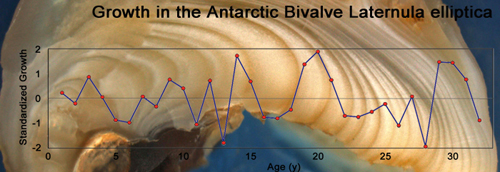
Diagram relating the growth bands of Antarctic soft-shelled clam with a chart showing the widths of those bands. Source

Collecting a database of widths for the annual growth rings of bivalve and gastropod (snail) species from many latitudes, Watson and her team were able to get a global view of how fast different molluscs grow from the equator to the poles. Because the unit cost of creating carbonate is determined by well-understood chemistry, they were able to create an equation which would determine the exact number of Joules of energy used for every bivalve to grow their shells.

They still needed a total energy budget for each species, in order to the percent of the energy budget that each bivalve was investing in their shells. They drew on a previous paper which had calculated the standard metabolic rates for each species by carefully measuring their oxygen consumption. We could do the same for you if you sat in a sealed box for an extended period of time while we measured the exact amount of oxygen going in and CO2 going out. Dividing the amount of energy needed to grow the shell by the total amount of energy used in the organism’s metabolism would give us a percent of total energy that the bivalve dedicates to adding growth layers to its shell.

That number is…not very large. None of the bivalves or gastropods they looked at put more than 10% of their energy into shell growth, and bivalves were the lowest, with less than 4% of their energy going into their shell. Low-latitude (more equatorward) bivalves have the easiest time, putting less than 1% of their energy into growth but getting way more payoff for that small expenditure. High-latitude polar bivalves have to work harder, because the lower temperatures they experience mean the reactions needed to create their shells are more expensive. In addition, most of that energy is going into the protein-based “scaffolding” that is used to make the shell, rather than the crystals of carbonate themselves. Organisms right now don’t have to put a whole lot of effort into making their protective shells, which could explain why so many organisms use shells for protection. That is good, because if shells were  already breaking the bank when it came to the bivalves’ growth budget, they wouldn’t have a lot of room to invest more energy in the face of climate change. Unfortunately, as the authors note, these budgets may need to change in the face of climate change, particularly for bivalves at the poles. As the oceans grow more acidic due to human CO2 emissions, growing their shells will start to take up more of their energy, which is currently not a major part of their budget.

A cold-water ecosystem dominated by Antarctic scallops. Source

Right now, the cold waters of the poles are refuges for organisms that don’t deal well with shell crushing predators. As polar regions warm, such predators will begin to colonize these unfamiliar waters. Polar bivalves may encounter the double whammy of needing to spend more energy to make the same amount of shell, but also find that it is no longer enough to protect them from predators that easily crack open their protective coverings.

I found this study to be an elegant and thoughtful attempt to fill in a gap in our current understanding of how organisms grow and how energy budgets are influenced by environmental variables like temperature. I instantly downloaded the paper because it answered a question that has long been on my mind. Maybe can sneak its way into my manuscript during the review process!

A hinged shell does not a clam make (QUIZ)

Bivalves are so named for their two hard shell valves made of carbonate, linked by a soft ligament acting as a hinge. They use a strong adductor muscle to close their shell, and the relaxation of the muscle allows the springy ligament to reopen (you might be familiar with adductor muscles as the edible tasty part of a scallop). In deference to the bivalves, laptops and flip-phones are called “clamshell” designs. That satisfying snap into place when you spring the ligamen… I mean, hinge of a flip phone is an example of human design imitating the ingenuity of evolution. But it turns out that plenty of other members of the tree of life have also stumbled upon the durable idea of a hinged two-valve shell. On the other hand, plenty of bivalves have given up on the classic clamshell look. In fact, the ancestor of all bivalves had a one-part shell, and the hinge evolved later.

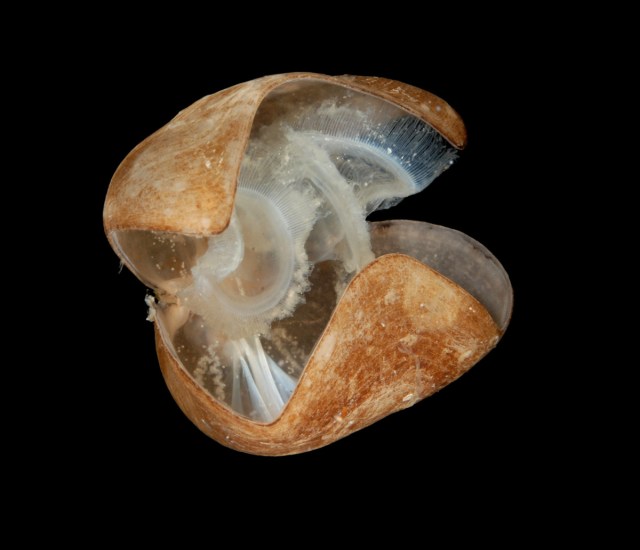
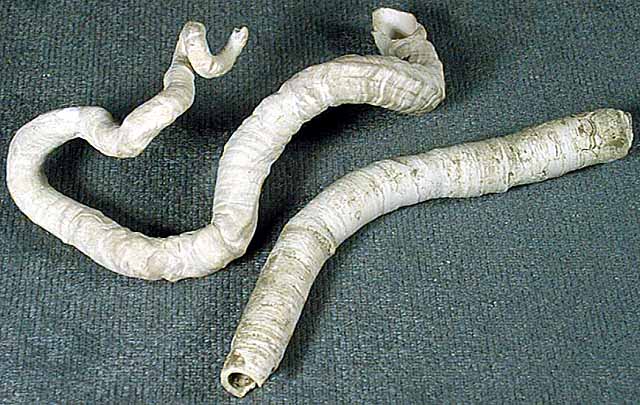
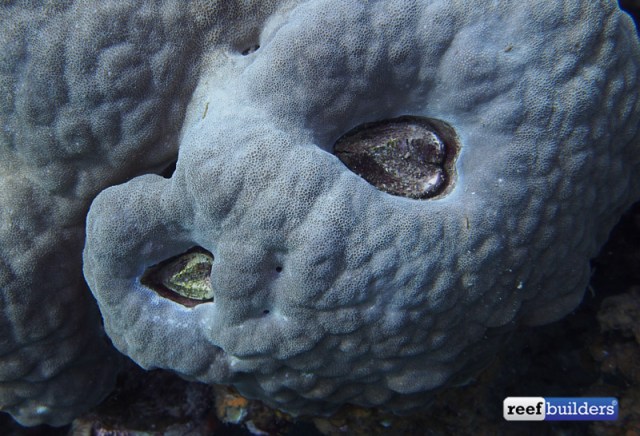
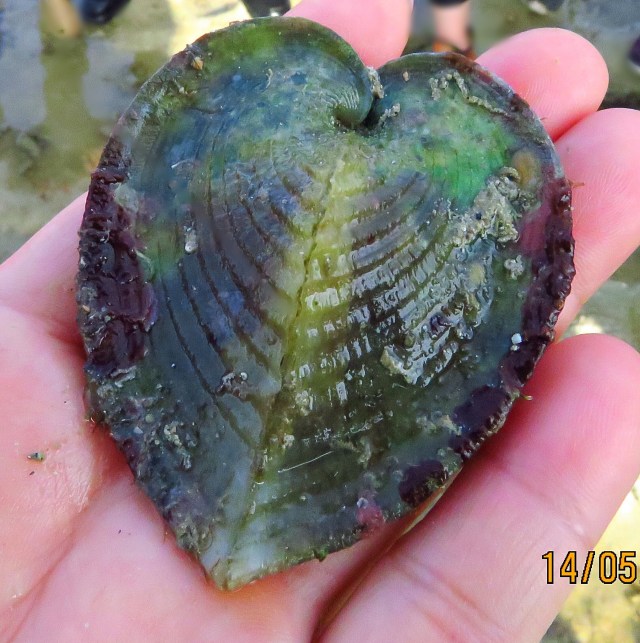
Test your knowledge by trying to identify which which pictures are bivalves and which aren’t. Answers and picture sources at the bottom!

A. brachiopod-semenov.jpg
B.IMG_20150808_120740529.jpg

C.

D.

E.

ostracod_waiwhetumontage_b_650.jpg

F.

G.

naticarius_plicatella_3_01_.jpg

H.

0fbc20dc-8bf8-4719-b6fd-06050caf85e3.png

I.

tn_burrowed_jpg.jpg

J.

K.

3630165727_a312f06fbc_o.jpg

L.

kuphus.jpg

ANSWERS

A. This is not even a mollusk, never mind a clam! It’s a different benthic (bottom-dwelling) invertebrate called a brachiopod, which make up their own phylum. To put that in perspective, brachiopods are as far from bivalves on the tree of life as you are (you’re in phylum Chordata)! Yet they evolved a similar look through a process called convergent evolution. If environmental needs are the same, organisms may come to the same solution multiple times. Much like wings for flight evolved independently in insects, birds and bats, bivalves and brachiopods both evolved a hinged shell as a form of protection from predation.

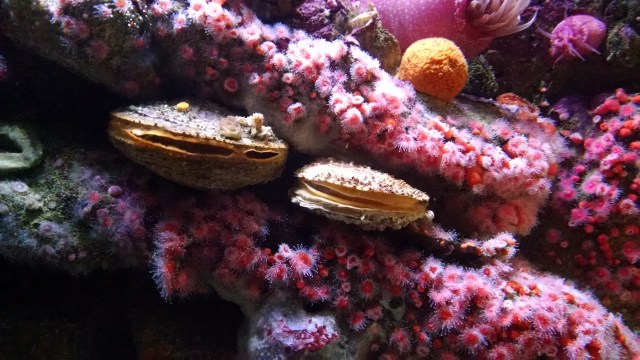
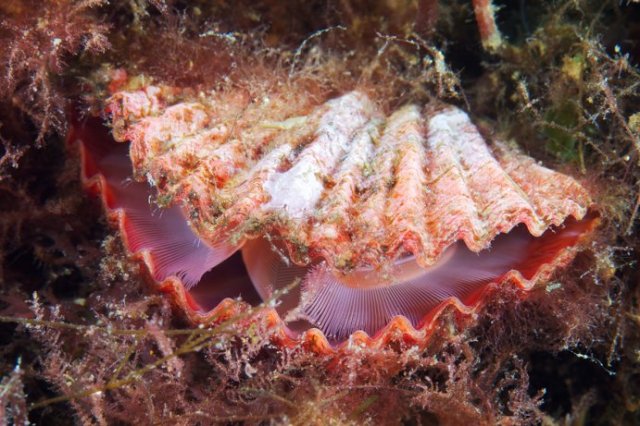
B. These are indeed bivalves: rock scallops commonly found off the coast of California (picture by me of an exhibit at Monterey Bay Aquarium). So similar to the brachiopods in their ridged, hinged shells. Like picture A, these guys specialize in living on hard, rocky nearshore bottoms. Some cultures do apparently eat brachiopods (I have not), but I have little doubt that rock scallops are tastier.

C. These are also bivalves: windowpane oysters. Also known as capiz shell, they are commonly used for decoration and art due to their beautiful, thin semi-transparent shells. A large industry harvests them off the shores of the Philippines, where they unfortunately are growing scarce due to overexploitation.

D. These are not bivalves! They are crustaceans called clam shrimp. They have little legs poking out of a hard hinged shell, and have been found in some of the harshest environments on earth, where they wait in extended hibernation, sometimes years, between bouts of rainfall.

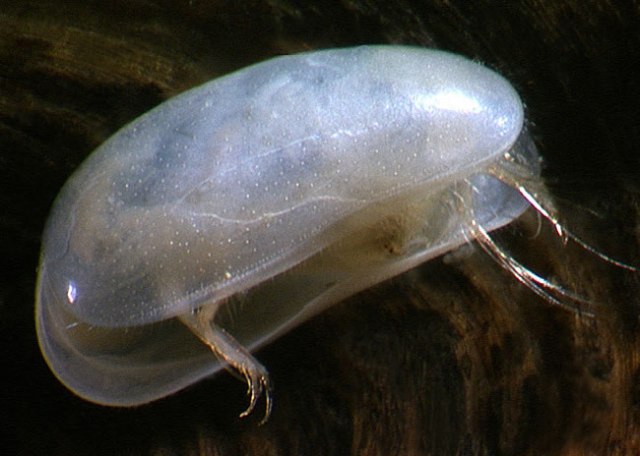
E. Not a bivalve. These are another kind of crustacean called ostracods. Like clam shrimp, ostracods live in a hinged shell and swim around with the help of tiny legs, filter-feeding in the water column. Ostracods are everywhere in the oceans and in freshwater, but have undergone an extreme process of miniaturization from their ancestral form, and are now represent some of the smallest complex multicellular life known.

F. These are fossil ostracods. You can see why they are sometimes mistaken for bivalves! The givaway is that one valve is overhanging the other. Most bivalves have symmetry between the two halves of their shell, but ostracods and brachiopods do not.

G. This is a snail, so it’s a close molluskan cousin of bivalves. Some snails feature a hinged lid at their shell opening called an operculum. This operculum can be closed to protect from predators and also seal in water to help land snails from drying out between rains.

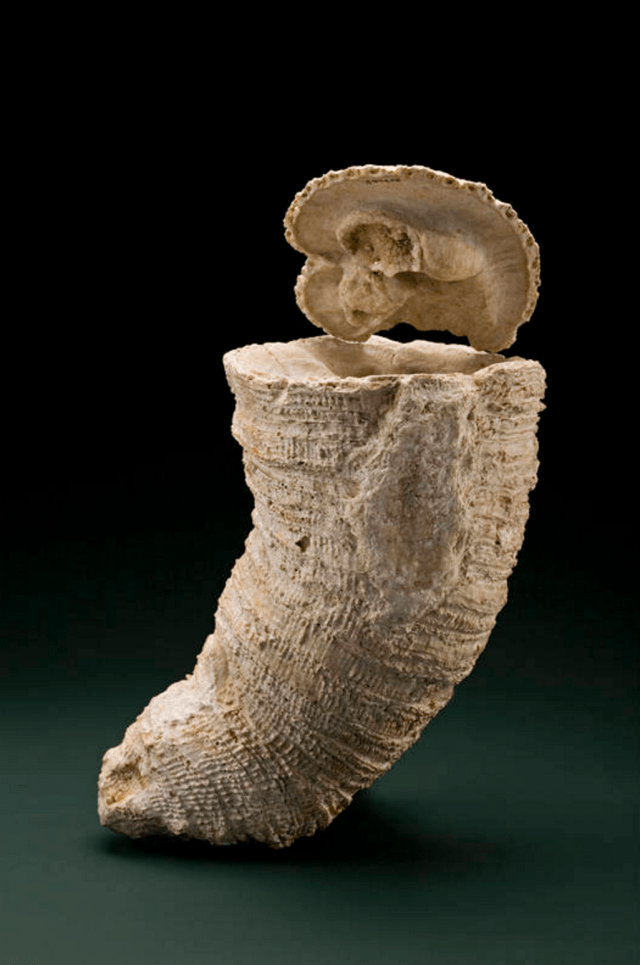
H. This is a bizarre bivalve called a rudist. They were common during the time of the dinosaurs but went extinct during the same extinction, 66 million years ago. While they come in many bizarre shapes, this elevator form (or as I prefer to call them, trash-can form) would have been stuck in the sediment with its small lid poking out at the surface. They could open and close the lid to filter-feed.

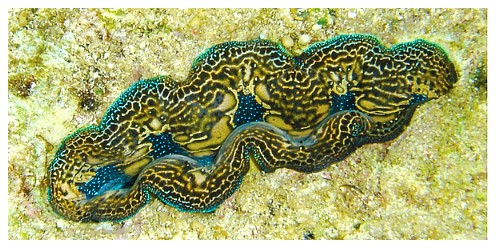
I. This is a giant clam, Tridacna crocea! Its shell is hidden, embedded in the coral that has grown to surround it on all sides. Only the mantle (soft “lips”) are exposed, and are brilliantly colored by the symbiotic algae in its tissue. It harvests the sugars made by the algae for food. Despite being embedded in the coral, the clam does have enough room to close and pull back its mantle if a predator approaches.

J. This is a one of the weirdest modern bivalves, called a hammer oyster. These guys are found in the tropics, and the hammerhead part of their shell is actually their hinge, extended at both sides. The hinge provides the surface area needed to “snow-shoe” on top of the soft sandy bottom where they live. Other bivalves sometimes take advantage and live on the oyster like a raft!

K. This is a different brachiopod. Notice the lack of symmetry between the valves which gives it away.

L. This is by far the weirdest modern bivalve, a shipworm. These guys live buried deep within wood and are the number-one killer of wooden ships. They secrete a long tube of carbonate and have largely given up the hinged lifestyle, looking more like worms than mollusks.

You are isotopes (Part II)

This is the second part in a series how isotopes work and how they are scientifically fascinating. Part I here

It turns out a horse is not just a horse, of course. The horse is a collection of atoms, and each of those atoms has a particular isotopic “flavor”, and the collection of isotope types in the horse tells a story.  At the end of the day, scientists are simply interested in reading and telling stories about our world. The tail….er, tale of the horse is written by myriad interacting processes in the universe which influence the horse’s stable isotope ratios.

As I mentioned last time, carbon-12 is much, much more common than carbon-13 is on our planet, due to nuclear fusion of helium-4 in the sun. there are nearly 99 carbon-12’s on earth for every carbon-13. But that’s the base ratio if you took our whole planet, put it in a blender and mixed it all up. If you measured a particular object, such as a horse, it likely does not follow that measure exactly. It has become differentiated from the global average by numerous factors which have altered the isotope ratio.

In isotopic chemistry, fractionation is our name for any process which creates a preference for a certain isotope. If chemical reactions had no bias toward any particular isotope, that 99 to 1 ratio of carbon-12 to carbon-13 would be present in literally everything including you and me. But it turns out that the biochemical dice are loaded- to make the ratio even more biased!

The enormous Rubisco enzyme. No one said photosynthesis was simple. Source: Wikipedia

Photosynthesis is the process by which plants take carbon dioxide gas in the atmosphere and “fix” it to make sugars, which they then use for food. The core enzyme responsible for this carbon fixation is called Rubisco (short for Ribulose-1,5-bisphosphate carboxylase/oxygenase). This enormous molecule is likely the most abundant enzyme on earth. And it turns out that it has a favorite flavor when it comes to the carbon it fixes into sugar.

In fact, the entire plant is discriminating against carbon-13 in several of the processes of photosynthesis. Carbon dioxide molecules diffuse more quickly into the plant’s leaves if they include the lighter carbon-12 rather than carbon-13. “Light” CO2 also dissolves more easily in the plant’s fluids. But the biggest fractionation happens when the Rubisco molecule gets hold of CO2 and breaks it. At each of these steps, the light carbon-12 is more likely to be used by the plant than its heavier siblings. There are various thermodynamic reasons for why this is the case, but the plant is essentially a sieve removing more of those heavy carbons at every step. At the end of the process, the plant is left isotopically “lighter” than the CO2 gas surrounding it that it breathes in.

Because you are what you eat, this means that you are suspiciously carbon-light, and there’s nothing you can do about it. Should have thought of that before you decided to be dependent on plants as the factory for your carbon-based molecules. Next time, we’ll talk about how we measure this, and the kinds of science that can happen once you have a nice consistent measurement to use to compare isotopic ratios between samples.

When a clam has a stowaway

My mussel contained a tiny half-eaten crab! - Imgur
Source: jeredjeya on Reddit

Bivalves put a lot of energy into their shells. These hardened, hinged sheaths of carbonate are an effective defense against many predators looking to get at the squishy clam’s body encased inside. Parasitic pea crabs have evolved to free-ride on the bivalves’ hard work.


(video courtesy Dana Shultz)

Pea crabs are small (pea-sized), very specialized parasites which live in the mantle cavity of many bivalve groups including oysters, mussels, clams and more. The mantle is the wall encasing the soft body of the bivalve, and the cavity is the space between this soft gooey tissue and the shell itself.

For a pea crab, there is no better place to be than this tiny, claustrophobic space. In fact, they can’t live anywhere else, though some species have been found in other unusual places such as inside the anuses and respiratory tracts of sea cucumbers (link SFW, fortunately, unless you’re a sea cucumber). In a bivalve host, the crab is protected from predation by the shell, and the bivalve provides a constant buffet of food as it sucks in suspended particles with its gills. The crab steals some of this food from itself before the bivalve can digest it.

As you might imagine, having a crab living in you taking your food and pinching at your gills is not an ideal arrangement for the bivalve. Pea crabs damage their hosts’ gills with their constant picking, and bivalves infected with crabs suffer slower growth than uninfected individuals, particularly for those unlucky enough to play host to the larger female pea crabs. At a certain point, the males will sneak out of their hosts and find a bivalve with a female crab inside. At this point, they mate inside the host’s shell, adding great insult to injury. The female releases her larvae, which swim out to infect new hapless bivalves and start the cycle over again.

IMG_2161
Aww, she’s expecting! The papers refer to this as being “with berry” which I find amusing for some reason. (photo from Dana Shultz)


You might think that commercial oysters with crab parasites would be thrown out, but to the contrary, finding a pea crab or its close relative the oyster crab with your meal is a cause for celebration in some areas, such as the Cheasapeake Bay. The crabs are eaten whole and often raw, and are said to have a texture akin to shrimp, with notes of sweetness and umami. Personally I prefer surprises in my Kinder eggs rather than in my shellfish, but to each their own.

Sea_otter_with_shells_2.jpg
A pea crab serves as a nice side dish for this lunching sea otter. Source: Brocken Inaglory on Wikipedia


The Many Homes of Hermit Crabs

IMGP3600
My boy Harry, a purple pincher (Coenobita clypeatus) inhabiting a tapestry turban snail (Turbo petholatus) shell. These seem to be his favorite kind, even though they do not come from his native Caribbean.

Hermit crabs (superfamily Paguroidea) are most famous for using snail shells as their home, having evolved a soft, spiral abdomen to be able to use them for protection. But they are more flexible about their choice of abode than you might expect.

tumblr_o85rmrh6Yw1sq04bjo1_1280.jpg
This crab was likely preserved buried alive in sediment. Note how it uses its claw as a protective trap door sealing the opening of the ammonite shell. Source: Jagt et al, 2006

Different groups of shelled organisms have risen and fallen in abundance through geological time. During the time of the dinosaurs, ammonites (relatives of modern squid and octopus) were among the most common marine organisms, and hermit crabs were there to recycle their shells when they died.

Capture
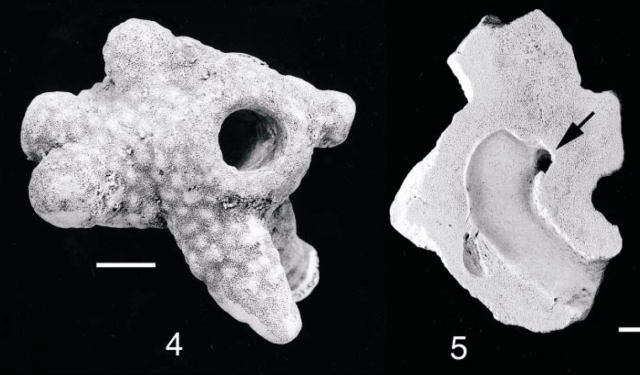
Each tiny pore (zooid) in this bryozoan contained a tiny tentacled organism. Together they grew in a shape that made for a nice hermit crab house (image 5 shows a cross section where the crab’s abdomen would fit). Source: Taylor and Schindler 2004

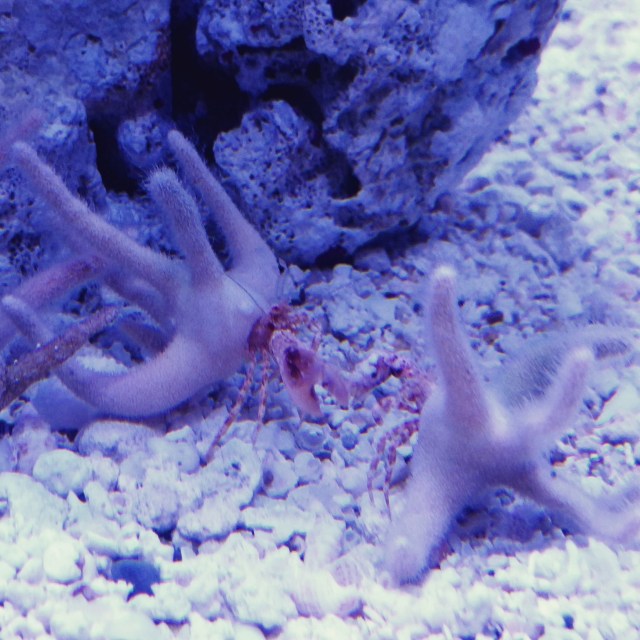
Mollusks aren’t the only contractors for hermit crabs. Some hermits utilize the skeletons of colonial organisms like bryozoans as a home. Bryozoans are filter-feeding colonial animals made up of thousands of tiny tentacled organisms living in the pores of a shared skeleton. The extinct bryozoan Hippoporidra lived in symbiotic partnership with hermit crabs, growing around a gastropod shell to attract a hermit crab partner. This was an example of mutualism: by providing a home for a crab, the bryozoan would be transported to new environments with plentiful food particles to eat, and also would be protected from their arch-enemy, nudibranchs (sea slugs). Some modern day hermits, such as Manucomplanus varians of the Gulf of California, have evolved very similar partnerships with live staghorn corals.

IMG_20160410_202354.jpg
Manucomplanus varians at Monterey Bay Aquarium

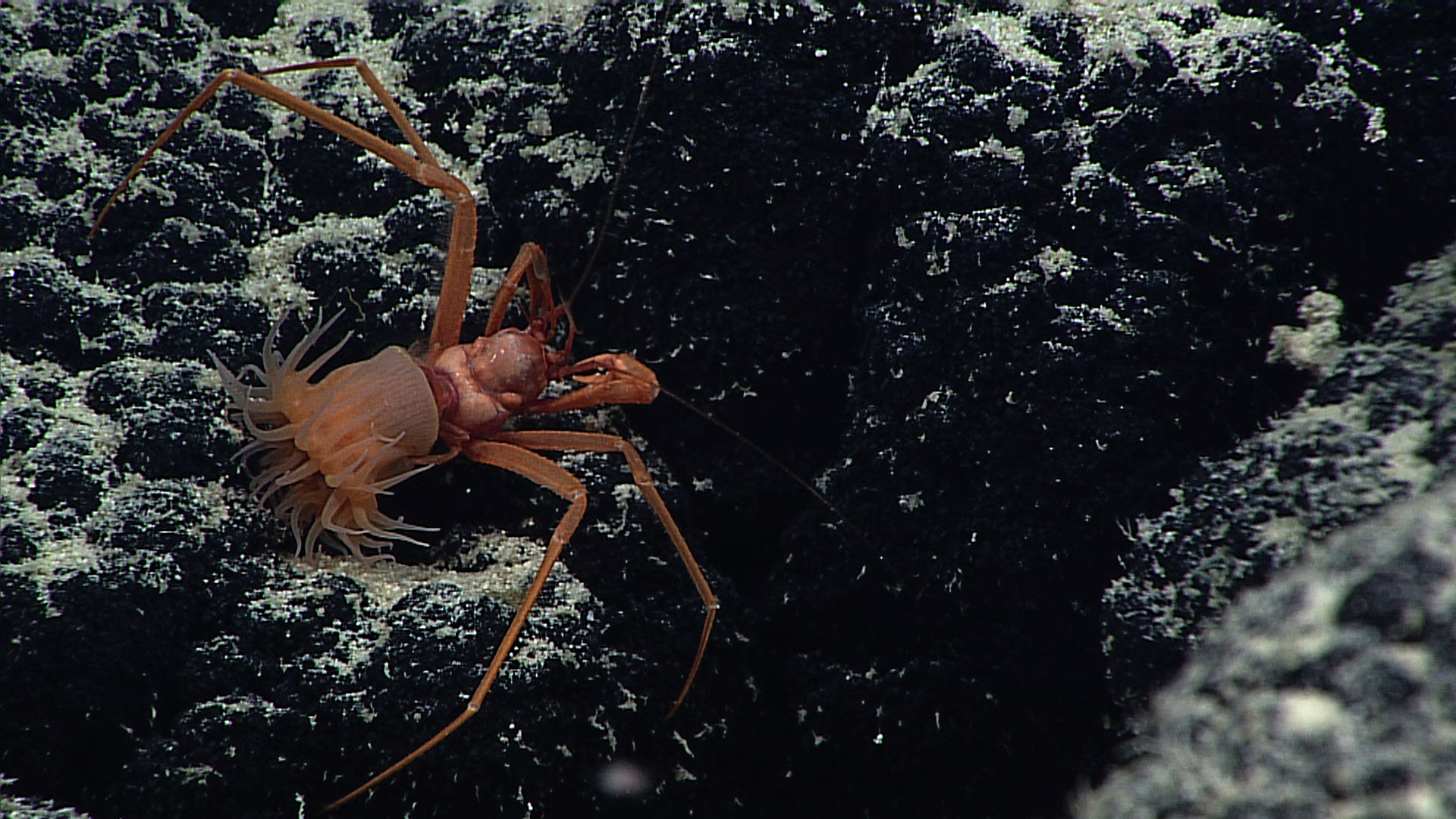
Not all hermit crabs live in hard houses. Some deep sea forms partner with anemones, with the stinging tentacles serving as an effective defense.

Source: Okeanos Explorer

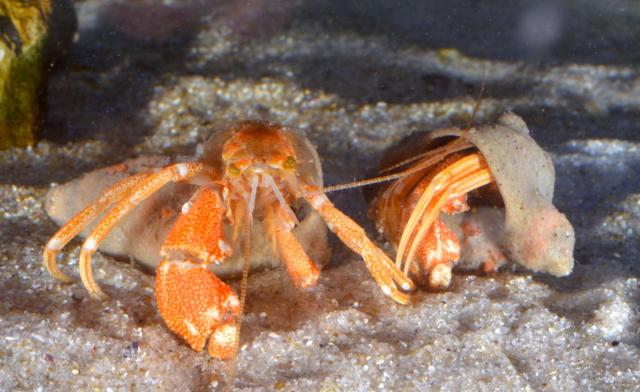
The recently discovered green-eyed hermit crab, which also lives in deep water, lives in a glued-together mass of sand created by tiny anemones, which continue to grow the structure to fit the crab as it increases in size.

145304_web.jpg
The green-eyed hermit crab was found over 200 m deep off of South Africa. Source: Lannes Landschoff via Eurekalert 

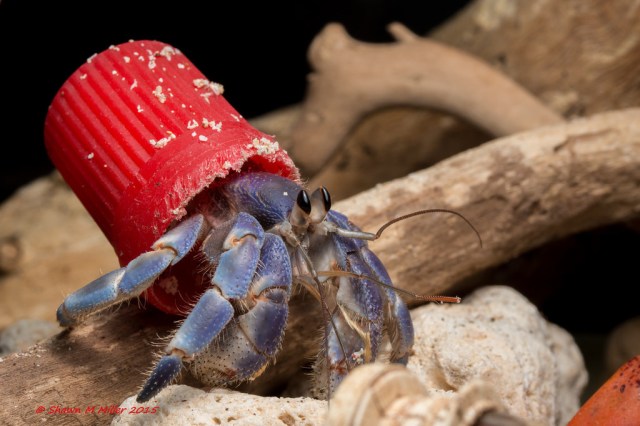
Unfortunately, hermits adapted for gastropod shells are unable to find adequate homes in some areas, due to overharvesting of shells for the tourist trade as well as an excess of plastic trash. These crabs make do with whatever items that they can find. Plastic is not an ideal home material for hermits. Bottlecaps and narrow tubes do not allow the crab to fully retract for protection and leach chemicals which may harm the crab. The crabs also nibble on their shells as a source of calcium, which is obviously not possible with plastic.

image.jpg
Coenobita purpureus, a land hermit crab on Okinawa. Source: Shawn Miller

But hermits continue to impress me with their flexibility and ingenuity in their search for homes. For a hermit crab, home is where the abdomen is.