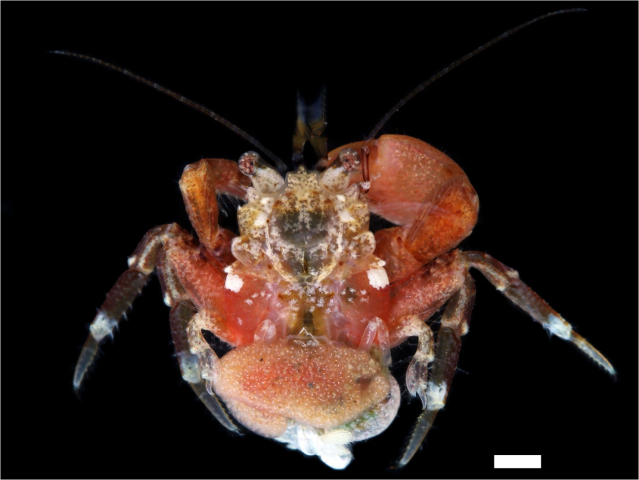
Porcellanopagurus nihonkaiensis wearing a bivalve shell (Source)
Some of you may be aware that I harbor great affection for hermit crabs. I own terrestrial Caribbean hermits. Your mental image of hermits may feature a wardrobe of gastropod (snail) shells, which are by far the most common mollusk contractor they use to construct their homes, but as I’ve discussed, they actually have great flexibility in their choice of abode. It turns out that there is yet another option which hermits take advantage of as a mobile home: the flat shells of bivalves and limpets!
What a cutie, wearing a limpet like a hat (source)
Porcellanopagurus nihonkaiensis is a species of marine hermit found off the coast of Japan. It uses the relatively flat, unenclosed shells of clams (and also limpets) for protection. Though lacking the 360 degree protection afforded by a snail shell, bivalve shell valves can be more plentiful in the marine environment, and being able to utilize a different shell frees them from competition with other hermit species which are specialized to work with snail shells.
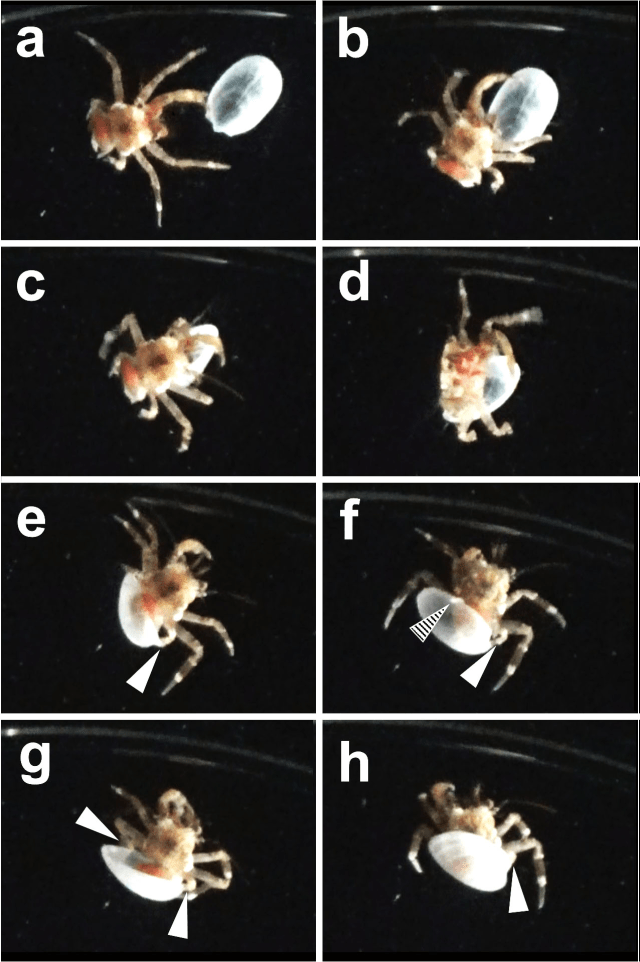
Hermits typically have a long, soft coiled body which fits in where the snail’s body once was, using “uropodal endopods” (little feet at the end of their bodies) to hold themselves in the shell. Some species like Porcellanopagurus, however hold a bivalve or limpet shell on their backs, which still provides protective cover for their bodies. One recent study talked about their method of acquiring and holding the shell. They actually took a cute little series of pictures showing how the crab picks up a shell it with its front claws, places it on its back and then holds it in place with their fourth pair of legs. So now I’ve found a creature that combines my beloved clams and hermit crabs in one fun package. Gonna have to keep an eye out if I ever dive off of Japan!
Play by play of how they pick up and carry away their new home (in this case a limpet shell) (source)
It was hard not to feel irritated as I opened the homepage of East Meadow Action, a grassroots group recently formed to defeat the development of Student Housing West (SHW), particularly regarding the Family Student Housing project on East Campus. The group has its heart in the right place. They believe that the field at the base of campus is a setting deserving of preservation, and are trying to prevent the building of new student housing to achieve this goal. I’m writing this to counter a number of points brought up on their site about the planning and design of SHW. I feel qualified to discuss this matter because I’ve been serving as a graduate student rep on the planning committee for the project since its early days last summer. From the start, I’ve been dedicating my efforts to keeping the project economical to ensure lower rent and as dense as possible, to prevent campus from sprawling into land needed by wildlife. I’m sorry to say that East Meadow Action’s efforts to defeat construction will harm both students and the environment if they succeed.
Student Housing West is an enormous planned development on the West side of campus designed to house ~2600 undergraduates, 200-220 graduate students, nearly 140 apartments for student families and a childcare facility. Well, it was initially planned to be on the west side of campus, beginning below Kresge College and continuing down the hill to the current site of Family Student Housing. That was the site university administrators provided for developers pitching their concepts for the project in an extended series of meetings last summer. We selected one developer, Capstone Development Partners, because of their proven track record of student housing construction and management. I personally voted for them because their plan had the highest goals for sustainability and the team made it clear that they would work to adapt to any contingencies which would surely arise during the future planning process.
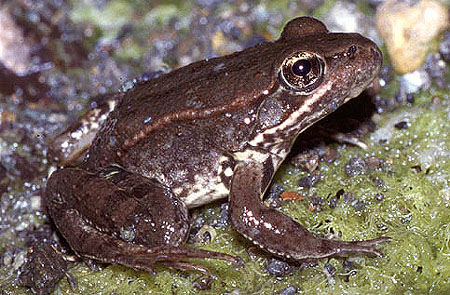
The red-legged frog. Apparently Californians ate them to near-extinction, no joke. From Wikipedia.
It turned out that their promised adaptability was put to the test when we were informed that nearly half the site would not be usable for construction. It turns out that a very cute and endangered species, the Red-Legged Frog, uses that corridor for their annual migration from the northerly forests to the grasslands near the Arboretum. Capstone suddenly had to work with half the space that they had initially anticipated for the 2800 students destined to live at West Campus. In addition, it meant there would be no housing prepared for current families living in Family Student Housing (FSH) when it was torn down to make room for the new development.
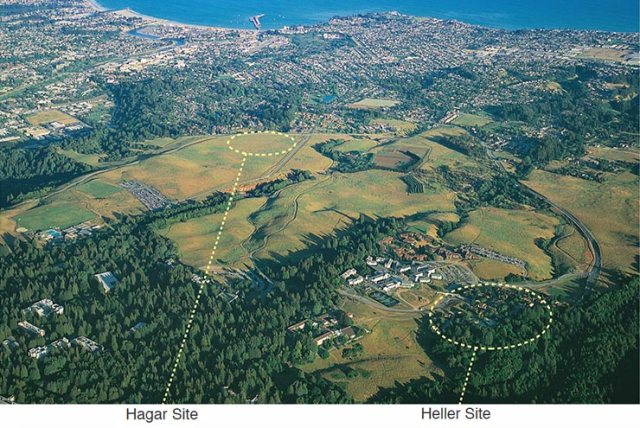
This news could well have killed the project. SHW would not be built in time. Students would be left to fend for themselves and find housing in town on Craigslist. But members of the planning committee discussed another site for the new FSH, one which I have long personally considered a waste of space: the “meadow” near Hagar and Coolidge Drive. As an environmentalist and earth scientist, I bristle at the suggestion that the field at the base of campus is some kind of natural grassland. This space is heavily damaged; if it was left alone, it would return in a few decades to being redwood forest much like North Campus. But it hasn’t been left alone. It is instead a haven for domestic cows which graze and trample the space year-round. The animals, while endearing, continuously roam mowing every blade of grass to a stub, happily emitting methane on a prime piece of real estate.
The cows declined to comment on their thoughts re: Family Student Housing.
Perhaps the current ongoing environmental review of the site will find that the land is needed by some sensitive species other than domestic cattle. If that turns out to be the case, then I will shut up and the project will probably need to restart at the drawing board. But some of the “alternative sites” that East Meadow Action assures us are available on campus (but never get specific about) seem far worse to me. Some possibilities include the forested land north of campus or the trailer park on the Northwest of campus. Both of these places seem much worse candidates to pave over to me in terms of ecological value (redwood and oak woodland) or their need for people (the trailer park is some of the most affordable housing on campus and much beloved by the students living there). I would much rather pave over cow pasture than a forest or someone’s home.
When I read through the website of East Meadow Action, I am struck that the centerpiece of their argument is the aesthetic value of lower campus as open space. I confess that I find this extremely irritating. It’s irritating to me because aside from being an advocate for conservation of sensitive species like the red-legged frog, I am also a student who has to get by living in this town, and I don’t have the luxury of worrying about aesthetics. When they mentioned Ranch View Terrace as an example of “building done responsibly”, my opinion was sealed. Take one look at the floor plans described for the single family homes of Ranch View Terrace, “a large housing complex set back from the road and mitigated by vegetation and topography.” How exactly are we going to house 2500 students in single family homes, artfully hidden behind trees? East Meadow Action is not motivated by environmentalism. They’re motivated by the same Not In My BackYard mentality that is choking the development of dense housing in town. We are in a housing crisis and their ocean views are a luxury that we can’t afford.
East Meadow Action’s ideal for student housing.
I agreed to be SHW rep because I want to make sure future graduate students will have an affordable housing option on campus. I currently am “lucky” to spend 40% of my stipend on rent in town. When I first came to attend grad school here I had to deal with Craigslist and ended up paying over 60% of my income for the first two years I lived here. Students are pursuing extreme solutions. I know people considering living in the woods, or in unzoned bedrooms in town that are another source of tension with the community. It will only continue to get worse as rents rise in the coming years.
Right now, all we can do to remedy the issue in Santa Cruz is pass rent control ordinances and increase supply. SHW is the best project we have to increase supply and do so ensuring maximum density. I want UCSC to continue to be a forest campus, which necessitates not chopping down trees. I am trying to ensure that students have an affordable housing option on campus. I want student families to have guaranteed housing that comes online right when their previous outdated complex is torn down. The sentimental affection that some may feel for the aesthetics of a cow pasture strikes me as the privilege of a comfortable and vocal minority. I value the croaking of frogs and the laughter of children over the yammering of NIMBYs and, yes, even the mooing of cows.
Dan Killam
Fourth Year PhD Candidate, UCSC Earth and Planetary Sciences
University of Southern California ’12, BS Environmental Studies
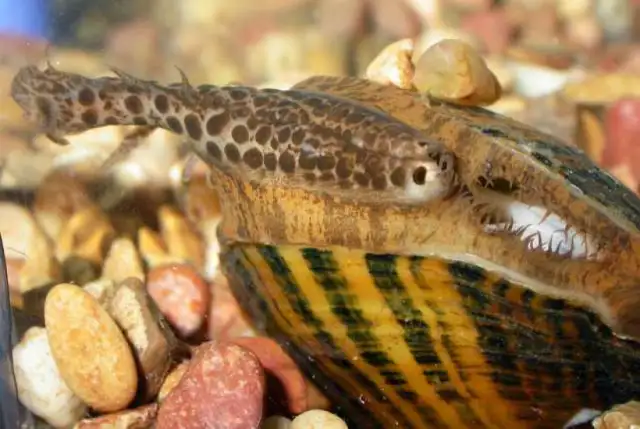
Lampsilis showing off its convincing fish-like lure. Photo: Chris Barnhart, Missouri State.
Clams are traditionally the victims of the aquatic realm. With some exceptions, clams are generally not predatory in nature, preferring to passively filter feed. When they are attacked, their defenses center around their protective shell, or swimming away, or just living in a place that is difficult for predators to reach. They are picked at by crabs, crushed in the jaws of fish, and pried apart by sea stars. But some clams are sick of being the victims. They have big dreams and places to be. For these clams, the rest of the tree of life is a ticket to bigger and better things. These clams have evolved to live inside of other living things.
Pocketbook mussels, for example, have a unique problem. They like to live inland along streams but their microscopic larvae would not be able to swim against the current to get upstream. The mussels have adapted a clever and evil strategy to solve this problem: they hitch a ride in the gills of fish. The mother mussel develops a lure that resembles a small fish, complete with a little fake eyespot, and invitingly wiggles it to attract the attention of a passing fish. When the foolish fish falls for the trick and bites the mussel’s lure, it explodes into a cloud of larvae which then flap up to attach to the gill tissue of the fish like little binder clips. They then encyst themselves in that tissue and feed on the fish’s blood, all the while hopefully hitching a ride further upstream, where they release and settle down to a more traditional clammy life of filter-feeding stuck in the sediment.
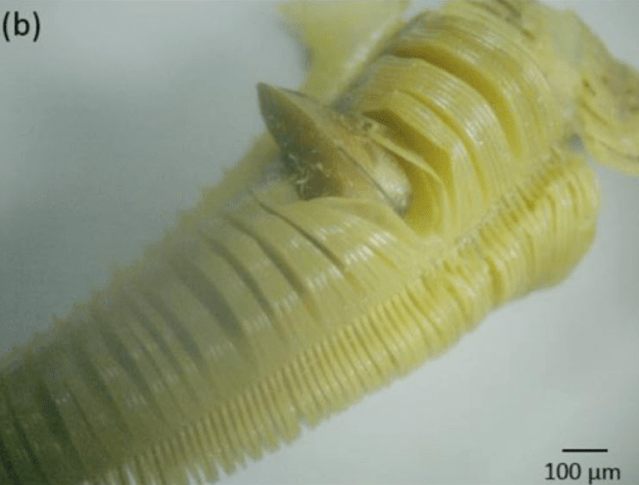
Very tiny Mytilus edulis living in the gills of a crab (Poulter et al, 2017)The tiny 2.5 mm long Mimichlamys varia, living on the leg of a crab (Albano and Favero, 2011)
Clams live in the gills of all sorts of organisms. Because they broadcast spawn, any passing animal may breathe in clam larvae which find the gills a perfectly hospitable place to settle. Sure, it’s a bit cramped, but it’s safe, well oxygenated by definition and there is plenty of food available. They also may just settle on the bodies of other organisms. Most of these gill-dwelling clams are commensal: that means that their impact on the host organism is fairly neutral. They may cause some localized necrosis in the spot they’re living, but they’re mostly sucking up food particles which the host doesn’t really care about. In addition, in crabs and other arthropods, these clams will get shed off periodically when the crab molts away its exoskeleton, so they don’t build up too heavily.
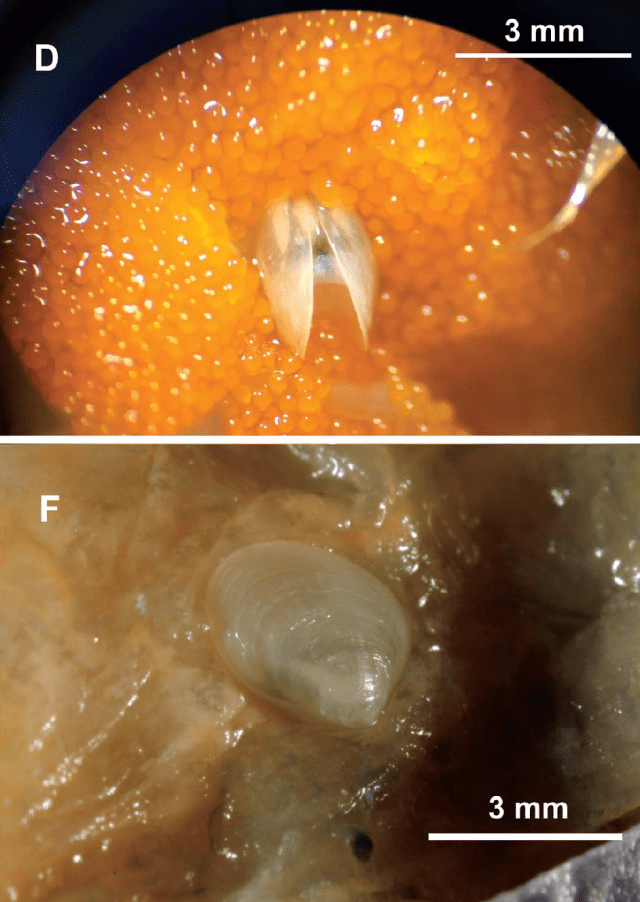
Top: Kurtiella attached among the eggs of the mole crab. Bottom: aberrant Kurtiella living within the tissue of the crab (Bhaduri et al, 2018)
While being a parasite is often denigrated as taking the easy way out, it is actually quite challenging to pursue this unusual lifestyle. Parasitism has evolved a couple hundred times in 15 different phyla, but it is rare to find some organism midway in the process of becoming a true parasite. One team of researchers just published their observations of a commensal clam, Kurtiella pedroana, which may be flirting with true parasitism. These tiny clams normally live in the gill chambers of sand crabs on the Pacific coasts of the Americas. They attach their anchoring byssal threads to the insides of the chambers and live a comfortable life until the crabs molt, when they are shed away. The crabs mostly are unaffected by their presence, but the researchers noticed that some of the clams had actually burrowed into the gill tissue itself. This is an interesting development, because the clams would not be able to filter feed in such a location, so they must have been feeding on the crab’s hemocoel (internal blood). These unusual parasitic individuals are currently a “dead end” as they haven’t figured out how to get back out to reproduce, but if they ever do, they could potentially pass on this trait and become a new type of parasitic clam species. The researchers have potentially observed a rare example of an animal turning to the dark parasitic side of life, with some living in a neutral commensal way and other innovative individuals seeking a bit more out of their non-consensual relationship with their host crabs. Considering the irritation that other bivalves suffer at the claws of pesky parasitic crabs, this seems a particularly sweet revenge.
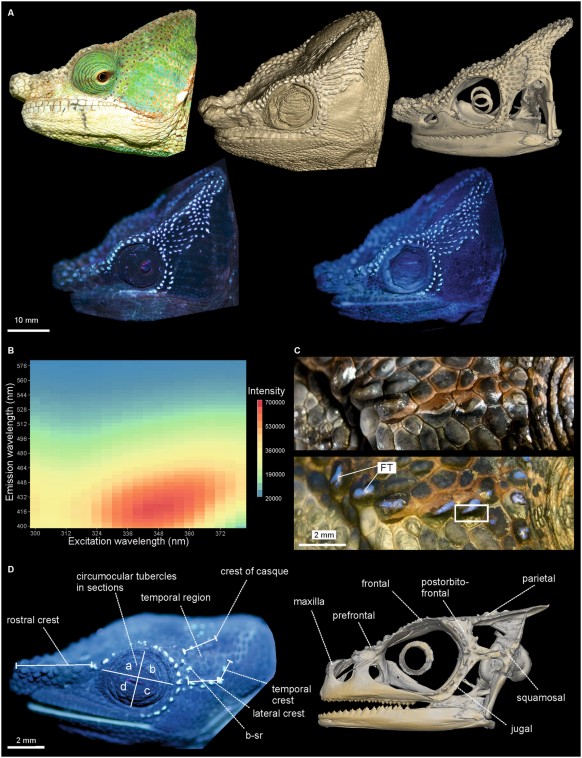
Imagine you had bone spurs coming out of your eyebrows that fluoresced under UV light in a way that attracted mates. That’s what chameleons do, according to a new study in Scientific Reports! Chameleons have a lot of ways to talk to each other, including most famously with their ability to change skin color. But this bone fluorescence strategy is a more subtle way to show off their sexiness to each other, and it may appear in other places in the tree of life. I can assure you that many, many researchers are now looking at their specimens to see if their study organisms do this as well.
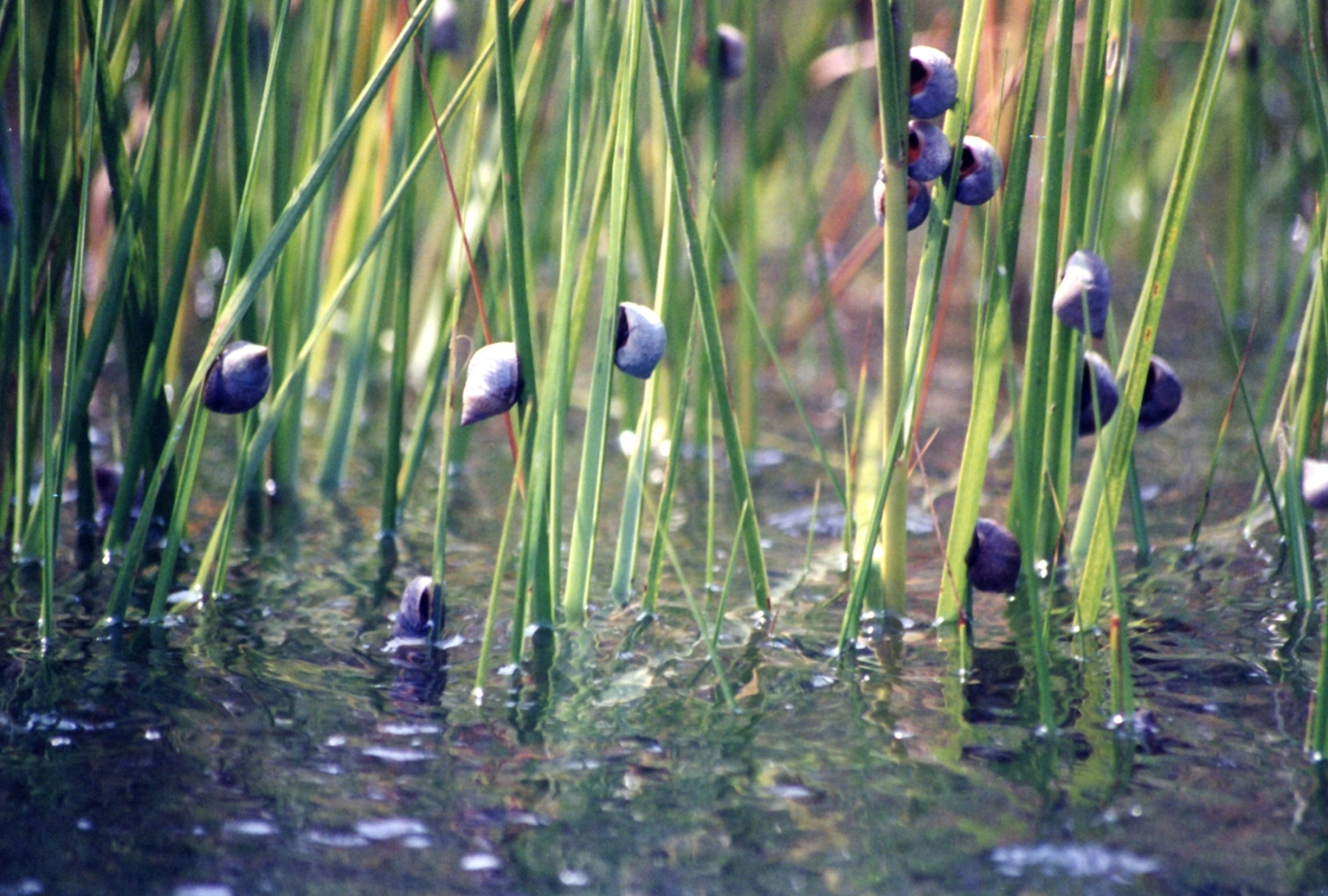
Littoraria grazing on Spartina marsh grass. (source)
Us humans really like to talk up our skills at farming. And while it’s true that we have domesticated animals and plants to a degree not seen in other life forms, the act of nurturing and harvesting food is actually not really that special, and is broadly observed throughout the animal kingdom. Perhaps the most iconic invertebrate farmers are insects. Leaf-cutter ants, termites, and some beetles have been observed to actively cultivate fungus by gathering plant material to feed it, growing the fungus, protecting the fungus from competition, and then harvesting the fungus to feed themselves and their young. Ants are also known to keep livestock in the form of aphids, which they lovingly protect and cultivate for the sweet nectar they excrete. Such practices are called “high-level food production” because, like human farmers with their seeds and fertilizer, insects have evolved a highly complex symbiosis with their fungus. The fungus has shaped their behavior as much as the ants cultivate the fungus.
Less well understood is the “low-level food production” that may occur more broadly throughout the tree of life. There is less direct evidence of such behavior because it is more indirect and less specialized than high-level food production, but it may be equally advantageous for the cultivator and the cultivated. One study published in 2003 uncovered a simple but powerful relationship between marsh periwinkles of the genus Littoraria and fungus which they cultivate and harvest.
Marsh periwinkles are small and not particularly charismatic creatures. Like many snails, they are grazers with a shell, a fleshy foot and a rough, abrasive organ called a radula which they use like sandpaper to graze on pretty much whatever they can get into. Snails are not known as picky eaters. But researcher Brian Silliman of Brown University and Steven Newell of University of Georgia noticed that these innocuous snails regularly undertake the risky, low reward activity of grazing above the water on the blades of swamp grass, stripping off the surfaces of the blades of grass. The researchers were confused why the snails would expose themselves to predation and the harmful open air for such a low-nutrition food.
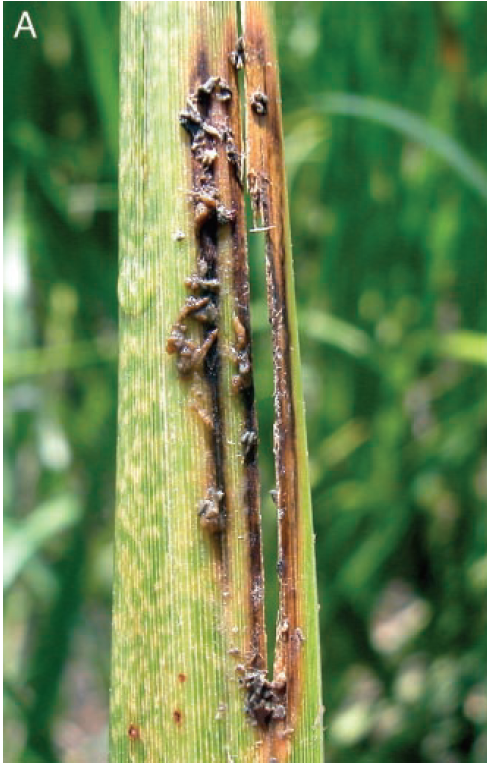
A typical snail farm, complete with liberally applied fertilizer. Yum.
They discovered that the snails were investing in the future. By stripping away the protective surface of the swamp grass blades and liberally fertilizing the surface of the grass with their droppings, the periwinkles are ensuring that the swamp grass will be infected with an active and very prolific fungal infection. The fungus, unlike the plant it lives on, is of high nutritional value. The researchers demonstrated the active partnership between the snails and fungus by conducting caged experiments where they showed that snails which grazed on grass but not the resulting fungus did not grow as large as snails which were allowed to return and chow down on the fungus. The fungus loves this deal as well. They grow much more vigorously on grass that is “radulated” (rubbed with the snail’s sandpapery radula) than uninjured grass. The fungus grows even faster if the snails are allowed to deposit their poop next to the wounds. The researchers found that this same relationship applies at 16 salt marshes along 2,000 km of the Eastern Seaboard.
The periwinkles don’t really know what they’re doing. They aren’t actively planting fungus and watching proudly like a human farmer as their crop matures. But over millions of years, the snails have been hard-wired to practice this behavior because it works. Snails that abrade a leaf of swamp grass, poop on the wound and come back later to eat the yummy fungus do a lot better than snails which just stick to the safe way of life below the surface of the water. The fungus loves this relationship too. The only loser is the swamp grass, which the researchers unsurprisingly found grows much more slowly when infected with fungus. But marsh grass is the largest source of biomass in swamp environments, and the snails that partner with fungus are able to more efficiently use this plentiful but low-nutrient food source, to the extent that it is now the dominant way of eating for swamp periwinkles on the East Coast of the US, and probably in a lot more places too. The researchers noted that there are likely far more examples of low-level food production that we simply haven’t noticed.
Since this work was published, other teams have discovered that some damselfish like to farm algae, fiddler crabs encourage the growth of mangrove trees, and even fungus get in on the action of farming bacteria. We love to talk up our “sophisticated” high-level food production techniques, but such relationships probably got started at a similarly low level. Our activities as hunter-gatherers encouraged the growth of certain organisms, we stumbled upon them, ate them, kept doing what we were doing and eventually our behavior developed into something more complex. Next time you see a snail munching its way up a blade of grass, consider to yourself whether it knows exactly what it’s doing. Come back later to see the fruits of its labor.
In undergrad, I felt like my school and internship were training me to be two different types of researcher. At USC, I was majoring in Environmental Studies with an emphasis in Biology. It was essentially two majors in one, with a year of biology, a year of chemistry, a year of organic chem, a year of physics, molecular biology, biochemistry, etc. On top of that, I took courses on international environmental policy and went to Belize to study Mayan environmental history. Meanwhile, I was working at Jet Propulsion Laboratory in Pasadena researching trends in historical rainfall data. I loved both sides of my studies, but felt like neither was exactly hitting the spot of what I would want to spend my career researching. I love marine biology but am not particularly interested in working constantly in the lab, looking for expression of heat shock protein related genes or pouring stuff from one tube into another. On the other hand, I was fascinated by the process of untangling the complex history of rainfall in California, but I yearned to relate this environmental history to the reaction of ecological communities, which was outside the scope of the project.
During my gap year post-USC, I thought long and hard about how I could reconcile these disparate interests. I read a lot, and researched a bunch of competing specialized sub-fields. I realized that paleobiology fit the bill for my interests extremely well. Paleobiologists are considered earth scientists because they take a macro view of the earth as a system through both time and space. They have to understand environmental history to be able to explain the occurrences of organisms over geologic time. I really liked the idea of being able to place modern-day changes in their geologic context. What changes are humans making that are truly unprecedented in the history of life on earth?
But it doesn’t have to be all zoomed out to million-year processes. A growing sub-field known as Conservation Paleobiology (CPB) is focused on quantifying and providing context of how communities operated before humans were around and before the agricultural and industrial revolutions, in order to understand the feasibility of restoration for these communities in this Anthropocene world. Sometimes, this means creating a baseline of environmental health: how did oysters grow and build their reefs before they were harvested and human pollution altered the chemistry of their habitats? I’m personally researching whether giant clams grow faster in the past , or are they reacting in unexpected ways to human pollution? It appears that at least in the Gulf of Aqaba, they may be growing faster in the present day. Such difficult and counterintuitive answers are common in this field.
Sometimes, CPB requires thinking beyond the idea of baselines entirely. We are realizing that ecosystems sometimes have no “delicate balance” as described by some in the environmental community. While ecosystems can be fragile and vulnerable to human influence, their “natural” state is one of change. The question is whether human influence paves over that prior ecological variability and leads to a state change in the normal succession of ecosystems, particularly if those natural ecosystems provide services that are important to human well-being. In a way, the application of paleobiology to conservation requires a system of values. It always sounds great to call for restoring an ecosystem to its prior state before humans. But if that restoration would require even more human intervention than the environmental harms which caused the original damage, is it worth it? These are the kinds of tricky questions I think are necessary to ask, and which conservation paleobiology is uniquely suited to answer.
At the Annual Geological Society of America meeting in Seattle this year, the Paleo Society held the first-ever Conservation Paleobiology session. The room was standing room only the whole time, investigating fossil and modern ecosystems from many possible angles. This field is brand new, and the principles behind it are still being set down, which is very exciting. It’s great to be involved with a field that is fresh, interdisciplinary, and growing rapidly. I look forward to sharing what my research and others find in the future.
One of the Antarctic bivalve species featured in this study. Source
Like all organisms, bivalves have a limited budget governing all aspects of their metabolism. If they put more energy into feeding (filtering the water), they can bring in a bit more food and therefore fuel more growth, but sucking in water takes energy as well, particularly if there isn’t enough food to be filtered out. Bivalves also periodically have to grow gonadal material and eggs for reproduction, expand their body tissue (somatic growth) and of course, grow their shells (made of of a mineral called carbonate). All of these expenditures are items in a budget determined by the amount of energy the bivalve can bring in, as well as how efficiently they can digest and metabolize that energy.
If a bivalve is placed under stress, their scope for growth (the max amount of size increase per unit time) will be decreased. Because they’re cold-blooded, bivalves are limited by the temperature of their environment. If temperatures are low, they simply can’t sustain the chemical reactions required for life at the same rate that endotherms like us can. They also may have to shut their shells and stop feeding if they’re exposed by the tide, or are tossed around by a violent storm, or attacked by predators or toxins from the algae that they feed on.
When their budget is lower, they have to make painful cuts, much like a company lays off employees if their revenues are lower. The question is which biological processes get cut, and when? My first chapter (submitted and in review) has settled temperature being the primary control on seasonal shell growth. Bivalves at high latitudes undergo annual winter shutdowns in growth, which create the growth bands I use to figure out their age, growth rate, etc. We’d be a lot closer to accurately predicting when bivalves suffer from “growth shutdowns” if we had hard numbers on how much energy they actually invest in their shells. A new study from a team led by Sue-Ann Watson of James Cook University attempts to do just that.
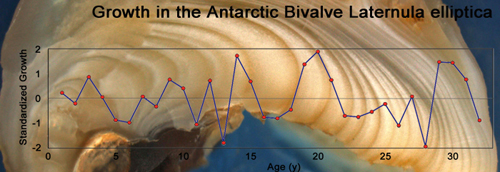
Diagram relating the growth bands of Antarctic soft-shelled clam with a chart showing the widths of those bands. Source
Collecting a database of widths for the annual growth rings of bivalve and gastropod (snail) species from many latitudes, Watson and her team were able to get a global view of how fast different molluscs grow from the equator to the poles. Because the unit cost of creating carbonate is determined by well-understood chemistry, they were able to create an equation which would determine the exact number of Joules of energy used for every bivalve to grow their shells.
They still needed a total energy budget for each species, in order to the percent of the energy budget that each bivalve was investing in their shells. They drew on a previous paper which had calculated the standard metabolic rates for each species by carefully measuring their oxygen consumption. We could do the same for you if you sat in a sealed box for an extended period of time while we measured the exact amount of oxygen going in and CO2 going out. Dividing the amount of energy needed to grow the shell by the total amount of energy used in the organism’s metabolism would give us a percent of total energy that the bivalve dedicates to adding growth layers to its shell.
That number is…not very large. None of the bivalves or gastropods they looked at put more than 10% of their energy into shell growth, and bivalves were the lowest, with less than 4% of their energy going into their shell. Low-latitude (more equatorward) bivalves have the easiest time, putting less than 1% of their energy into growth but getting way more payoff for that small expenditure. High-latitude polar bivalves have to work harder, because the lower temperatures they experience mean the reactions needed to create their shells are more expensive. In addition, most of that energy is going into the protein-based “scaffolding” that is used to make the shell, rather than the crystals of carbonate themselves. Organisms right now don’t have to put a whole lot of effort into making their protective shells, which could explain why so many organisms use shells for protection. That is good, because if shells were already breaking the bank when it came to the bivalves’ growth budget, they wouldn’t have a lot of room to invest more energy in the face of climate change. Unfortunately, as the authors note, these budgets may need to change in the face of climate change, particularly for bivalves at the poles. As the oceans grow more acidic due to human CO2 emissions, growing their shells will start to take up more of their energy, which is currently not a major part of their budget.
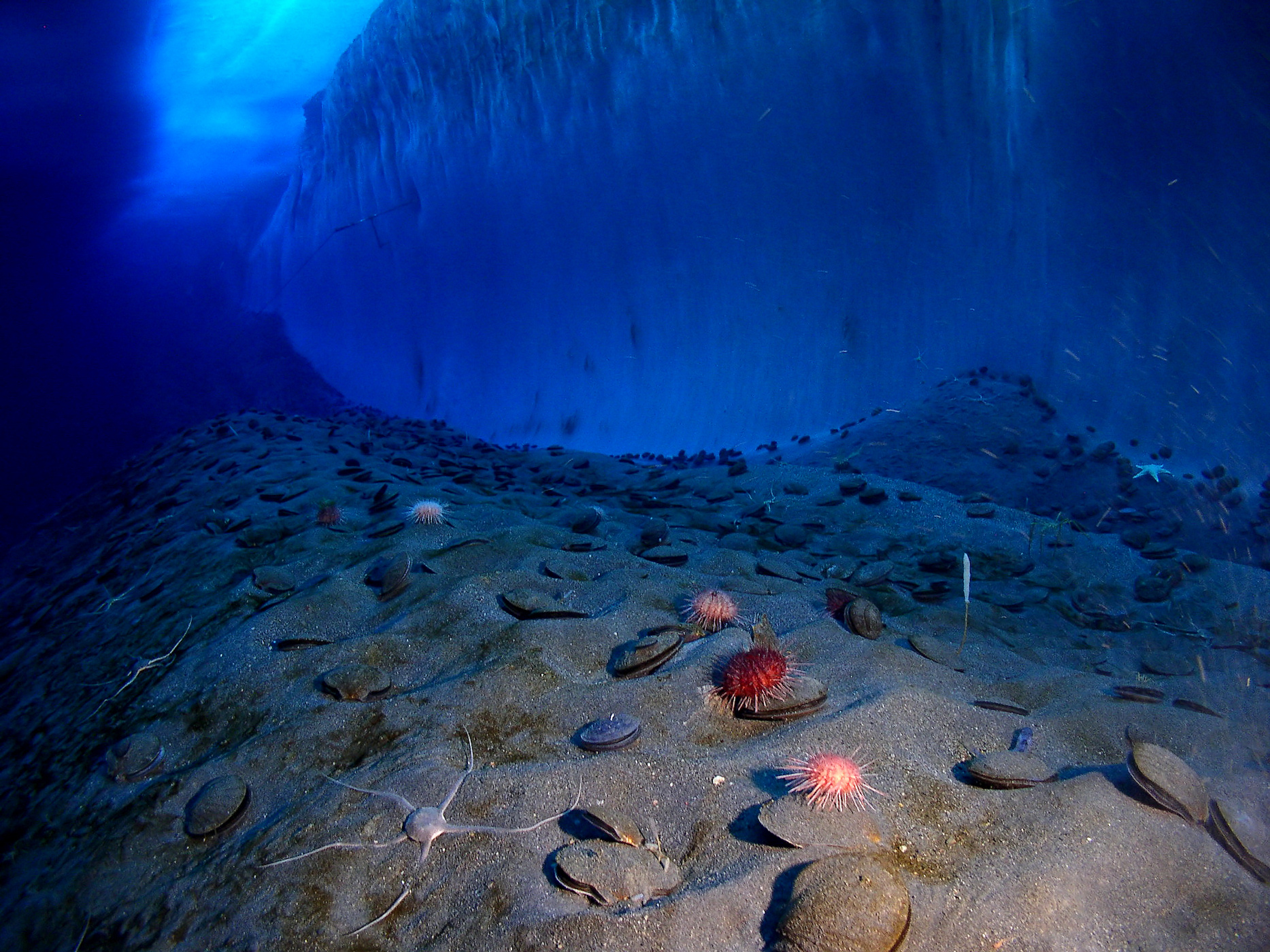
A cold-water ecosystem dominated by Antarctic scallops. Source
Right now, the cold waters of the poles are refuges for organisms that don’t deal well with shell crushing predators. As polar regions warm, such predators will begin to colonize these unfamiliar waters. Polar bivalves may encounter the double whammy of needing to spend more energy to make the same amount of shell, but also find that it is no longer enough to protect them from predators that easily crack open their protective coverings.
I found this study to be an elegant and thoughtful attempt to fill in a gap in our current understanding of how organisms grow and how energy budgets are influenced by environmental variables like temperature. I instantly downloaded the paper because it answered a question that has long been on my mind. Maybe can sneak its way into my manuscript during the review process!
Keep a journal of every research-related idea you have and every research-related action you take. Seriously, find the most frictionless way you can keep notes and stick to it. Your brain will thank you later.
Ask for help whenever possible, but with the knowledge that many of the issues you have will have no troubleshooting manual.
Crude, hacked together and done is better than perfect and never finished.
Work when you feel productive. Sleep when you feel less productive. Use the benefits of being a self-scheduled researcher to your advantage.
Don’t feel guilty to be involved in grad student life and service. These activities give a mission and direction to your research.
Take on a mentee. It is such a massive boost to your own productivity to take charge of managing and encouraging another less experienced person’s work. It will push you to practice what you preach.
Make sure your family and loved ones know what you do and what is expected of you, so they aren’t upset when you aren’t free to talk or have to work a late night.
Don’t hold on to the paper you’re working on too long. Chances are that there is someone out there doing a similar project based on an idea that they had at the same time as you, and you don’t want to get scooped.
If someone more experienced than you who you respect disagrees with your findings, that doesn’t mean you’re wrong.
Don’t be afraid to overhaul a project you have based on new information. This is the stage of your career when you are not invested in a theory or particular method. You can quickly change tack to use new analyses and pursue new research questions with little or no cost. Your committee will understand.
NEVER show off how much you work. We all work a ton (yes, you do too, don’t let that impostor syndrome get you) and there is no need to hero-worship based on how many hours we work a week.
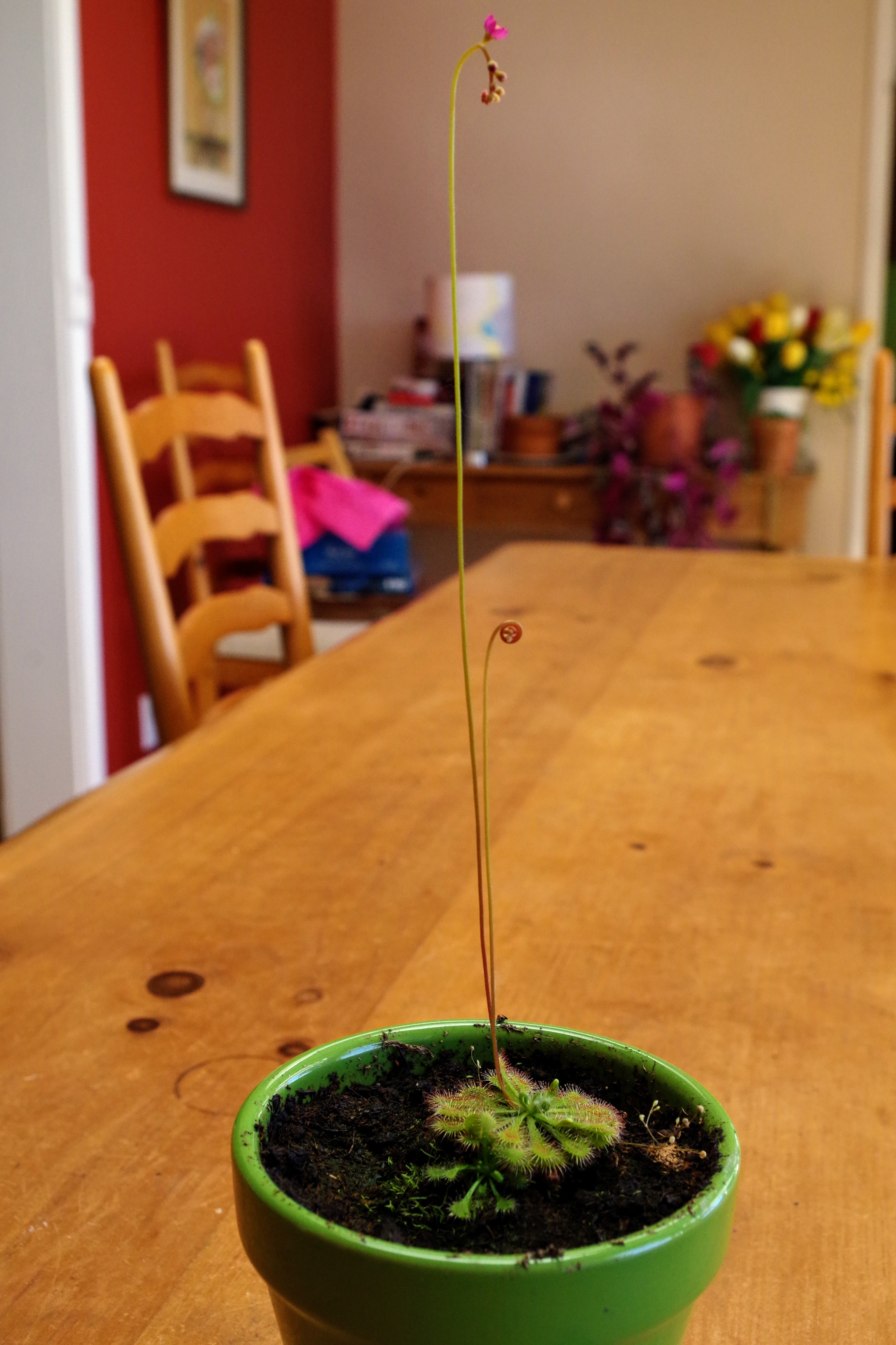
Sundews (Drosera) are famous for eating bugs by trapping them in the sticky tentacles on their leaves. But they still need bugs occasionally to reproduce. When it comes time, the plant builds an enormous stalk to put its flowers at arm’s length. Any pollinators visiting their tiny blooms won’t be at risk of becoming the victim of friendly fire.
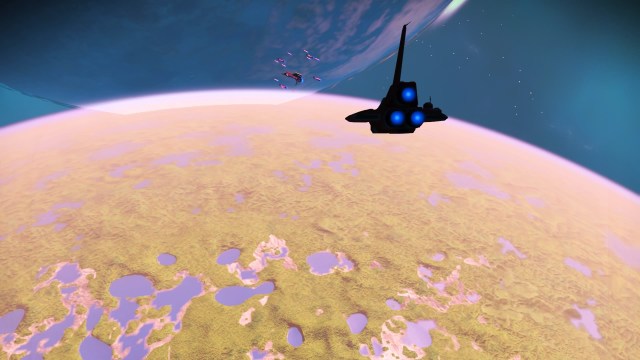
Approaching a beautiful lake-filled green planet, which unfortunately turned out to be covered with hostile robots.
I’m entering the atmosphere of this planet in full knowledge that I don’t have the fuel to lift off again. Normally, this wouldn’t be an issue, but the weather strongly tends towards acid rain and the average temperature is well above 150°F. So when I’m landed, I’m going to have to be quick about harvesting some plutonium (an odd choice for fuel considering its rarity on Earth) to use for my ship’s launch thrusters. When I get out to do so, my life support systems immediately begin using power and I realize my harvesting tool is low on juice as well. I could easily die here, alone and hundreds of light years from the nearest real-life human.
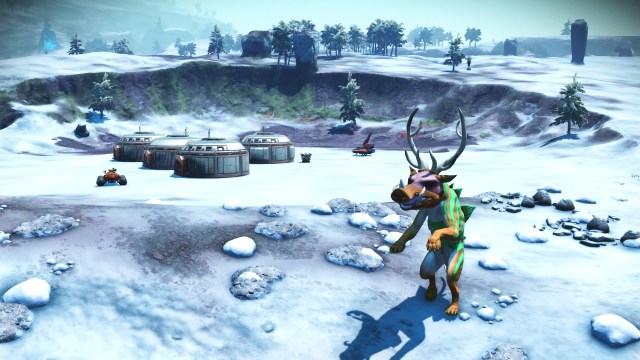
My home base, on a frozen lake on the tundra planet I call home. One of the strange hog-faced, antlered bipedal herbivores is in the foreground.
The main enemy in No Man’s Sky is scarcity. Everything from your space-suit’s life support systems to the hyperdrive you use to travel between planets requires some amount of resources to power and repair. Most planets are not friendly in conditions. They can be frozen to -200 degrees, or +200 or both in a day. Windstorms and acid rain can sap away at your suit’s life support systems. You are truly subservient to the environment in No Man’s Sky.
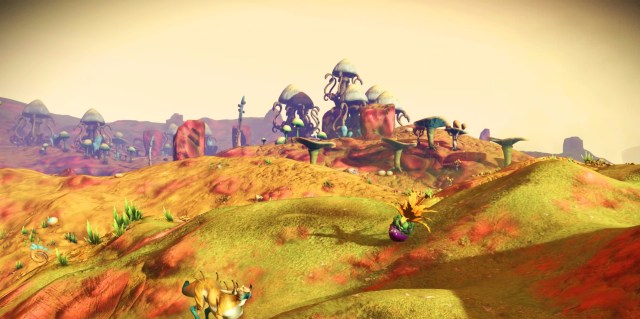
Weird hopping pineapple creature in the foreground in this strange fungus-dominated toxic world, where acid rain quickly sapped my suit’s life support systems.
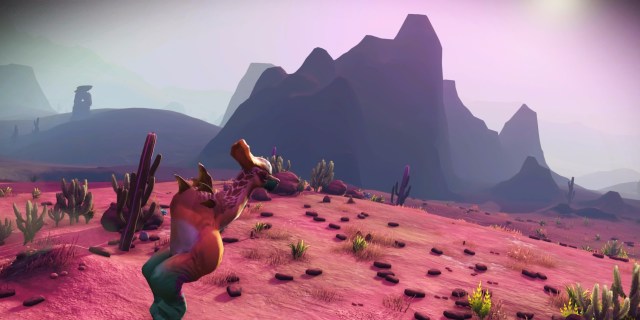
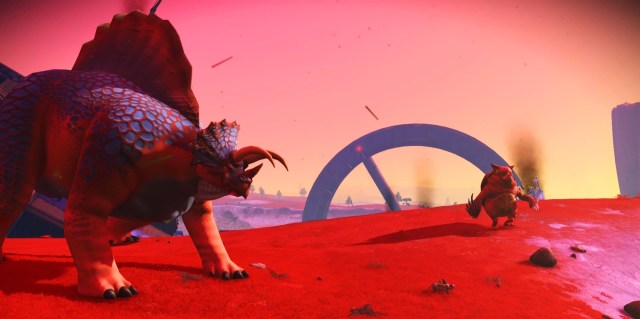
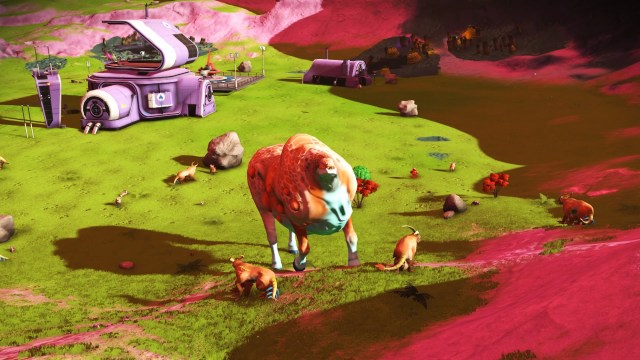
There is a stunning variety of animal and plant life present in the game. All environments and the inhabitants thereof are generated by an algorithm, meaning that the game’s creators can’t be fully aware of all the billions of worlds existing in their fictional galaxy. I have seen flying worms, giant predatory dinosaur-like creatures that chase me on sight, and what can only be described as a hopping pineapple. Each planet is its own ecosystem. Most creatures are uninterested or fearful of you, though a few do seem to chase me or attack in defense. Some attack each other.
A creature reminding me of a terror bird on a burning hot desert planet.
To be fair, the ecosystems are somewhat limited. I have yet to see truly giant trees rivaling the redwoods of my own real-life planet. I haven’t seen icebergs or glaciers, because each planet only has one real biome. There are no ice-caps or climate differences on each world, which is disappointing, but typical in science fiction (think Hoth or Tatooine from Star Wars). I haven’t seen a running river, which would likely be too computationally expensive to generate. All oceans and lakes seem to be static at a certain sea level. There are no differences in gravity between worlds, most likely to simplify gameplay. Star systems have planets and moons are not to realistic scale, with planets and moons far closer than they should be, probably for visual effect.
Triceratops-like creature and a weird tubby feathered animal, with a crashed freighter in the background.
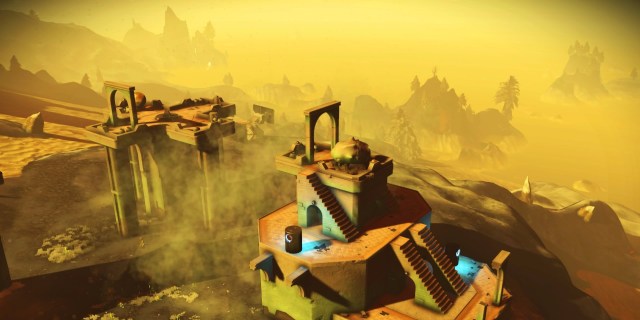
Some of the design limitations are interesting from an environmental perspective. There are orbiting space stations, but no cities to speak of. The sparse planetary settlements have at most a few inhabitants in a few buildings. Did the civilization of this fictional galaxy suffer some calamity which decimated its population? Or did they make a conscious decision to spread out and dismantle their cities in subservience to environmental preservation? Perhaps No Man’s Sky is the most extreme manifestation of the Kuznets curve. As human societies mature and living situations improve, their policies begin to value conservation and public health instead of economic growth.
In this way, the civilization of No Man’s Sky has achieved a near-environmental utopia. The player’s actions, however are interesting in their persistence. When you destroy a plant or harvest resources, they do not return. The changes that you make are truly persistent, and the game does not fill back in the gaps. As I rode my buggy over the surface of my own planet, I felt a twinge of regret running over the strange coral-like creatures in the warm canyons between stretches of tundra, because they will not regenerate.
Remnants of a disbanded city? This world was a frozen archipelago with a yellow sky.
No Man’s Sky has been heavily criticized by many players, who felt it didn’t live up to the hype it received before release. Several updates have been added to improve the core gameplay and story in the last year. Regardless of the improvements of the game itself, I find the concept and environmental ideas in the game to be engrossing. As a real-life naturalist, the experience of exploration and nature-watching in a game is also fun, with the added novelty of knowing that every creature I see has likely never been observed before.







 Clamsplaining


