The clams that sail the seas on rafts of kelp


gtrap.jpg
The streamlined shells of Gaimardia trapesina. Source: New Zealand Mollusca
Bivalves are not known as champion migrators. While scallops can swim and many types of bivalves can burrow, most bivalves are primarily sessile (non-moving on the ocean bottom). So for many bivalves, the primary method they use to colonize new territories is to release planktotrophic (“plankton-eating”) larvae, which can be carried to new places by currents and feed on other plankton surrounding them. Many bivalves have broad distributions because of their ability to hitchhike on ocean currents when they are microscopic. They don’t even pack a lunch, instead eating whatever other plankton is around them. But once they settle to grow, they are typically fixed in place.

Not all bivalves have a planktotrophic larval stage, though. Larvae of lecithotrophic bivalve species (“yolk-eaters”) have yolk-filled eggs which provide them with a package of nutrition to help them along to adulthood. Others are brooders, meaning that rather than releasing eggs and sperm into the water column to fertilize externally, they instead internally develop the embryos of their young to release to the local area when they are more fully developed. This strategy has some benefits. Brooders invest more energy into the success of their offspring and therefore may exhibit a higher survival rate than other bivalves that release their young as plankton to be carried by the sea-winds. This is analogous to the benefits that K-strategist vertebrate animals like elephants have compared to r-strategist mice: each baby is more work, and more risky, but is more likely to survive to carry your genes to the next generation.

Brooding is particularly useful at high latitudes, where the supply of phytoplankton that is the staple food of most planktrophic bivalve larvae is seasonal and may limit their ability to survive in large numbers. But most of these brooding bivalves stay comparatively local compared to their planktonic brethren. Their gene flow is lower on average as a result, with greater diversity in genetic makeup between populations of different regions. And generally, their species ranges are more constricted as a result of their limited ability to distribute themselves.
gtrap2
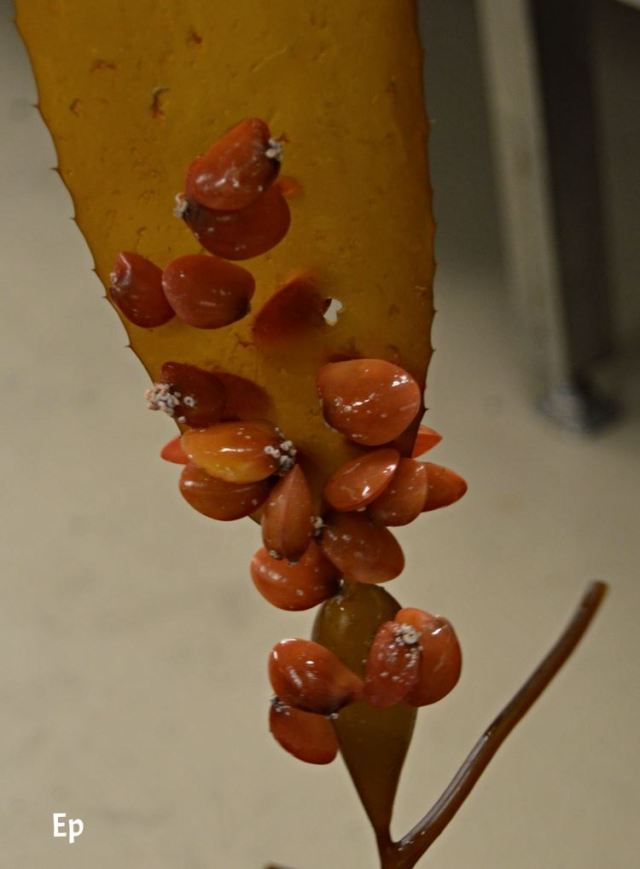
A bunch of G. trapesina attached to kelp. Notice the hitchhiking clams have in turn had hitchhiking barnacles attach to them. Freeloaders on freeloaders! Source: Eleonora Puccinelli

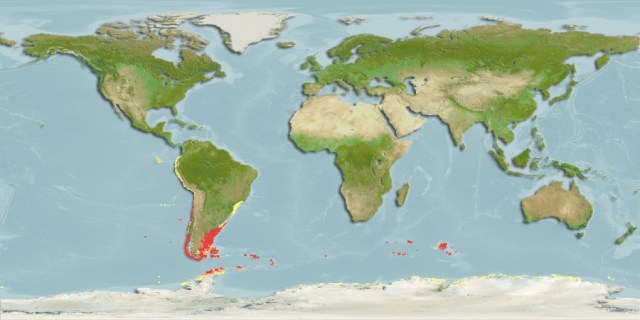
But some brooding bivalves have developed a tool to have it all: they nurture their young and colonize new territories by sailing the seas using kelp rafts. The clam Gaimardia trapesina has evolved to attach itself to giant kelp using long, stringy, elastic byssal threads and a sticky foot which helps it hold on for dear life. The kelp floats with the help of gas-filled pneumatocysts, and grows in the surge zone where it often is ripped apart or dislodged by the waves to be carried away by the tides and currents. This means that if the clam can persist through that wave-tossed interval to make it into the current, it can be carried far away. Though they are brooders, they are distributed across a broad circumpolar swathe of the Southern Ocean through the help of their their rafting ability. They nurture their embryos on specialized filaments in their bodies and release them to coat the surfaces of their small floating kelp worlds. The Southern Ocean is continuously swirling around the pole due to the dominance of the Antarctic Circumpolar Current, which serves as a constant conveyor belt transporting G. trapesina across the southern seas. So while G. trapesina live packed in on small rafts, they can travel to faraway coastlines using this skill.
pic_w-msc-197185
The broad circumpolar distribution of G. trapesina. Source: Sealifebase

The biology of G. trapesina was described in greater detail in a recent paper from a team of South African researchers led by Dr. Eleonora Puccinelli, who found that the clams have evolved to not bite the hands (kelp blades?) that feed them. Tests of the isotopic composition of the clams’ tissue shows that most of their diet is made up of detritus (loose suspended particles of organic matter) rather than kelp. If the clams ate the kelp, they would be destroying their rafts, but they are gifted with a continuous supply of new food floating by as they sail from coast to coast across the Antarctic and South American shores. But they can’t be picky when they’re floating in the open sea, and instead eat whatever decaying matter they encounter.
shell-gaimardia-trapesina
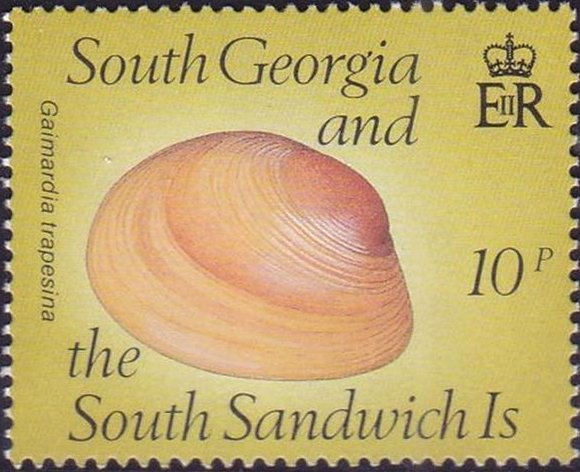
Falkland Islands stamp featuring G. trapesina. Source.

The clams are small, around 1 cm in size, to reduce drag and allow for greater populations to share the same limited space of kelp. Their long, thin byssal threads regrow quickly if they are torn, which is a useful skill when their home is constantly being torn by waves and scavengers. Unlike other bivalves, their shells are thin and fragile and they do not really “clam up” their shells when handled. They prioritize most of their energy into reproduction and staying stuck to their rafts, and surrender to the predators that may eat them. There are many species that rely on G. trapesina as a food source at sea, particularly traveling seabirds, which descend to pick them off of kelp floating far from land. In that way, these sailing clams serve as an important piece of the food chain in the southernmost seas of our planet, providing an energy source for birds during their migrations to and from the shores of the Southern continents.


Killer Clams

machado.PNG
Some shells of the carnivorous genus Cardiomya. Notice the protuberance off one side, making space for the overdeveloped siphon they use to capture prey (Machado et al. 2016)

You might think of clams as rather pacifistic creatures. Most of them are; the majority of bivalves are filter-feeding organisms that suck in seawater and eat the yummy stuff being carried by the currents. This mostly means phytoplankton, tiny single-celled photosynthetic plankton which make up most of the biomass in the world’s oceans. Most bivalves could be considered exclusively herbivorous, but as I’ve learned happens throughout evolutionary biology, there are exceptions to every rule. We already talked about parasitic bivalves that have evolved to hitch a ride on other hapless marine animals. But there is an even more sinister lineage of bivalves waiting in the sediment: yes, I’m talking about killer clams.

siphon.PNG
View of the oversized siphon (Machado et al. 2016)

Carnivory in bivalves has evolved multiple times, but the majority of known carnivorous bivalves fall within an order called the Anomalodesmata. Within that order, two families of clams called the Poromyidae and Cuspariidae have a surprising number of species which are known to eat multicellular prey.

Screenshot_2018-07-22 Clams.png
Evil clams are also the star of my favorite Spongebob episode

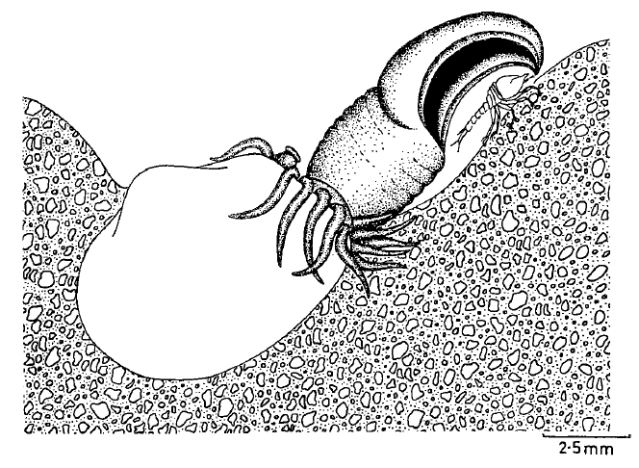
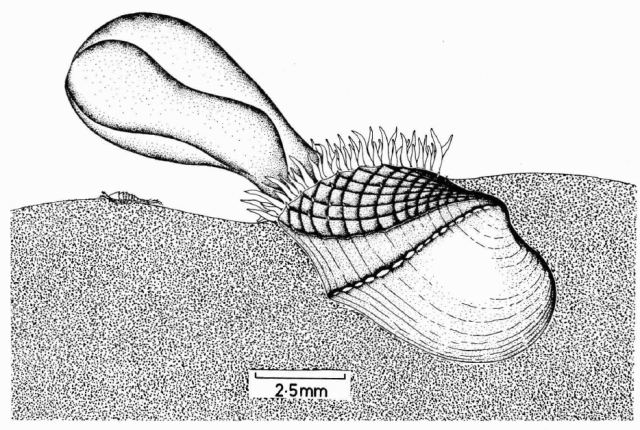
Now, you can rest easy because there are no clams that eat people. You’re safe from the Class Bivalvia, as far as we know. But if you were a small crustacean like a copepod, isopod or ostracod, you would be quite concerned about the possibility of being eaten by a poromyid clam in certain regions of the world. These clams lie in wait in the sediment like a sarlacc, with sensory tentacles feeling for passing prey and a large, overdeveloped siphon ready to suck up or engulf their helpless targets.

morton.PNG
Until we catch the feeding behavior of poromyids on video, these whimsical artist’s depictions will have to do (Morton 1981).

Because they spend their lives under the sediment, these clams aren’t very well studied, and the first video of them alive was only taken in recent years. In addition, many of these killer clams live in deeper water, where their murderous lifestyle provides an advantage because food supplies can be much more sparse than in the sun-drenched shallow coastal zone. Much like the venus flytrap and carnivorous plants have arisen in response to the low nutrient supply of boggy swamp environments, the ability to eat alternative prey is valuable to the killer clams in all sorts of unconventional environments.

The siphon which these clams use to suck up their prey is a repurposed organ. In most other bivalves, the siphon is usually a snorkel-like organ which enables the clam to safely remain buried deep in the sediment and still breathe in oxgyen and food-rich water from open water above. But for the poromyids, the siphon is instead a weapon which can be used like a vaccum cleaner hose, or even be enlarged to engulf hapless prey. The poromyids have also evolved to have a much more complex, muscular stomach than any other bivalves. It takes a lot more energy to digest multicellular food, while most other bivalves simply just feed from the single-celled food they catch on their gills, expelling the other un-needed junk as “pseudofeces.”

dilemma.PNG
Dilemma, another strange carnivorous bivalve which eats marine isopods (pill bugs), found from deep waters off the the Florida Keys, Vanuatu and New Zealand (Leal 2008)

Hopefully soon we will have video of this predatory activity in action. But until then, you can imagine that somewhere on earth, tiny copepods foraging on the surface of the sediment pass by a strange field of squishy tentacles. Suddenly, out of nowhere a hellish giant vacuum hose appears in view and sucks them in like Jonah and the whale. Then it’s just darkness and stomach acid. What a way to go!

lyonsiella.PNG
Lyonsiella going after a doomed copepod (Morton 1984).

The boring giant clam is anything but.

crocea2
Tridacna crocea, bored into a coral head on a reef in Palau

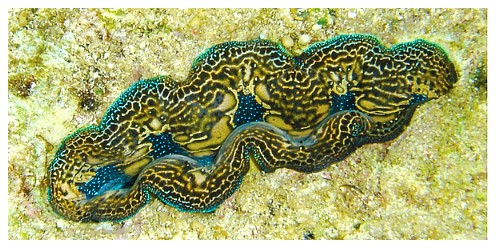
There are many types of giant clam. Not all of them are giant; the boring giant clam, Tridacna crocea, only grows to 10 cm long or so. The boring giant clam is not so named because it’s dull; its main skill is its ability to bore into the coral of its coral reef home and live with its entire shell and body embedded in the living coral. They sit there with their colorful mantle edge exposed from a thin opening in the coral, harvesting energy from sunlight like the other giant clams. When disturbed by the shadow of a human or other such predator, they retract their mantle and close their shell, encased by an additional wall of coral skeleton. It’s a clever defensive strategy, and they are some of the most numerous giant clams in many reefs in the Eastern and Southern Equatorial Pacific.

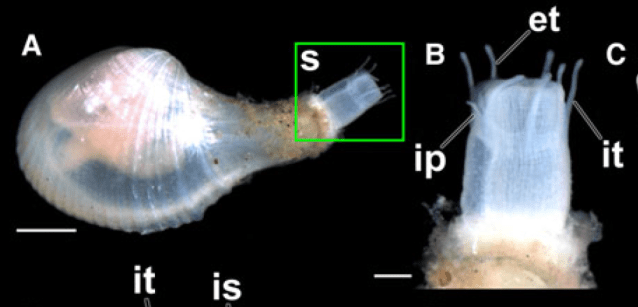
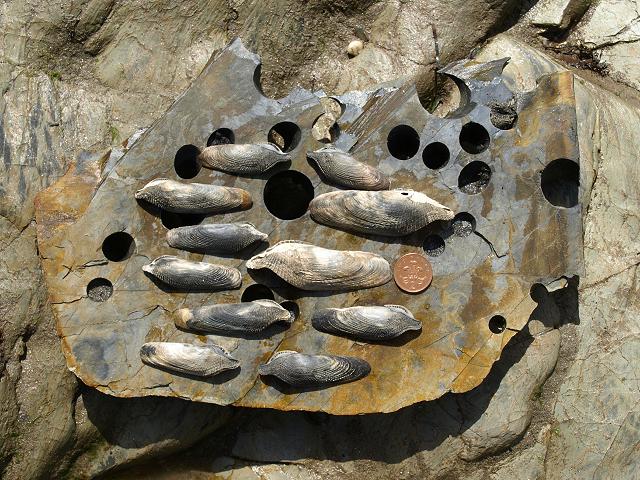
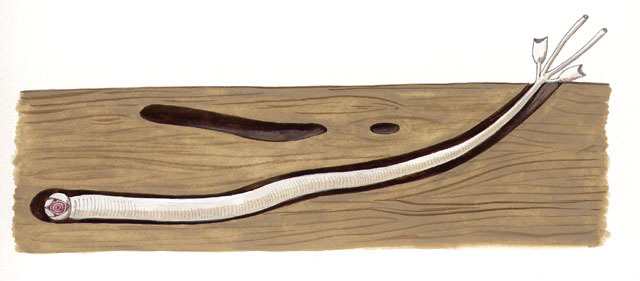
But it’s always been a mystery of how they bore away at the coral so efficiently, and how they continue to enlarge their home as they grow their shell. There are other bivalves that are efficient borers, including the pholad clams (“piddocks”) which use sharp teeth on their hinge to carve their way into solid rock, and the shipworms, which have abandoned their protective shell and instead use their two valves as teeth to burrow into wood. Both of these methods of boring are pretty straightforward.

bivalve_pholas_dactylus_common_piddock_24-08-10_shells_1

Piddocks in next to holes that they made in solid rock. Source: Aphotomarine

medium

Shipworm embedded in wood. Source: Michigan Science Art via Animal Diversity Web

But the boring giant clam has no such adaptation. It does not have large teeth on its hinge to carve at the coral. Such abrasion of the coral would also not explain how they widen the opening of their cubby-holes to allow their shell to grow wider. This mystery has long confounded giant clam researchers. I myself have wondered about it, and was surprised to find there was no good answer in the literature about it. But now, a team of scientists may have cracked the problem once and for all.

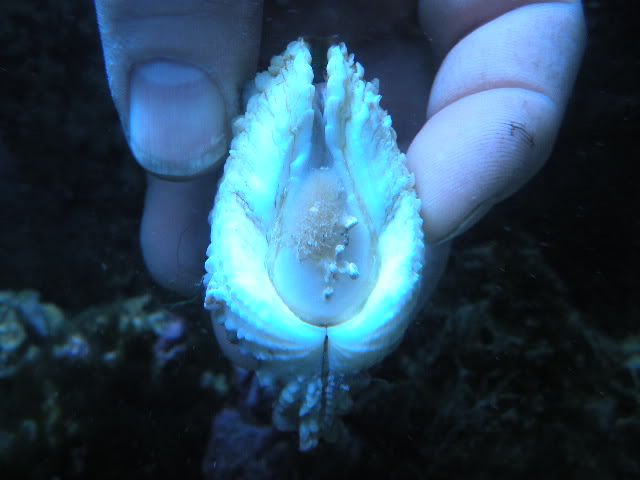
At the back of T. crocea‘s shell at the hinge, there is a large “byssal opening” with a fleshy foot which they can extend out of the opening to attach themselves to surfaces. Giant clams that don’t embed in coral (“epifaunal,” resting on the surface of the coral rather than “infaunal,” buried in the coral) lack this opening. The researchers suspected that the foot was the drilling instrument the clam used to create its home.

dscn0083

Byssal opening of T. crocea with the foot retracted. Source: NickB on Southwest Florida Marine Aquarium Society

How could a soft fleshy foot drill into the solid calcium carbonate (CaCO3) skeleton of corals? I can confirm from experience that my own foot makes for a very ineffective drilling instrument in such a setting. But T. crocea has a secret weapon: the power of acid-base chemistry. CaCO3 can be dissolved by acids. You may well have taken advantage of this chemistry to settle your acid stomach by taking a Tums, which is made of CaCO3 and reacts with the excessive hydrochloric acid in your stomach, leaving your tummy with a more neutral pH. pH is a scale used to measure acidity, with low numbers indicating very acidic solutions like lemon juice, and high pH indicating a basic solution like bleach.

Scientists are well aware of the hazards corals face from decreasing pH (increasing acidity) in the oceans. All the CO2 we are emitting, in addition to being a greenhouse gas, dissolves in the ocean as carbonic acid and gets to work reacting and dissolving away the skeletons of corals and any other “calcifying” organisms that make shells. It makes it harder for corals to form their skeletons and is already worsening die-offs of corals in some areas. The researchers suspected that the clams use this phenomena to their advantage at a small scale, lowering the pH with their foot somehow to dissolve away the coral to make their borehole.

GOPR2264.JPG
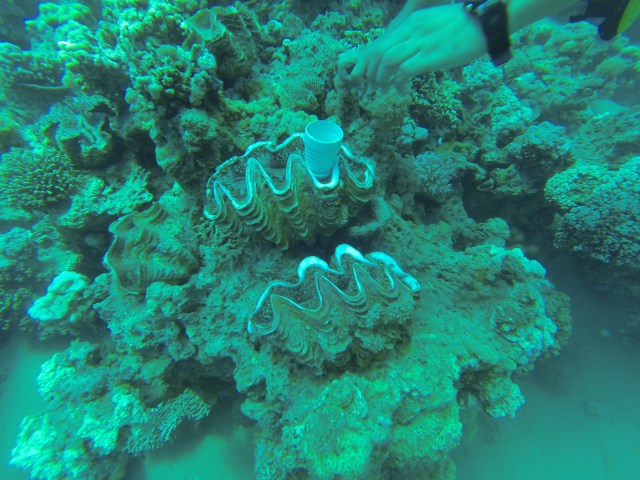
Using a wedge to keep open a Tridacna shell in my Red Sea work. We took a small blood sample with permission of local authorities. This caused no lasting effects to the clams.

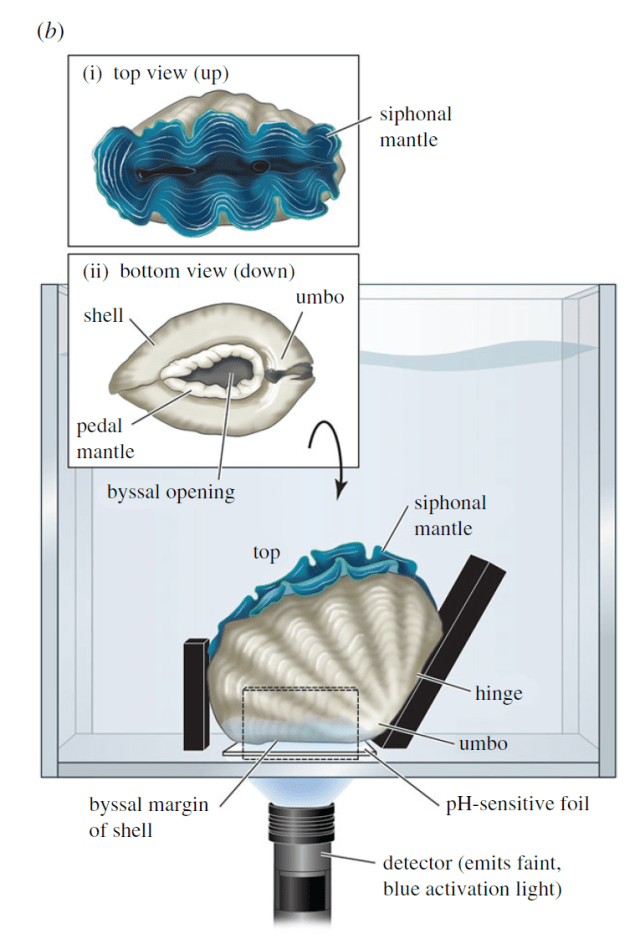
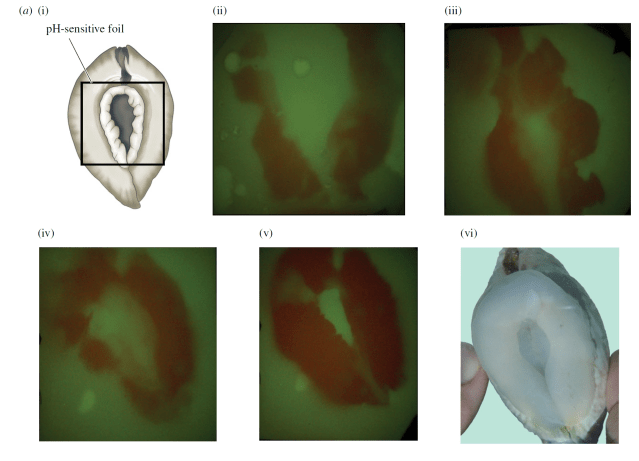
But they needed to prove it, and that was a challenge. Giant clams can be unwilling research participants. I myself have observed this in trying to take samples of their body fluid for my own research. When they sense the presence of a predator, they immediately clam up in their protective shell. I used a small wedge to keep their shells open to allow me to take a sample of their body fluid, but the researchers working on T. crocea needed to convince the clam to place its foot on a piece of pH-sensitive foil, keep it there and do whatever acid-secreting magic allows it to burrow into coral. They would then be able to measure whether it indeed is making the water around its foot more acidic, and by how much.
clam
Diagram from Hill et al., 2018 showing their experimental design.

In what I can only assume was an extended process of trial and error and negotiation with a somewhat unwilling research subject, the researchers found exactly the right angle needed to convince the clam that it was safe enough to try making a coral home. But it was not in coral, instead sitting in an aquarium, on top of a special type of foil that changes color when exposed to changing pH, like a piece of high-tech litmus paper. The researchers discovered that their suspicions were correct: the clams do make the area around their feet significantly more acidic than the surrounding seawater, as much as two to four pH units lower. Where seawater is around a pH of around 8, the clams were regularly reducing pH to as low as 6 (about the level of milk) and sometimes as low as 4.6 (about the pH of acid rain). Small differences in pH can make a big difference in the power of an acid because each pH unit corresponds to 10x more protons (hydrogen ions, H+) in the water. The protons are the agent that dissolves CaCO3. Each proton can take out one molecule of coral skeleton. The clams are dissolving away coral skeleton to make holes with only their feet!

clam2.PNG
Footage of the pH- sensitive foil, with darker areas corresponding to lower pH. The areas of low pH (high acidity) correspond exactly to the “footprint” of the clam!

But what in T. crocea‘s foot allows them to make acid? I know that my foot does not do this, though that would be a very entertaining and obscure superpower. The researchers found the enzymes called vacuolar-type H+-ATPase (VHA) present in great quantities in the outermost cells of the clam’s feet. These enzymes are found throughout the tree of life and are proton pumps that can quickly reduce pH through active effort. Other prior researchers like the influential Sir Maurice Yonge, a legendary British marine biologist who worked extensively with giant clams, had suspected that the clams had used acid but had never been able to detect a change in pH in the seawater around the clams’ feet through more conventional methods. It was only because of new technologies like the pH paper that this research team was able to finally solve this issue. And now, I suspect other groups will want to re-investigate the importance of VHA in their study organisms. Many branches of the tree of life may be utilizing acid-base chemistry to their advantage in ways we never had previously imagined.
What is Conservation Paleobiology?

In undergrad, I felt like my school and internship were training me to be two different types of researcher. At USC, I was majoring in Environmental Studies with an emphasis in Biology. It was essentially two majors in one, with a year of biology, a year of chemistry, a year of organic chem, a year of physics, molecular biology, biochemistry, etc. On top of that, I took courses on international environmental policy and went to Belize to study Mayan environmental history. Meanwhile, I was working at Jet Propulsion Laboratory in Pasadena researching trends in historical rainfall data. I loved both sides of my studies, but felt like neither was exactly hitting the spot of what I would want to spend my career researching. I love marine biology but am not particularly interested in working constantly in the lab, looking for expression of heat shock protein related genes or pouring stuff from one tube into another. On the other hand, I was fascinated by the process of untangling the complex history of rainfall in California, but I yearned to relate this environmental history to the reaction of ecological communities, which was outside the scope of the project.

During my gap year post-USC, I thought long and hard about how I could reconcile these disparate interests. I read a lot, and researched a bunch of competing specialized sub-fields. I realized that paleobiology fit the bill for my interests extremely well. Paleobiologists are considered earth scientists because they take a macro view of the earth as a system through both time and space. They have to understand environmental history to be able to explain the occurrences of organisms over geologic time. I really liked the idea of being able to place modern-day changes in their geologic context. What changes are humans making that are truly unprecedented in the history of life on earth?

But it doesn’t have to be all zoomed out to million-year processes. A growing sub-field known as Conservation Paleobiology (CPB) is focused on quantifying and providing context of how communities operated before humans were around and before the agricultural and industrial revolutions, in order to understand the feasibility of restoration for these communities in this Anthropocene world. Sometimes, this means creating a baseline of environmental health: how did oysters grow and build their reefs before they were harvested and human pollution altered the chemistry of their habitats? I’m personally researching whether giant clams grow faster in the past , or are they reacting in unexpected ways to human pollution? It appears that at least in the Gulf of Aqaba, they may be growing faster in the present day. Such difficult and counterintuitive answers are common in this field.

Sometimes, CPB requires thinking beyond the idea of baselines entirely. We are realizing that ecosystems sometimes have no “delicate balance” as described by some in the environmental community. While ecosystems can be fragile and vulnerable to human influence, their “natural” state is one of change. The question is whether human influence paves over that prior ecological variability and leads to a state change in the normal succession of ecosystems, particularly if those natural ecosystems provide services that are important to human well-being. In a way, the application of paleobiology to conservation requires a system of values. It always sounds great to call for restoring an ecosystem to its prior state before humans. But if that restoration would require even more human intervention than the environmental harms which caused the original damage, is it worth it? These are the kinds of tricky questions I think are necessary to ask, and which conservation paleobiology is uniquely suited to answer.

At the Annual Geological Society of America meeting in Seattle this year, the Paleo Society held the first-ever Conservation Paleobiology session. The room was standing room only the whole time, investigating fossil and modern ecosystems from many possible angles. This field is brand new, and the principles behind it are still being set down, which is very exciting. It’s great to be involved with a field that is fresh, interdisciplinary, and growing rapidly. I look forward to sharing what my research and others find in the future.

No Man’s Sky: An Environmentalist’s Review

No Man's Sky_20170915172052.jpg
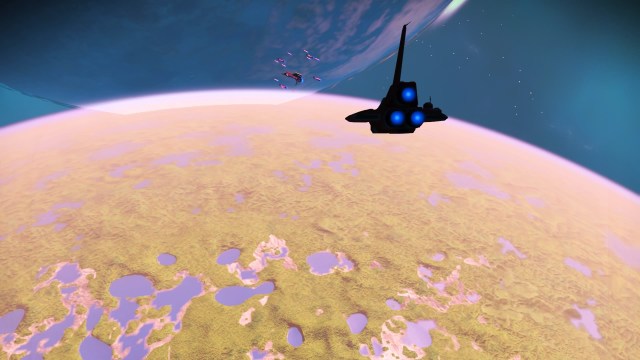
Approaching a beautiful lake-filled green planet, which unfortunately turned out to be covered with hostile robots.

I’m entering the atmosphere of this planet in full knowledge that I don’t have the fuel to lift off again. Normally, this wouldn’t be an issue, but the weather strongly tends towards acid rain and the average temperature is well above 150°F. So when I’m landed, I’m going to have to be quick about harvesting some plutonium (an odd choice for fuel considering its rarity on Earth) to use for my ship’s launch thrusters. When I get out to do so, my life support systems immediately begin using power and I realize my harvesting tool is low on juice as well. I could easily die here, alone and hundreds of light years from the nearest real-life human.

No Man's Sky_20170915164713
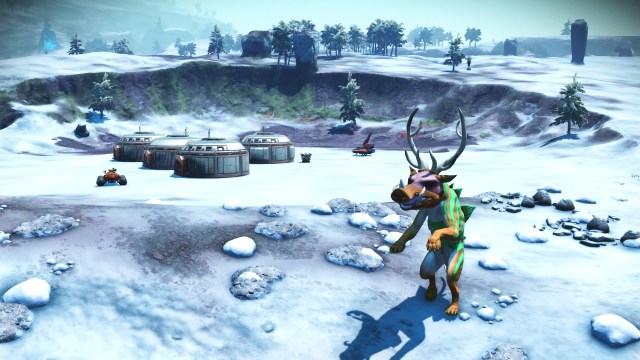
My home base, on a frozen lake on the tundra planet I call home. One of the strange hog-faced, antlered bipedal herbivores is in the foreground.

The main enemy in No Man’s Sky is scarcity. Everything from your space-suit’s life support systems to the hyperdrive you use to travel between planets requires some amount of resources to power and repair. Most planets are not friendly in conditions. They can be frozen to -200 degrees, or +200 or both in a day. Windstorms and acid rain can sap away at your suit’s life support systems. You are truly subservient to the environment in No Man’s Sky.

No Man's Sky_20170917151427
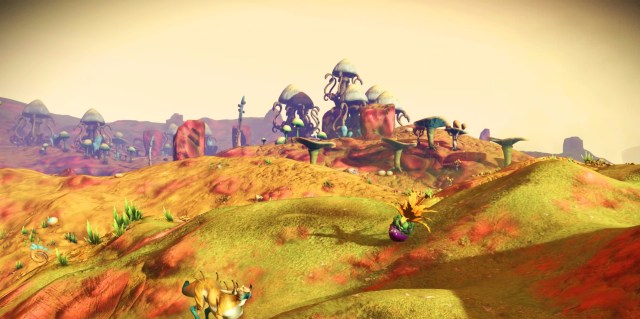
Weird hopping pineapple creature in the foreground in this strange fungus-dominated toxic world, where acid rain quickly sapped my suit’s life support systems.

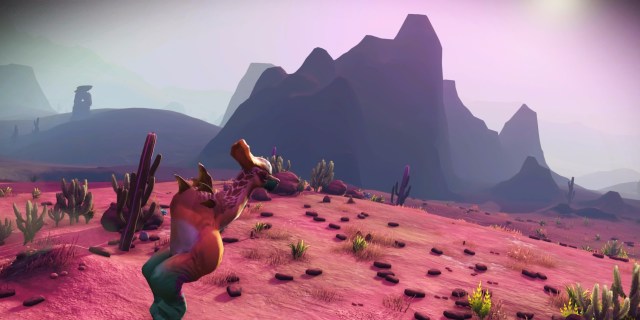
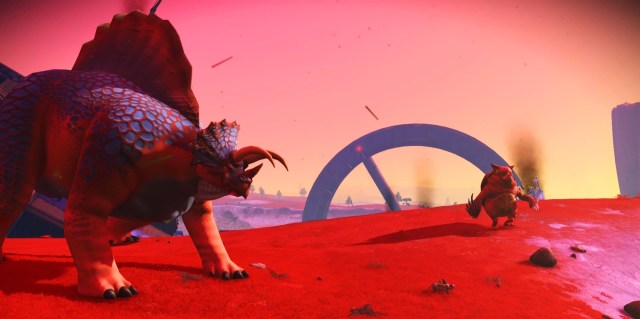
There is a stunning variety of animal and plant life present in the game. All environments and the inhabitants thereof are generated by an algorithm, meaning that the game’s creators can’t be fully aware of all the billions of worlds existing in their fictional galaxy. I have seen flying worms, giant predatory dinosaur-like creatures that chase me on sight, and what can only be described as a hopping pineapple. Each planet is its own ecosystem. Most creatures are uninterested or fearful of you, though a few do seem to chase me or attack in defense. Some attack each other.

No Man's Sky_20170906201211
A creature reminding me of a terror bird on a burning hot desert planet.

To be fair, the ecosystems are somewhat limited. I have yet to see truly giant trees rivaling the redwoods of my own real-life planet. I haven’t seen icebergs or glaciers, because each planet only has one real biome. There are no ice-caps or climate differences on each world, which is disappointing, but typical in science fiction (think Hoth or Tatooine from Star Wars). I haven’t seen a running river, which would likely be too computationally expensive to generate. All oceans and lakes seem to be static at a certain sea level. There are no differences in gravity between worlds, most likely to simplify gameplay. Star systems have planets and moons are not to realistic scale, with planets and moons far closer than they should be, probably for visual effect.

No Man's Sky_20170917162629
Triceratops-like creature and a weird tubby feathered animal, with a crashed freighter in the background.

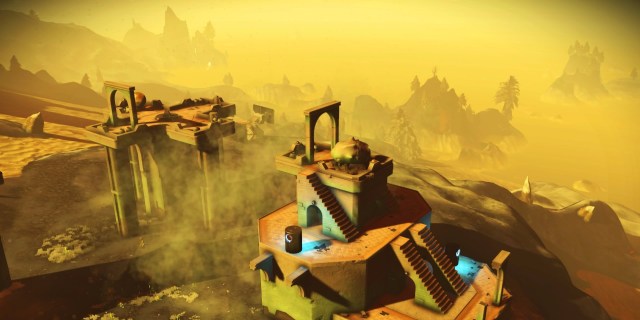
Some of the design limitations are interesting from an environmental perspective. There are orbiting space stations, but no cities to speak of. The sparse planetary settlements have at most a few inhabitants in a few buildings. Did the civilization of this fictional galaxy suffer some calamity which decimated its population? Or did they make a conscious decision to spread out and dismantle their cities in subservience to environmental preservation? Perhaps No Man’s Sky is the most extreme manifestation of the Kuznets curve. As human societies mature and living situations improve, their policies begin to value conservation and public health instead of economic growth.

In this way, the civilization of No Man’s Sky has achieved a near-environmental utopia. The player’s actions, however are interesting in their persistence. When you destroy a plant or harvest resources, they do not return. The changes that you make are truly persistent, and the game does not fill back in the gaps. As I rode my buggy over the surface of my own planet, I felt a twinge of regret running over the strange coral-like creatures in the warm canyons between stretches of tundra, because they will not regenerate.

No Man's Sky_20170917152548
Remnants of a disbanded city? This world was a frozen archipelago with a yellow sky.

No Man’s Sky has been heavily criticized by many players, who felt it didn’t live up to the hype it received before release. Several updates have been added to improve the core gameplay and story in the last year. Regardless of the improvements of the game itself, I find the concept and environmental ideas in the game to be engrossing. As a real-life naturalist, the experience of exploration and nature-watching in a game is also fun, with the added novelty of knowing that every creature I see has likely never been observed before.

No Man's Sky_20170912234442.jpg
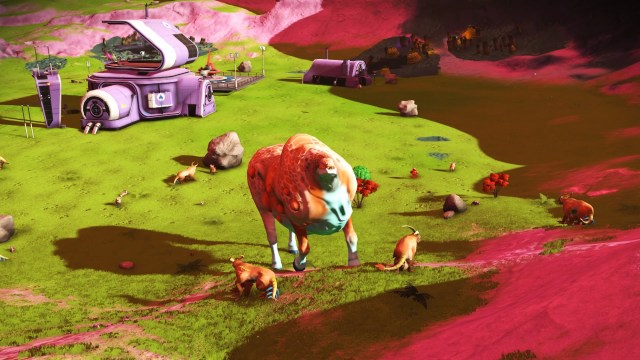
A modern settlement, in harmony with nature.

You are Isotopes (Part III)

This is the third part of a series about isotopes and why they’re useful and interesting to scientists.

Isotopes are the flavors of elements. And because our universe is made up of atoms of elements, every object can be thought of as a delicious smoothie of flavors. Scientists like me are trying to reverse engineer those mixtures and pick out individual tastes, in order to answer questions about our world.

For example, I work with giant clams. These guys build enormous shells made of a mineral called calcium carbonate: CaCO3. That means that every molecule in a clam’s shell contains a calcium atom, a carbon and three oxygens. But as you might know from reading the previous entries in this series, not all of those atoms are the same. They are a mixture of different flavors. We have some carbon-12 and 13 in there (so named for their atomic weights), and some oxygen-16, 17 and 18. Here I’m focusing on the stable isotopes, which are not radioactive and are called “stable” because they’re not going to self-destruct. There are radioactive isotopes in there too, but I don’t use those nearly as often in my work.

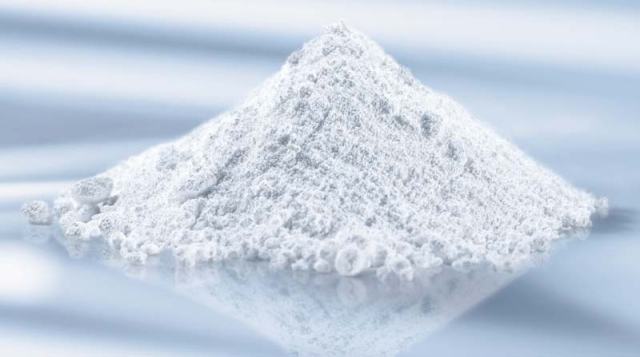
calcium-carbonate-powder-1291396
Officer, this is a pile of giant clam powder, I swear!

I am measuring stable isotopes of carbon and oxygen in my shell samples. To do this, I take a sample of powder, grind it up, weigh it, and put it into tiny little cups. We only need a very small sample: about 50 micrograms of shell material. A typical pill of tylenol contains over 300 mg of active ingredient, so about 6,000 of my samples will fit in a single tylenol regular strength pill, if you suddenly decided you needed a giant clam prescription.

deflect
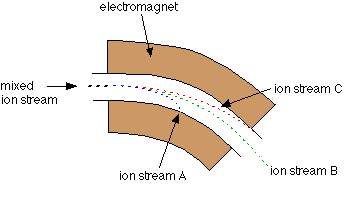
Simplified representation of what’s happening in a mass spec. Source

This tiny sample is one of thirty that I can measure at a time. Those samples are reacted with acid and the CO2 gas that is released as a result of the reaction can be processed by a machine called a mass spectrometer. The mass spec, which is in the Stable Isotope Laboratory in my building, ionizes the molecules in that gas (gives them a bit of electric charge) and then those ions are flung through an electromagnetic field. That beam of charged gas is flung around a curve. That curve is where the magic of making a mass spectrum happens.

Think of the atoms in the CO2 gas from my sample as a bunch of racecars exiting the straightaway and starting around the curve on the racetrack. Only these racecars vary in weights. And the race organizers have greased the track at the curve so that they fling into the sides of the track when they try to turn. As the racecars fling into the sides of the track, they will separate according to their mass. The lighter cars will be able to make it further around the curve before they meet their demise because they have less inertia forcing them forward, whereas the SUVs in the race will barrel forward straight into the sides of the track. At the end, you have a spectrum of racecars poking out of the walls of the track, with SUVs first, then the coupes, then the compact cars and then the motorcycles, which almost made it around the bend, but not quite. Atoms in the mass spectrometer act the same way, and we measure how many collisions happen along each point of the bend in order to not only “weigh” the sample of gas, but also figure out how many molecules of each weight there are!

It turns out that it is quite difficult to measure the exact number of atoms of a particular isotope in gas, however. It is much more economical and feasible for the purposes of most researchers to simply compare our mass spectrum to the results from a standard. Much like there is a literal standard kilogram and standard meter in a lab somewhere in France which is used to keep track of how much mass is actually in a kilogram, there is a standard used by all researchers like me to describe our samples of carbonate.

6852716289_cca3c0a635_b
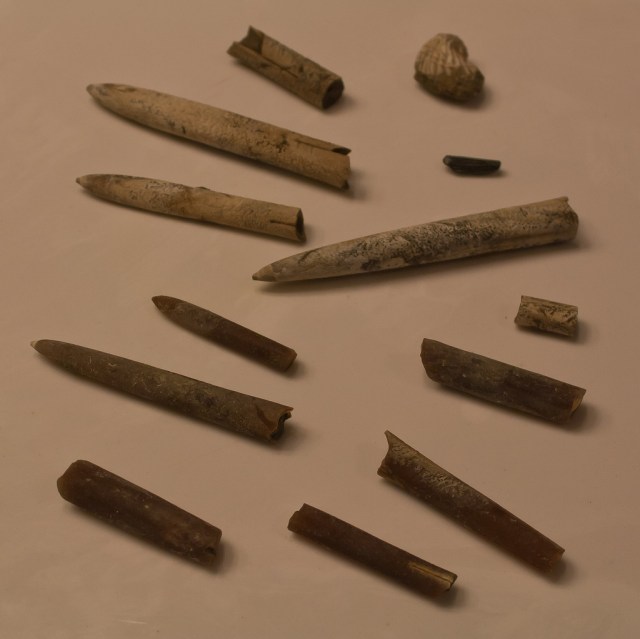
A collection of belemnite fossils from the Pee Dee formation, similar to the one used for the PDB standard. Source

The most common standard used is from a belemnite fossil from the Pee Dee formation in North Carolina. Belemnites are extinct squid-like creatures that formed an internal shell, and one of those internal shells was fossilized, unearthed by a researcher and ground up to become the reference for all other researchers following. Samples of the carbonate in its fossil had more carbon-13’s per unit mass than most other fossil specimens known.  Almost everything you measure will be “lighter” in terms of carbon, because carbon-12 is naturally so common on our planet.

Scientists needed a convenient way to put a number on this, so a simple formula was developed which would allow us to quickly communicate to each other how isotopically “heavy” or “light” a particular sample is in comparison to the Pee Dee Belemnite. The formula isn’t that important for our purposes but the units of its output are in parts per thousand, or “per mil” for short (same idea of how we shorten parts per hundred to “percent”).

The symbol for per mil is a percent sign with an extra little loop at the end: ‰. To make the shorthand complete, we also need to note that this is how much the carbon-13 to carbon-12 isotope ratio of a sample differs from the Pee Dee Belemnite. We do so, we use the Greek delta symbol (δ), commonly used in science and math to represent “difference or change from.” So a sample that has a carbon-13 to carbon-12 ratio which is 20 parts per thousand less than that of the Pee Dee Belemnite is written -20 ‰ δ13CPDB. There are other samples that can be used as well, including Standard Mean Ocean water (SMOW), and the Vienna Pee Dee Belemnite (VPDB). It’s important to note which you are using so that people know the scale of your measurement!

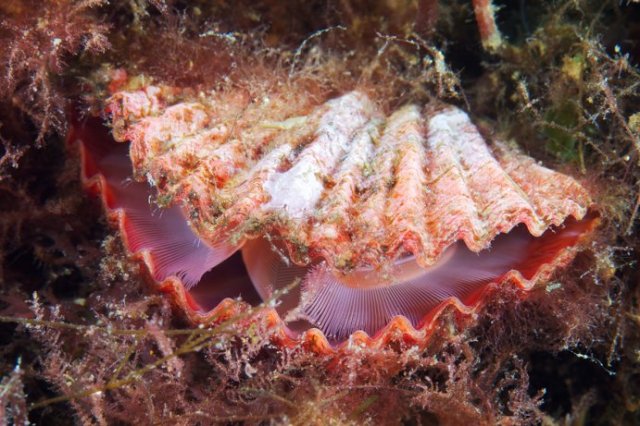
Phew, hopefully that didn’t confuse the hell out of you! Next time, I’ll talk about how different δ13C (and for oxygen isotopes, δ18O) can tell us different details about the life of an organism. Here’s a cute gif of a scallop as a chaser after all that science you read.

Local thief spotted in my backyard

IMGP5312

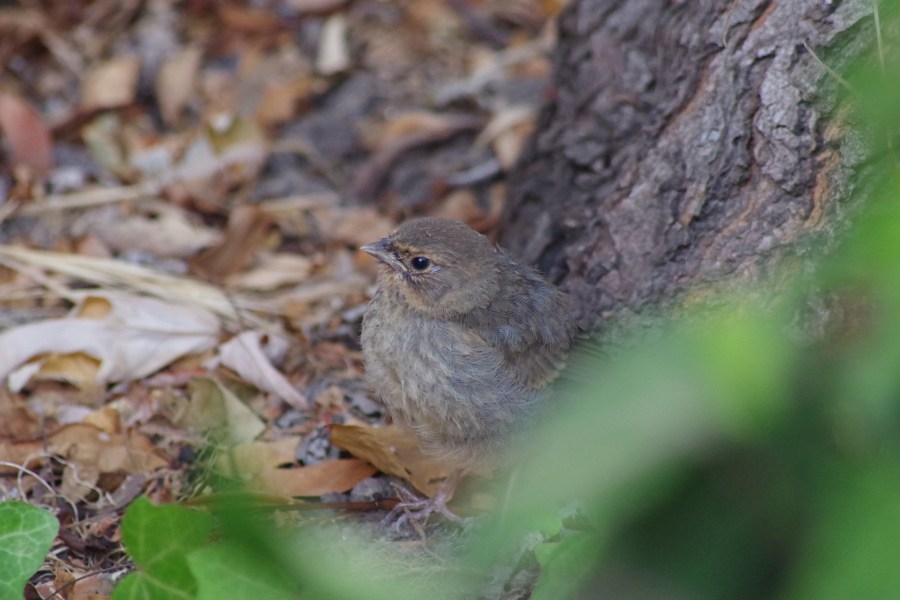
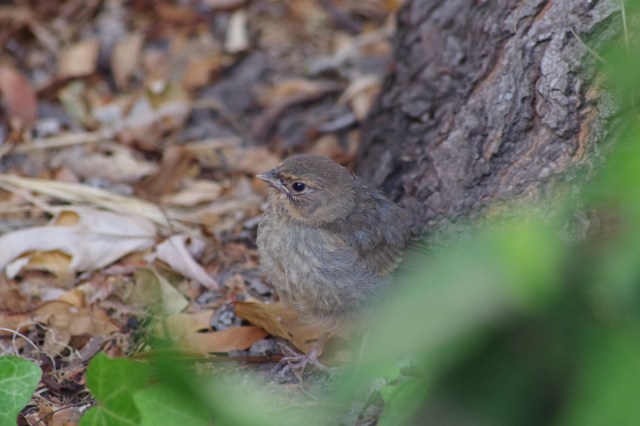
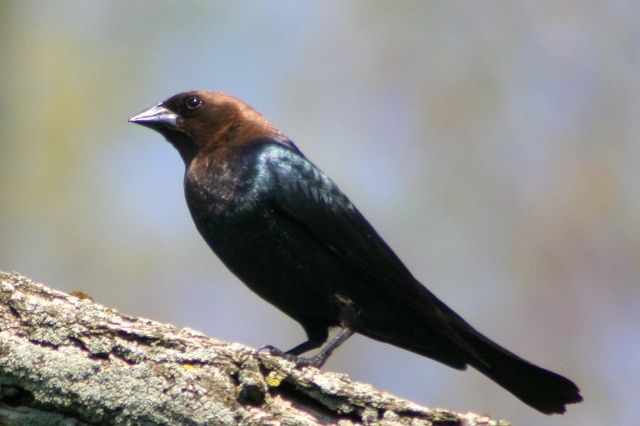
The brown-headed cowbird (Molothrus ater) is a notorious thief. This is merely a young thief which I observed in my yard; it’s still in training, but when it is an adult it will look more like this:

molothrus_ater_2
Source: Wikipedia

It will search out a nest of an unsupecting bird, perhaps a sparrow or other songbird, and it will sneakily lay an egg when the parents are away. The egg will hatch and the other birds will raise it as their own. This practice is known as brood parasitism. The unsuspecting sap that raises the young cowbird will unfortunately feed its own young proportionately less and its fitness will suffer as a result.

Sometimes, the victim figures out that one of the eggs isn’t its own and disposes of it. If the cowbird sometimes returns to the scene of the crime and if it discovers its egg is missing, it may destroy the nest in a darkly Darwinian form of payback called “mafia behavior.” Sometimes, a cowbird egg is an offer you can’t refuse.

A hinged shell does not a clam make (QUIZ)

Bivalves are so named for their two hard shell valves made of carbonate, linked by a soft ligament acting as a hinge. They use a strong adductor muscle to close their shell, and the relaxation of the muscle allows the springy ligament to reopen (you might be familiar with adductor muscles as the edible tasty part of a scallop). In deference to the bivalves, laptops and flip-phones are called “clamshell” designs. That satisfying snap into place when you spring the ligamen… I mean, hinge of a flip phone is an example of human design imitating the ingenuity of evolution. But it turns out that plenty of other members of the tree of life have also stumbled upon the durable idea of a hinged two-valve shell. On the other hand, plenty of bivalves have given up on the classic clamshell look. In fact, the ancestor of all bivalves had a one-part shell, and the hinge evolved later.

Test your knowledge by trying to identify which which pictures are bivalves and which aren’t. Answers and picture sources at the bottom!

A. brachiopod-semenov.jpg

B.IMG_20150808_120740529.jpg

C.

D.

E.

ostracod_waiwhetumontage_b_650.jpg

F.

G.

naticarius_plicatella_3_01_.jpg

H.

0fbc20dc-8bf8-4719-b6fd-06050caf85e3.png

I.

tn_burrowed_jpg.jpg

J.

K.

3630165727_a312f06fbc_o.jpg

L.

kuphus.jpg

ANSWERS

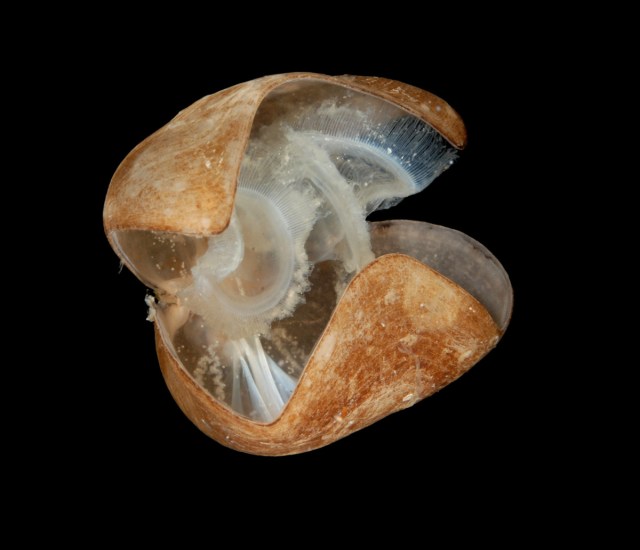
A. This is not even a mollusk, never mind a clam! It’s a different benthic (bottom-dwelling) invertebrate called a brachiopod, which make up their own phylum. To put that in perspective, brachiopods are as far from bivalves on the tree of life as you are (you’re in phylum Chordata)! Yet they evolved a similar look through a process called convergent evolution. If environmental needs are the same, organisms may come to the same solution multiple times. Much like wings for flight evolved independently in insects, birds and bats, bivalves and brachiopods both evolved a hinged shell as a form of protection from predation.

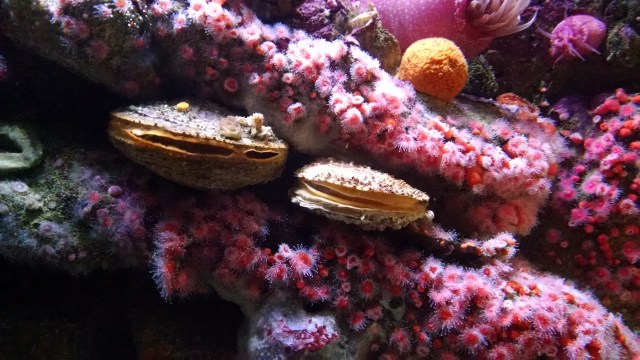
B. These are indeed bivalves: rock scallops commonly found off the coast of California (picture by me of an exhibit at Monterey Bay Aquarium). So similar to the brachiopods in their ridged, hinged shells. Like picture A, these guys specialize in living on hard, rocky nearshore bottoms. Some cultures do apparently eat brachiopods (I have not), but I have little doubt that rock scallops are tastier.

C. These are also bivalves: windowpane oysters. Also known as capiz shell, they are commonly used for decoration and art due to their beautiful, thin semi-transparent shells. A large industry harvests them off the shores of the Philippines, where they unfortunately are growing scarce due to overexploitation.

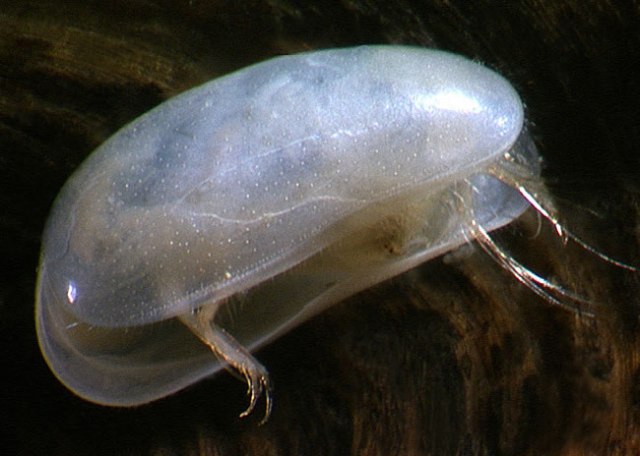
D. These are not bivalves! They are crustaceans called clam shrimp. They have little legs poking out of a hard hinged shell, and have been found in some of the harshest environments on earth, where they wait in extended hibernation, sometimes years, between bouts of rainfall.

E. Not a bivalve. These are another kind of crustacean called ostracods. Like clam shrimp, ostracods live in a hinged shell and swim around with the help of tiny legs, filter-feeding in the water column. Ostracods are everywhere in the oceans and in freshwater, but have undergone an extreme process of miniaturization from their ancestral form, and are now represent some of the smallest complex multicellular life known.

F. These are fossil ostracods. You can see why they are sometimes mistaken for bivalves! The givaway is that one valve is overhanging the other. Most bivalves have symmetry between the two halves of their shell, but ostracods and brachiopods do not.

G. This is a snail, so it’s a close molluskan cousin of bivalves. Some snails feature a hinged lid at their shell opening called an operculum. This operculum can be closed to protect from predators and also seal in water to help land snails from drying out between rains.

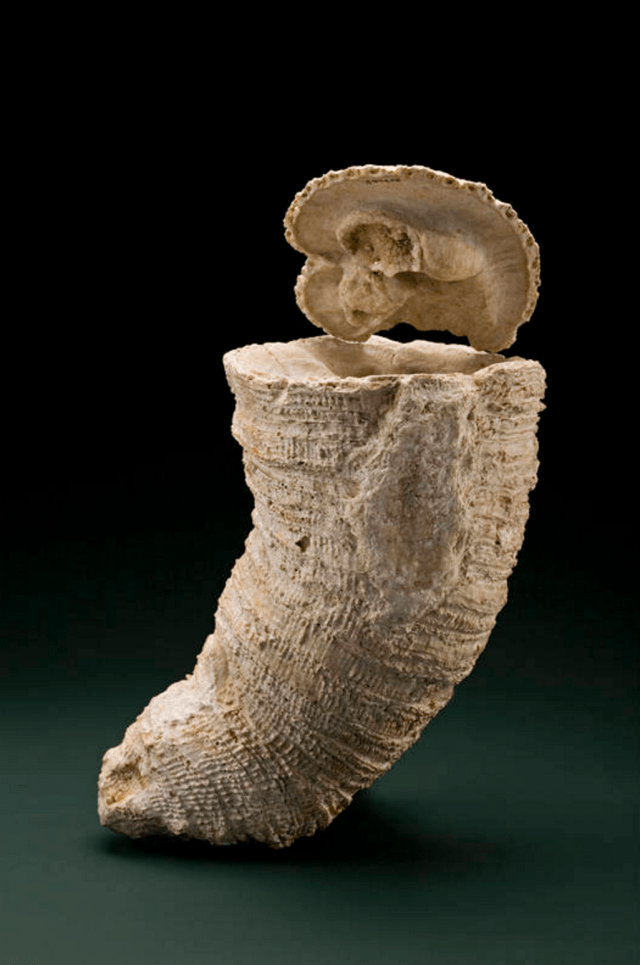
H. This is a bizarre bivalve called a rudist. They were common during the time of the dinosaurs but went extinct during the same extinction, 66 million years ago. While they come in many bizarre shapes, this elevator form (or as I prefer to call them, trash-can form) would have been stuck in the sediment with its small lid poking out at the surface. They could open and close the lid to filter-feed.

I. This is a giant clam, Tridacna crocea! Its shell is hidden, embedded in the coral that has grown to surround it on all sides. Only the mantle (soft “lips”) are exposed, and are brilliantly colored by the symbiotic algae in its tissue. It harvests the sugars made by the algae for food. Despite being embedded in the coral, the clam does have enough room to close and pull back its mantle if a predator approaches.

J. This is a one of the weirdest modern bivalves, called a hammer oyster. These guys are found in the tropics, and the hammerhead part of their shell is actually their hinge, extended at both sides. The hinge provides the surface area needed to “snow-shoe” on top of the soft sandy bottom where they live. Other bivalves sometimes take advantage and live on the oyster like a raft!

K. This is a different brachiopod. Notice the lack of symmetry between the valves which gives it away.

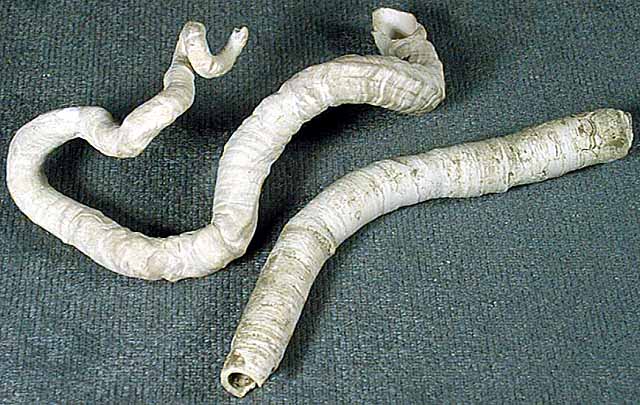
L. This is by far the weirdest modern bivalve, a shipworm. These guys live buried deep within wood and are the number-one killer of wooden ships. They secrete a long tube of carbonate and have largely given up the hinged lifestyle, looking more like worms than mollusks.

You are isotopes (Part II)

This is the second part in a series how isotopes work and how they are scientifically fascinating. Part I here

It turns out a horse is not just a horse, of course. The horse is a collection of atoms, and each of those atoms has a particular isotopic “flavor”, and the collection of isotope types in the horse tells a story.  At the end of the day, scientists are simply interested in reading and telling stories about our world. The tail….er, tale of the horse is written by myriad interacting processes in the universe which influence the horse’s stable isotope ratios.

As I mentioned last time, carbon-12 is much, much more common than carbon-13 is on our planet, due to nuclear fusion of helium-4 in the sun. there are nearly 99 carbon-12’s on earth for every carbon-13. But that’s the base ratio if you took our whole planet, put it in a blender and mixed it all up. If you measured a particular object, such as a horse, it likely does not follow that measure exactly. It has become differentiated from the global average by numerous factors which have altered the isotope ratio.

In isotopic chemistry, fractionation is our name for any process which creates a preference for a certain isotope. If chemical reactions had no bias toward any particular isotope, that 99 to 1 ratio of carbon-12 to carbon-13 would be present in literally everything including you and me. But it turns out that the biochemical dice are loaded- to make the ratio even more biased!

The enormous Rubisco enzyme. No one said photosynthesis was simple. Source: Wikipedia

Photosynthesis is the process by which plants take carbon dioxide gas in the atmosphere and “fix” it to make sugars, which they then use for food. The core enzyme responsible for this carbon fixation is called Rubisco (short for Ribulose-1,5-bisphosphate carboxylase/oxygenase). This enormous molecule is likely the most abundant enzyme on earth. And it turns out that it has a favorite flavor when it comes to the carbon it fixes into sugar.

In fact, the entire plant is discriminating against carbon-13 in several of the processes of photosynthesis. Carbon dioxide molecules diffuse more quickly into the plant’s leaves if they include the lighter carbon-12 rather than carbon-13. “Light” CO2 also dissolves more easily in the plant’s fluids. But the biggest fractionation happens when the Rubisco molecule gets hold of CO2 and breaks it. At each of these steps, the light carbon-12 is more likely to be used by the plant than its heavier siblings. There are various thermodynamic reasons for why this is the case, but the plant is essentially a sieve removing more of those heavy carbons at every step. At the end of the process, the plant is left isotopically “lighter” than the CO2 gas surrounding it that it breathes in.

Because you are what you eat, this means that you are suspiciously carbon-light, and there’s nothing you can do about it. Should have thought of that before you decided to be dependent on plants as the factory for your carbon-based molecules. Next time, we’ll talk about how we measure this, and the kinds of science that can happen once you have a nice consistent measurement to use to compare isotopic ratios between samples.

You are isotopes (Part I)

As you may well know, every element is defined by its number of protons contained the nuclei of its atoms. Hydrogen has one. Carbon has six. This is non-negotiable. But every element can be found in multiple “flavors” known as isotopes. This flavor depends on the isotope’s atomic mass, which is determined by the number of neutrons present in the nucleus of that atom. Neutrons are kind of like atomic ballast. Unlike protons, which have a positive charge, they are neutral, but they do have a mass. Different isotopes have different numbers of neutrons, determining their atomic mass but preserving its particular elemental identity (which would only change if you changed the number of protons present).

Let’s focus on carbon, an element which I think about daily, though every element has isotopes and I could pick many other examples. Hope you’re OK with that, but if not it’s my blog so deal with it. So carbon has been found or created in up to 15 flavors. A whopping 98.9% of all the carbon on Earth occurs as carbon-12 (written as 12C), which has six protons and six neutrons, adding up to an atomic mass of about 12 atomic mass units (amu). It’s the most common because it’s the product of three helium-4 isotopes fusing together, each weighing 4 amu + 4 amu + 4 amu adding to make a single carbon-12. This is a very common reaction in stars, and because you are stardust, it is also the most common flavor of carbon in you.

But we make other flavors by adding neutrons. You can make carbon-13 with six protons and seven neutrons. This is a rare flavor, accounting for almost all of the remaining 1.1% of carbon found on earth. It is also the only other stable form of carbon. I note that it’s stable because all the other 13 known flavors of carbon are unstable, and many are only known from the laboratory because they are too short-lived to be found in the environment.

It turns out that if an element’s atomic nucleus is too light, or too heavy, that element will become radioactive and decay with time, continuously firing off pieces of itself out of frustration. Carbon-14 is the most famous and common of these radioactive isotopes of carbon, and it still only makes up 1 in every million million atoms of carbon on earth. Carbon-14 fires off particles and decays into nitrogen-14 because it is more stable orientation for the protons and neutrons to be in, for physics reasons I won’t get into here.

Carbon-14 does this in a very predictable, methodical pattern. It’s difficult to predict when an individual carbon-14 atom will do this, but if you take any object you have just created, like a piece of pottery, for example, you can be pretty much certain that in 5,730 years, only 1/2 of the carbon-14’s will still be present. The rest decided they’d rather be nitrogen-14. This is non-negotiable and you’d best learn to accept it. But it means that we can sniff out the age of a lot of interesting mysterious objects if we know the amount of carbon-14 present in the environment (which we often do) and measure the amount present in the object today. You have some restrictions. For example, for objects that are too old, too little of the carbon-14 would be left for you to measure accurately.

Carbon-14 dating, often just called radiocarbon dating, is very useful in figuring out the ages of stuff, but I’m mostly interested in the stable isotopes of carbon. Next week I’ll talk about why that is, and what kind of questions I can answer by looking at amounts of different stable carbon isotopes in a sample. See you then!