An open letter to Stephen Colbert from a clam expert

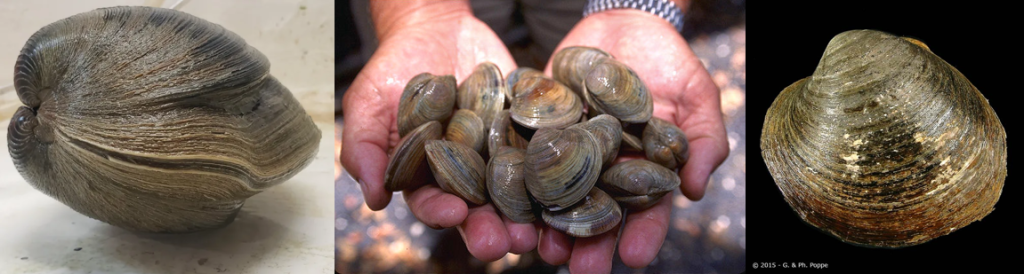
Abraclam Lincoln (photo source) next to a handful of Mercenaria mercenaria, a closely related kind of quahog (photo from Wikipedia), illustrating that Abraclam is indeed a chonker. To the right we have Arctica islandica, the famous long-lived clam, illustrating how hard it is to tell these clams apart without specialized training (photo from conchology.be).

Recently, a bit of an amusing clamfuffel arose when the Gulf Specimen Marine Lab, a research institute in Florida, began posting about a supposedly 214-year-old clam they named “Abraclam Lincoln”, in honor of potentially sharing a birth year with Honest Abe. The story went viral, and while some of their clammy claims turned out to hinge on flawed assumptions about how clams can be aged, it was still a worthwhile opportunity to communicate about the wonderful world of bivalves with people.

I was particularly impressed with how GSML went out of their way to correct the record as more info came in. Long story short, Abraclam is not the long-lived ocean quahog Arctica islandica (more on them below), but in fact a specimen of the southern quahog Mercenaria campechiensis, which lives along the Gulf coast and grows much more quickly than A. islandica. So the large clam they found was likely more like 40 years old, which is not too unusual for this species, rather than two centuries old. It also makes much more sense to find Mercenaria in Florida than Arctica. Additionally, external shell growth lines in Mercenaria are known to not be reliable for aging the species. The shell would have to be cut open to view internal lines to figure out how old Abraclam really is, which would require killing them. Fortunately, they released the clam rather than cut them in half for science.

Known range of Arctica islandica as a heatmap, compared to location of GSML on the Florida Panhandle. Source: OBIS
Slice through a Mercenaria campechiensis shell. The shell is lit from behind to show the annual growth lines. From Moss et al. 2021, written by fellow clam man David Moss, a friend of mine!

For what it’s worth, I still think Abraclam is an interesting specimen of M. campechiensis– they have a huge scar in their shell that would be interesting to learn more about (maybe they were hit by a dredge in their youth, healed the break and recovered to reach a ripe old age), and an unusual undulating margin at the edge of the shell that could be a deformity reported in the past literature for this species. Sometimes, scientists are wrong the first time, but we’re open about how we’re wrong, and everyone ends up learning more than we would have known otherwise.

So far so good. Then a bull had to wander into this delicate china shell with the entry of Stephen Colbert into the debate. I’ll let Stephen speak for himself, but needless to say, after his rant I feel a need to respond:

Before I dig into this clambake, Stephen, kudos to you for covering the whole story and not just the initial incorrect information. You addressed all the big inaccuracies, from the size not being tremendously out of the ordinary, to the incorrect species ID, to the incorrect age. Maybe it’s not so bad that people are getting their news from comedians rather than the news media these days! But while there were definitely some pearls of wisdom within your monologue, I have to point out some misconceptions here.

“The only thing more heartbreaking than the lies we were fed in this story…is growing up to be a clam expert!”

– Stephen Colbert

This is just plain false, since I’m not heartbroken, because clams are frickin’ awesome. Clams are way cooler than you or me, and that means by extension that the people who study them are pretty cool and interesting too (not really referring to myself. I’m just an eclamgelist along for the ride). So here are three facts about big old clams, and information about the clam experts who discovered these facts!

The ocean quahog lives to >500 years old!

Arctica islandica shell I saw on the beach in Massachusetts. This individual was likely several decades old when it died based on its fairly large size!

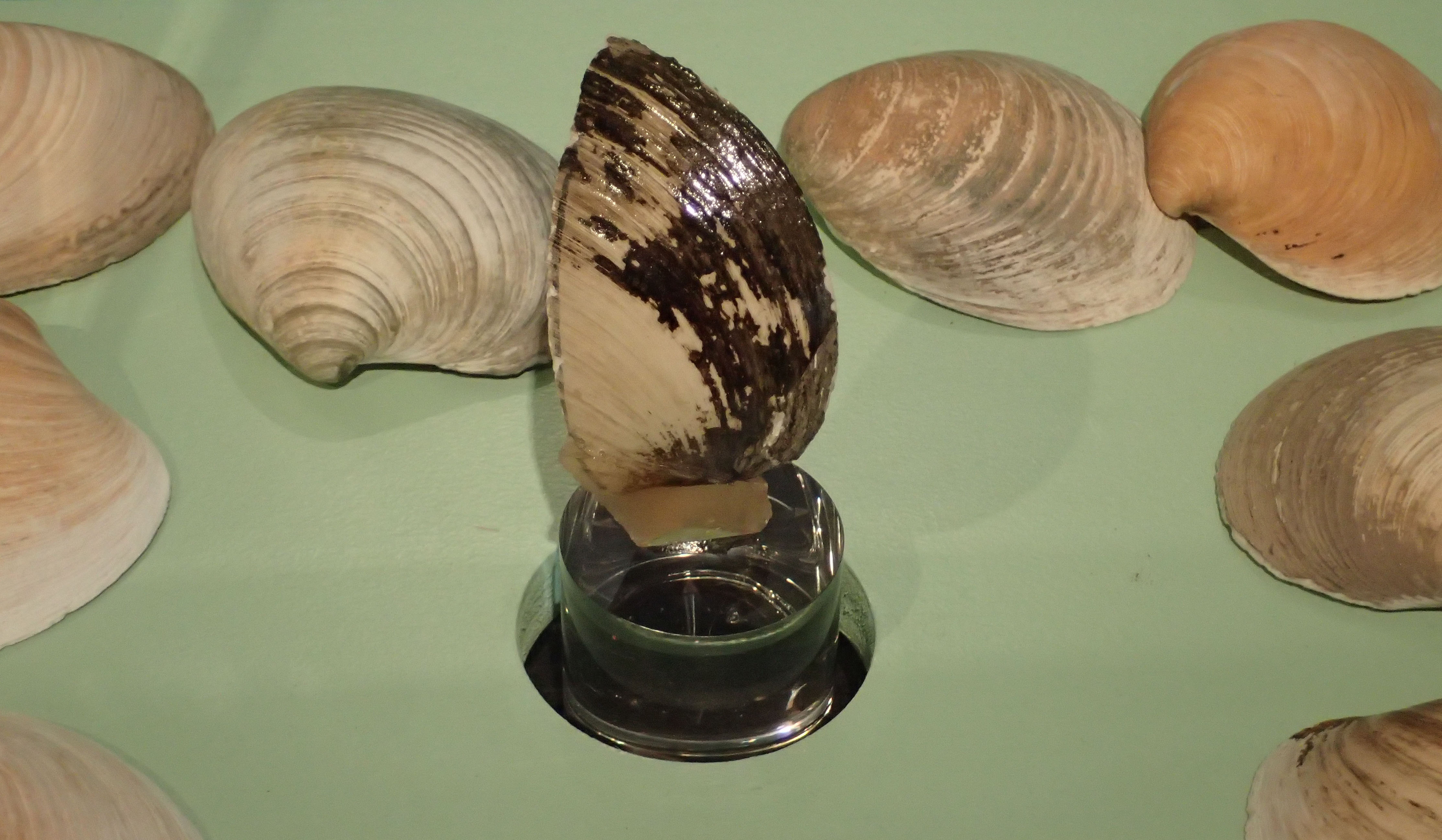
The ocean quahog Arctica islandica (which Abraclam was initially misidentified as) is tremendously long-lived, one of the longest-lived animals on earth! It has been confirmed to live to at least half a millenium! One individual caught off the coast of Iceland was aged to ~507 years by counting tiny growth lines in its shell via microscope, combined with radiocarbon dating. This clam was named Hafrún (meaning “ocean mystery” in Icelandic), but is sometimes called Ming due to it being born in the Ming dynasty of China. So put that in your Ming vase and smoke it Colbert!
https://museum.wales/media/48824/Ming-blog1image1.jpg
Part of the shell of Hafrún, which was cut open to determine its age via internal growth lines. Source: Museum Wales

Several scientists worked on aging Ming, but Alan Wanamaker at Iowa State was a lead author on the original work. He uses growth lines in the shells of many clam species as records of climate change and is generally one of the nicest people you could have the opportunity to meet.

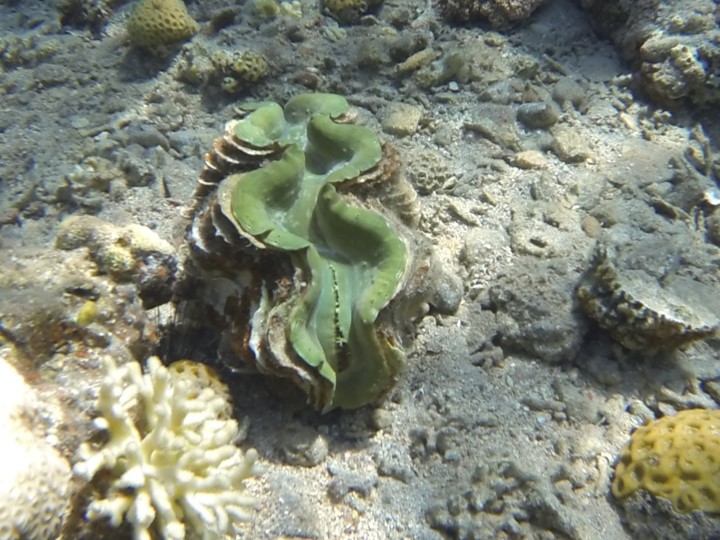
Tridacna gigas grows to over 4 feet long and hundreds of pounds!

Large specimens of giant clams that are around 3 feet long at the California Academy of Science collection.
The author sitting in a scale model of Tridacna gigas at the Monterey Bay Aquarium

Abraclam might be only 6 inches long (which is respectable as he/she is quite girthy; length isn’t everything, Stephen!), but there are other types of clams that are bigger than one Colbert in mass. The giant clam Tridacna gigas grows to over 4 feet long and weighs hundreds of pounds. They live on tropical coral reefs and use the power of the photosynthetic algae in their flesh to speed up their growth. So basically these clams are bigger and way more interesting than you, Stephen, since they get to go out and tan in the sun for lunch while you have to gobble down a slice of pizza.

Mei-Lin Neo at University of Singapore is considered the world’s leading expert on Tridacna, and has done more than almost anyone I know to describe all twelve currently known species of giant clams found around the world. She’s a tremendous advocate for giant clam conservation and gave an outstanding TED talk about them to boot. You should have her on your show to be honest.

Geoducks: they looked like that first!
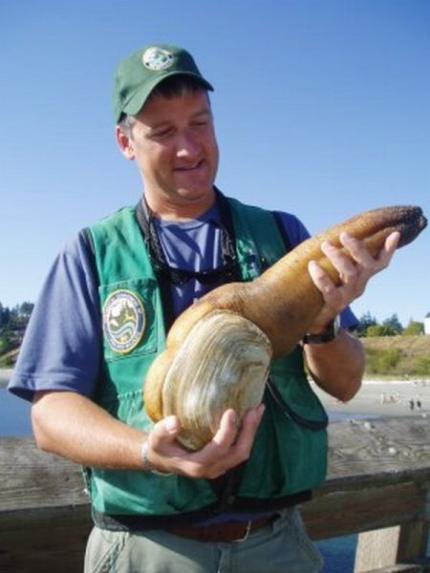
WDFW employee holds large geoduck
A 6.5 pound geoduck and admiring Washington Department of Fish and Wildlife Volunteer (Source)

Speaking of girthy, long clams, I’d be remiss not to mention the geoduck, Panopea generosa. Pronounced “gooey-duck,” these clams looked like this long before any part of human anatomy existed, having been around in various forms since at least the Jurassic. They have a long siphon that they use like a snorkel when they dig deep in the mud, and they can live for almost 200 years.

Brian Black at the University of Arizona is an expert in using their shells as a record of climate change. He was part of a group that was able to stitch together the growth line records from multiple geoduck shells to make a continuous record of climate change going back to 1725. Seems appropriate to note that 1725 was the year that Casanova was born…a man who may have channeled some qualities of geoducks.

Local experts on Abraclam

I’d like to mention two of the experts who corrected the record about Abraclam Lincoln and provoked Stephen’s attack in the first place. Dr. Dan Marelli wrote an op-ed correcting the record on how Mercenaria clams are aged for the Tallahassee Democrat. He’s an expert scientific diver and has published papers on clams ranging from endangered scallops to invasive mussels. Scientific diving is crucial to understand clams in their native environment, and to assist in their conservation. If I had to choose who had more interesting stories at the bar, it’d be an easy decision to listen to the swashbuckling diver over the late-night TV host!

Dr. Edward Petuch at Florida Atlantic University reached out to GSML to make sure they knew the correct species ID for Abraclam. He is well-known for his work describing the change in ecology of mollusks in Florida and the Caribbean over the last several million years. GSML expressed interest in working with Dr. Petuch in the future, and I can confirm that I’ve had fruitful scientific collaborations start when other scientists have reached out to me about how I was totally, embarrassingly wrong. Being wrong in science is part of the job, and that’s why I’m glad this Abraclam story came out in the first place.

“So what does your son do? He’s a marine biologist. Does he work with dolphins? …I’m gonna say yes.”

-Stephen Colbert

To close out, I’d like to address Stephen’s assertion that my mom isn’t proud of me for being a clam expert. Stephen, I’ll have you know that my mom is the most enthusiastic patron of my clam science. She reached out to the local paper to anonymously tip them to interview me about my clam work, had me give a speech about clams at the local women’s group she’s a part of, and when I defended my PhD thesis, she made t-shirts to commemorate the occasion. I can confidently say I wouldn’t be Dan the Clam Man if it weren’t for her support. Thanks Mom!
What good is a clam?

Picture1

When I mention to people that I study bivalves, I can sometimes sense from their facial expressions that they are secretly asking “why?” While clams are perfectly content to keep doing what they’re doing without being thanked, I think it’s important to enumerate all of the ways they make our world more livable and functional.

vaughn.PNG
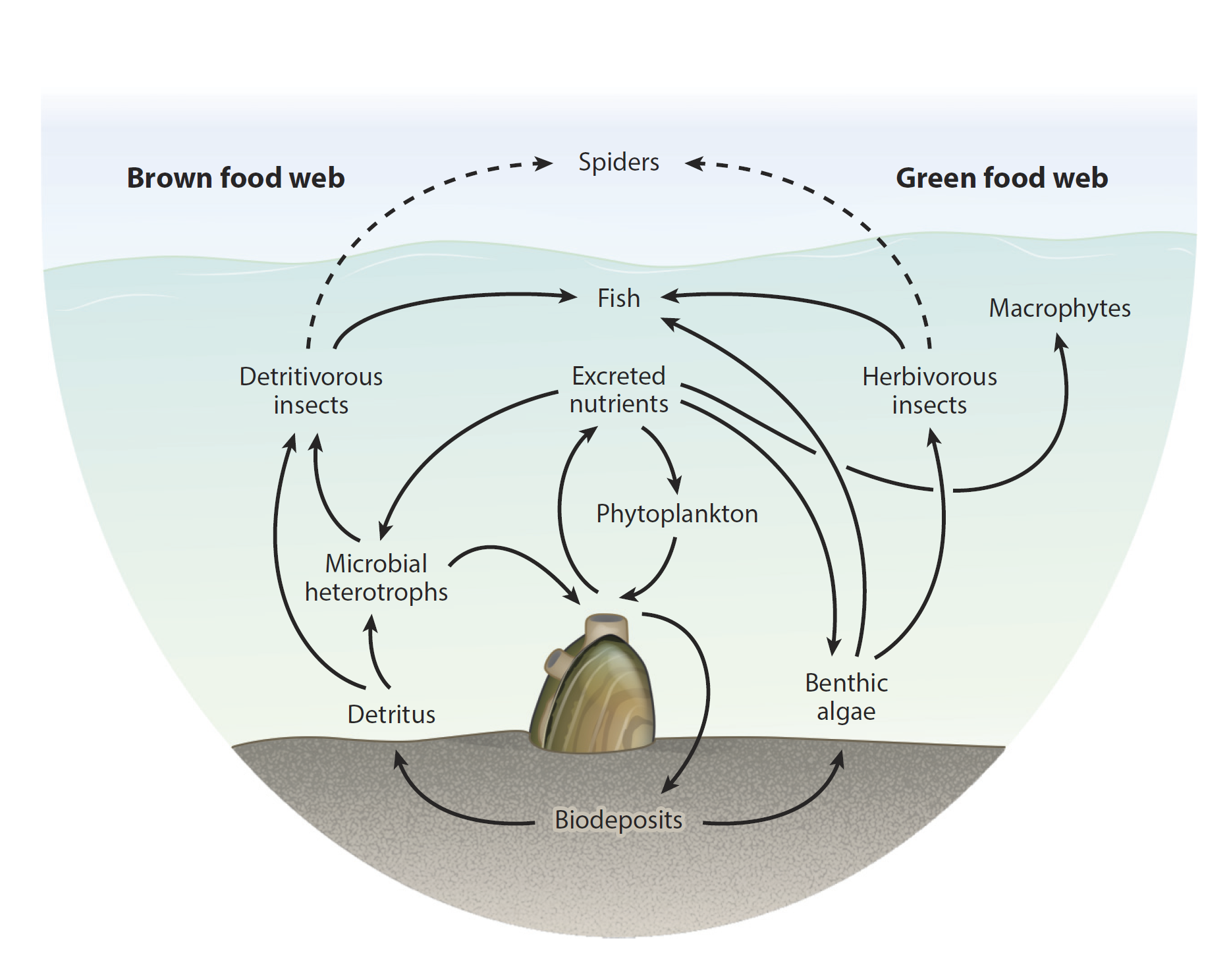
Various roles that freshwater mussels can play in their local food webs (Source: Vaughn and Hoellein, 2018)

Bivalves are ecosystem engineers. While they may seem rather stationary and not up to much at any particular time, they are actually always working to actively maintain their habitat. The majority of clams are filter-feeders, meaning that they use their gills to gather particles from the water column for food. Some of these particles are ingested as food and later pooped out. Some inedible particles are discarded immediately by the clam as “pseudofeces”. Both mechanisms serve as a bridge between the water column and the benthos (the sediment at the bottom). In this way, clams are engines that take carbon fixed by algae floating in the water and transfer that material to be stored in the sediment. Their bodies also act as nutrition to feed all sorts of animals higher on the food chain like sea stars, lobsters, seabirds, sea otters and humans that depend on bivalves as food. They are literally sucking up the primary productivity (algae) to be used by the rest of the food chain.

03-20ae43y.jpg
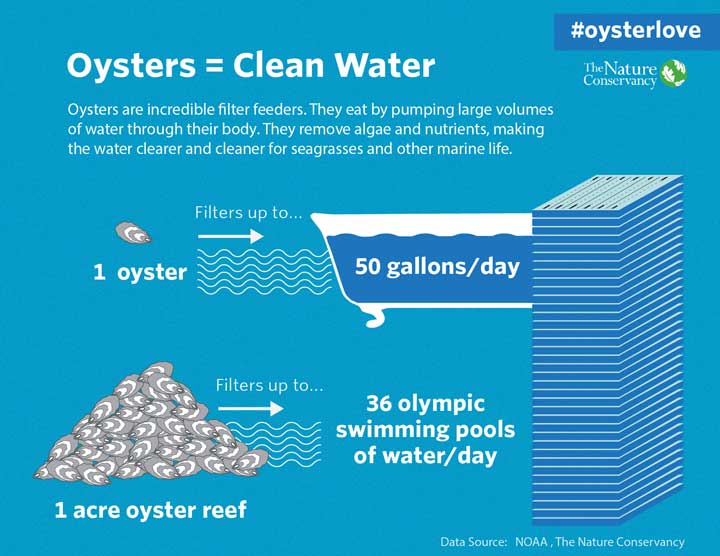
The filtration rate of oysters. Graphic from The Nature Conservancy

Different clam species vary in their precise filtration rate (how fast they can inhale and exhale water, filtering the particles within), but it is prodigious. Some freshwater mussels, for example, can pick-through 1-2 liters of water per hour for every gram of their own flesh. Since these individual bivalves can weigh over 100 g, they are capable of picking the food out of an immense quantity of water. In doing so, bivalves help improve the clarity of the water column, allowing more sunlight to reach deeper into the water body (the photic zone), providing more energy for additional photosynthesis to occur. While there are examples where invasive bivalves such as zebra or quagga mussels take this phenomenon too far, in well-functioning ecosystems, the filtration activity of clams helps improve the productivity of the community.

Oystershells.jpg
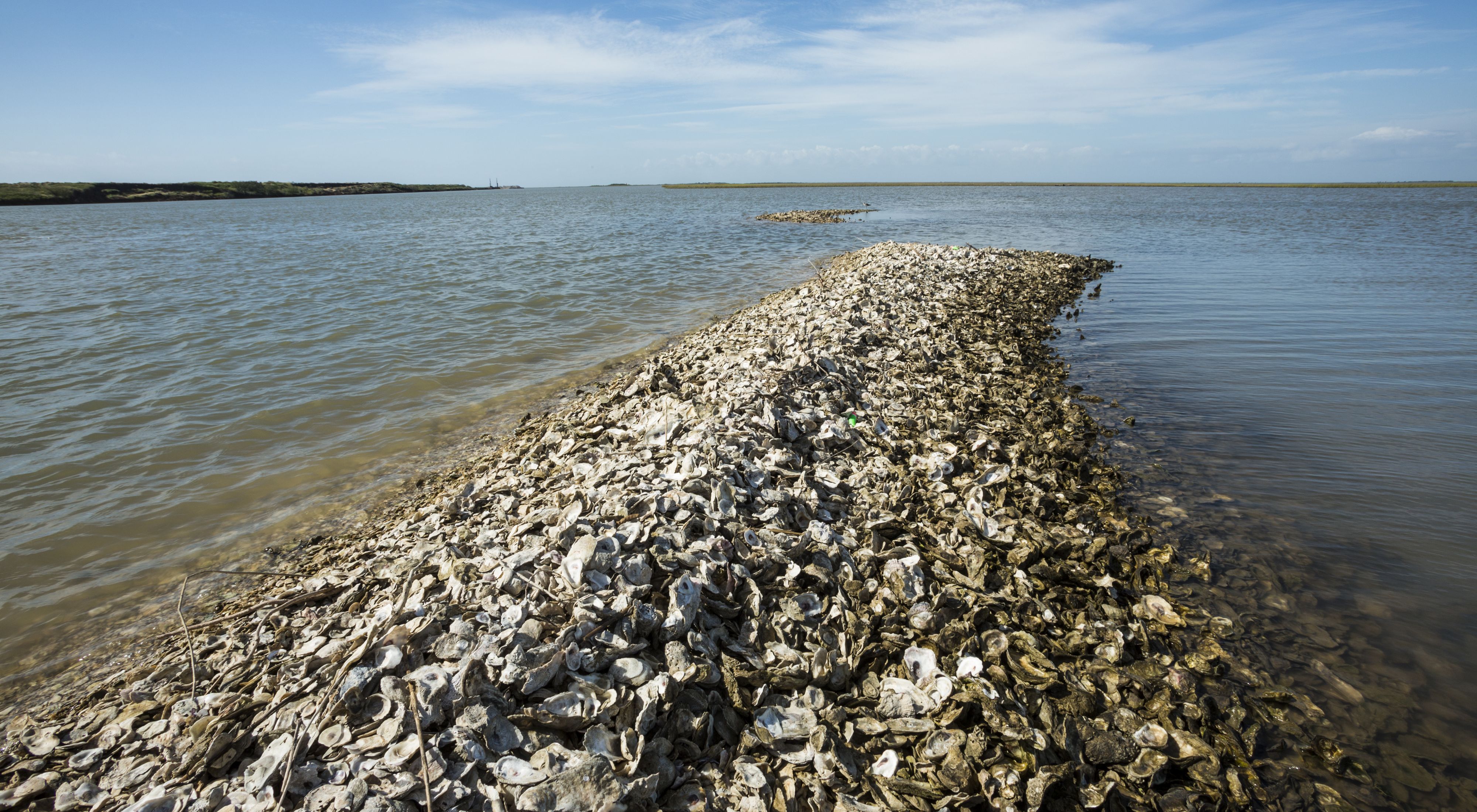
An oyster reef. Source: The Nature Conservancy

Bivalves help make sediment through their filtration of material from the water column, and they also engineer and manipulate the sediment directly. Some bivalves, like oysters, are able to make huge mounds of dirt that serve as habitat for all sorts of life, increasing the diversity of the community. They do so both by excreting sediment, and also by passively trapping it between the shells of neighboring oysters (“baffling”). By doing so, they reduce rates of coastal erosion and increase the biodiversity of wetlands. For this reason, New York and other communities plan to seed oyster reefs to help fight sea level rise and reduce the threat of storm surges like the one that occurred during Superstorm Sandy.

bioturb.PNG
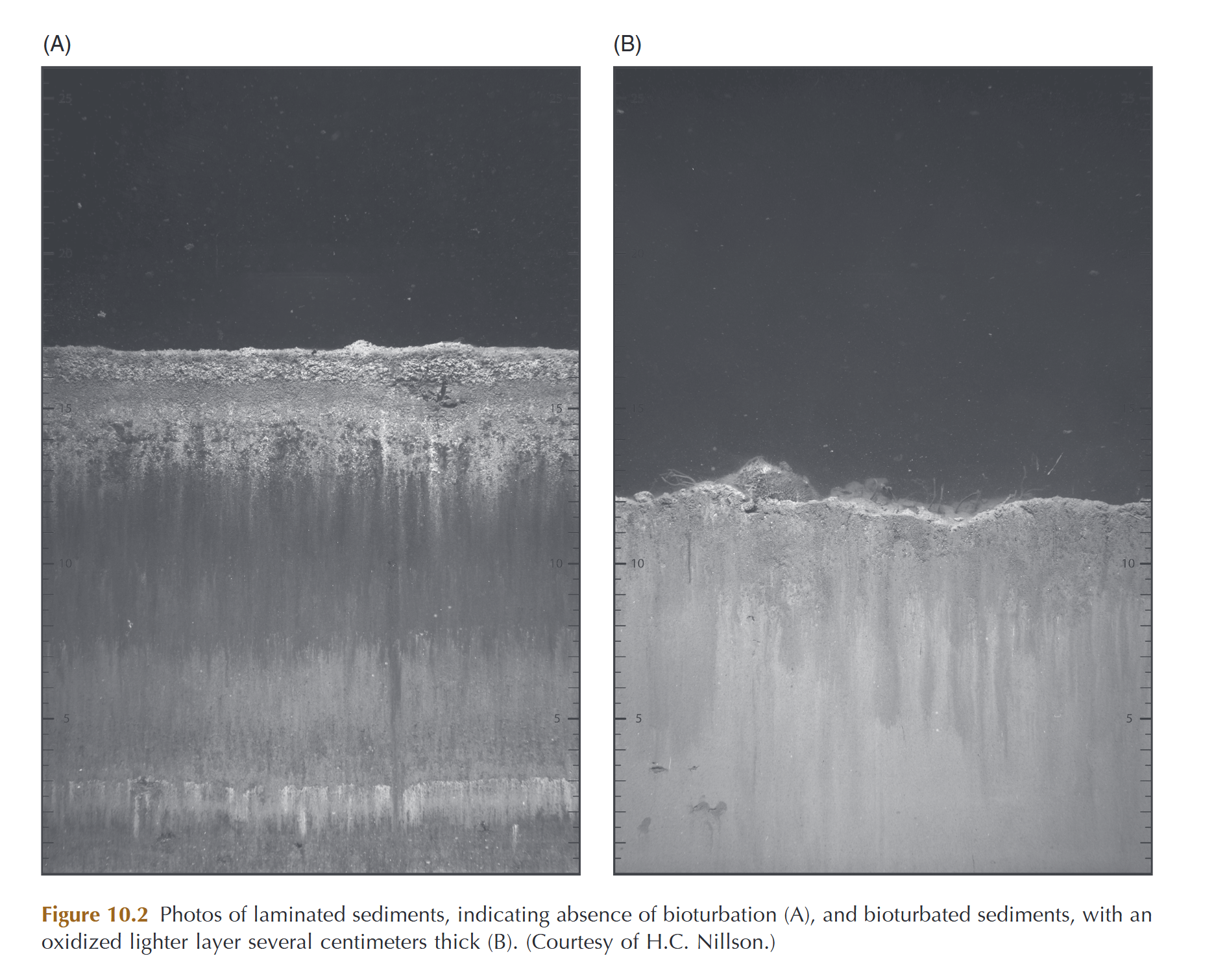
Comparison of sediments without bioturbation by digging animals, and with. Notice how the non-bioturbated sediment is layered and darkened due to activity by anaerobic bacteria, while the well-oxygenated, mixed sediment is light all the way through. From Norkko and Shumway, 2011

Other “infaunal” bivalves (burrowers) help to aerate the sediment through their tunneling, bringing oxygen deep under the surface of the dirt. This mixing of the sediment (also called bioturbation) ensures that nutrition from deep under the sediment surface is again made available for other organisms. Some bivalves can bore into coral reefs or solid rock, creating burrows which serve as habitat for other animals and can free up minerals for use by the surrounding ecosystem. Helpful shipworms assist in eating wood, assisting in returning nutrients stored in that tissue to the ecosystem as well.

https://media.springernature.com/original/springer-static/image/art%3A10.1007%2Fs00338-005-0494-2/MediaObjects/338_2005_494_Fig1_HTML.jpg
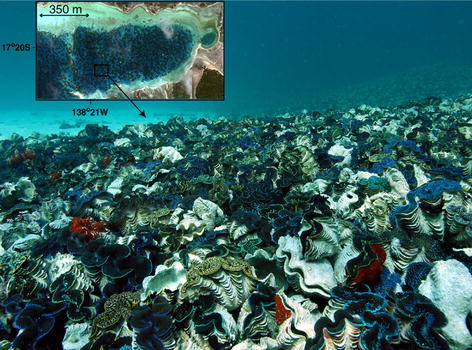
Enormous grouping of giant clams in a lagoon in French Polynesia. From Gilbert et al., 2005

Bivalves of course are also famous for their shells, and this activity also provides habitat to sponges, snails, barnacles and many other encrusting organisms specially adapted to live on bivalve shells and found nowhere else. Giant clams are the most legendary “hypercalcifiers,” and in some regions like New Caledonia can rival reef-building corals in terms of biomass. In areas where soft-bottoms dominate, bivalves like hammer oysters, adapted to “rafting” on the quicksand-like surface of the soft sediment, can assist by providing a platform for other animals to take refuge. In the deep sea, bathymodiolid mussels and other chemosymbiotic bivalves can feed directly on the methane and sulfur emitted from hot vents or cold seeps with the help of symbiotic bacteria, creating dense reefs which provide food and habitat for all sorts of life. Even once the clams die, their shells can continue to serve as homes for other creatures.

redcrab-600.jpg
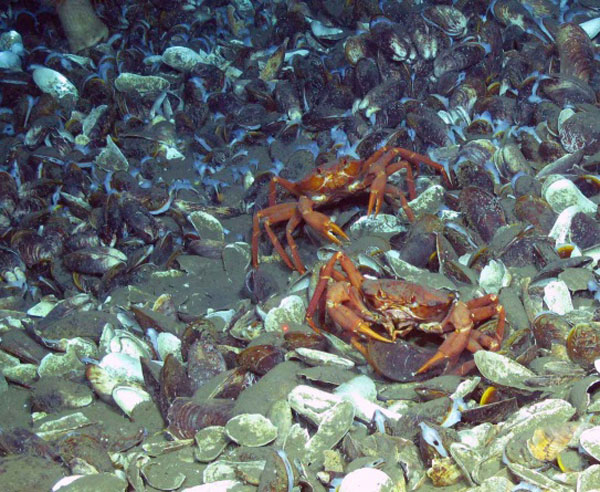
Crabs feeding on Bathymodiolus in the deep sea (NOAA)

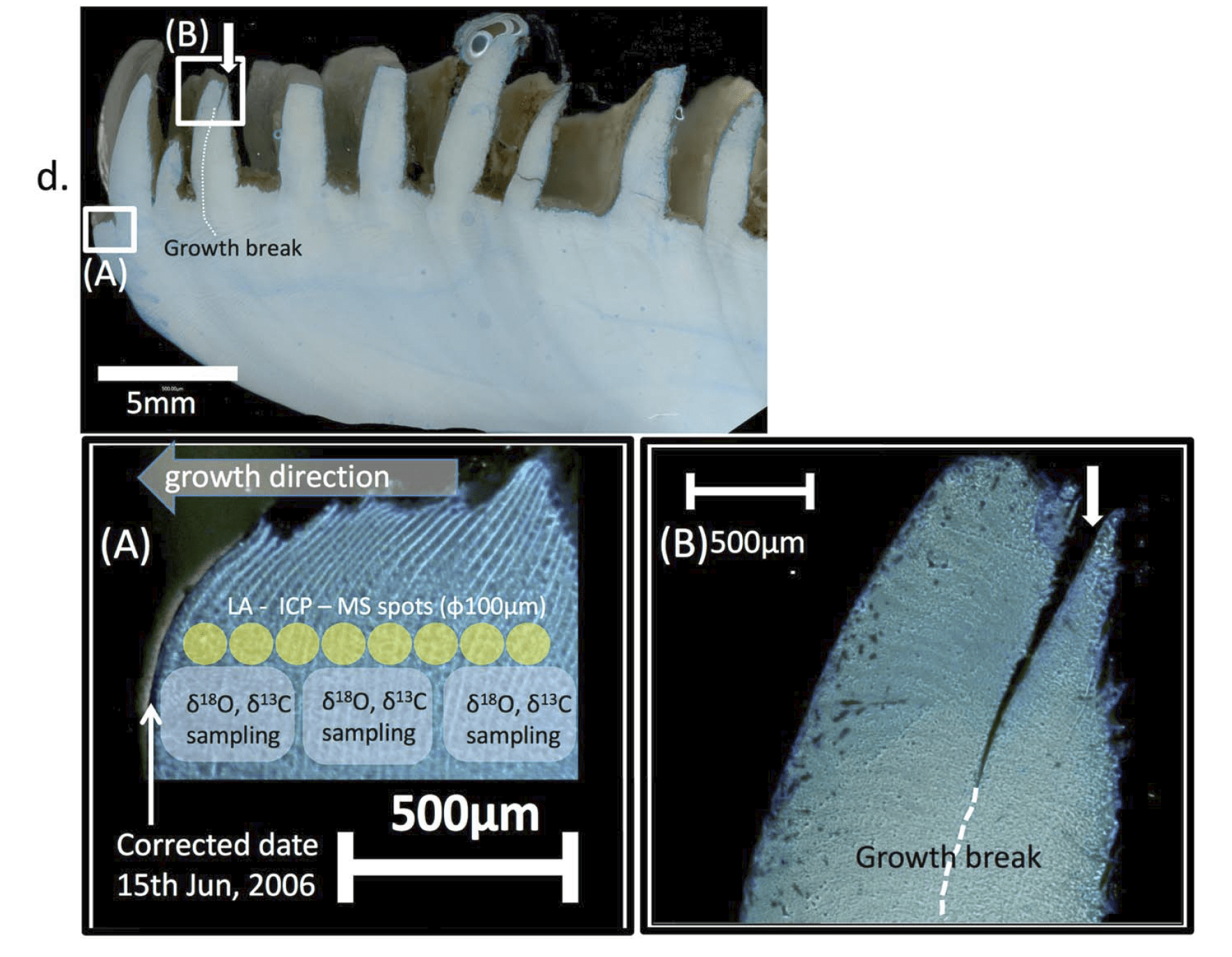
The shells of clams provide great scientific value in understanding our world. Much like tree rings serve as a record of environment thousands of years into the past, growth rings in clam shells serve as a diary of the animal’s life. These rings can be yearly, lunar, tidal or even daily in rhythm, with each ring serving as a page in the diary. The chemistry of those “pages” can be analyzed to figure out the temperature the clam experienced, what it ate, whether it suffered from pollution, and even the frequency of storms! The study of rings in the hard parts of animals is called sclerochronology, and it’s what first drew me to study bivalves. I was so fascinated by the idea that our beaches are covered with high-resolution records of the ocean environment, waiting to be cut open and read.

komagoe.png
This giant clam shell recorded an interruption in the animal’s daily growth caused by a typhoon! From Komagoe et al., 2018

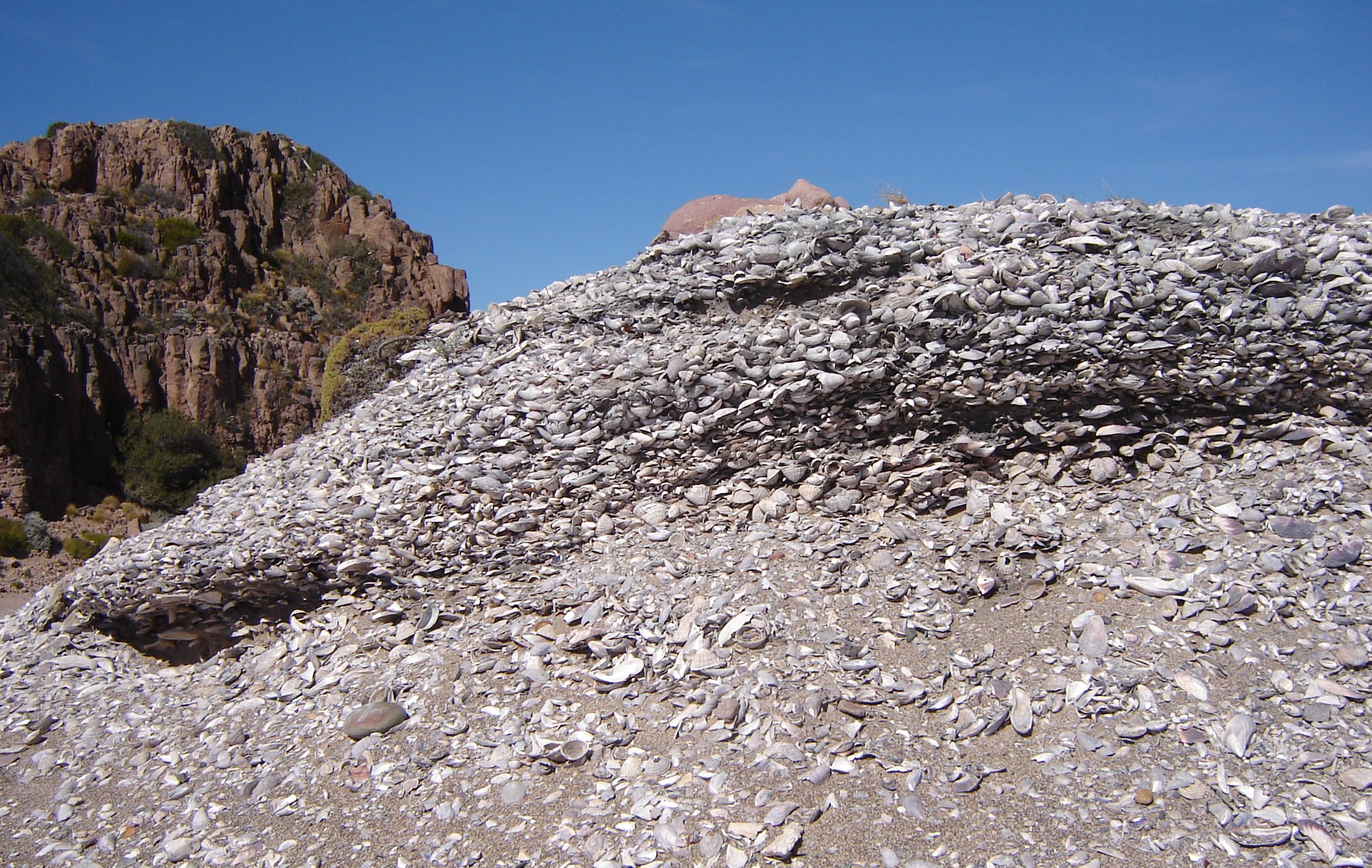
While they don’t owe us anything, clams provide a lot of value to humans as well, serving as a sustainable and productive source of food. Humans have been farming bivalves for thousands of years, as evidenced by “oyster gardens” and shell middens which can be found all over the world. Particularly in seasons when food is scarce on land, native peoples could survive by taking advantage of the wealth of the sea, and bivalves are one of the most plentiful and accessible marine food sources available. But they aren’t just the past of our food; they may be part of the future. Bivalves are one of the most sustainable sources of meat known, requiring very little additional food to farm and actively cleaning the environment in the process. Mussels grown out on a rope farm are an easy investment, growing quickly and with very little required energy expenditure. Someday, giant clams may provide the first carbon-neutral meat source, as they gain their food from symbiotic algae within their flesh. I have never eaten one, but I’ve heard they’re delicious.

Conchero_al_sur_de_Puerto_Deseado.jpg
A shell midden in Argentina. Photo from Mikel Zubimendi, Wikipedia

Image result for mussel farm
Mussels being farmed on ropes

Clams are heroes we didn’t know we needed and maybe don’t deserve. They ask for nothing from us, but provide vast services which we take for granted. So the next time you see an inconspicuous airhole in the sand, thank the clam that could be deep below for aerating the sediment. The shell of that long-dead mussel at your feet may have fed a sea star, and now is a home for barnacles and many other creatures. While that mussel was alive, it sucked in algae to improve water quality on our beaches. And the sand itself may contain countless fragments of even more ancient shells. Clams silently serve as an important cog in the vast machine that makes our oceans, rivers and lakes such amazing places to be. Thank you clams!


Weird Clam Profile: Pinna nobilis

8175041434_a8b6c7e573_o
A fan mussel among the seagrass it calls home (Arnaud Abadie on Flickr)

The fan mussels (Pinna nobilis) are a species of enormous mussel which live in seagrass beds of the Mediterranean Sea. They can grow to nearly 4 feet long (though most are 1-2 feet in size at maturity), and live with most of their bodies protruding straight up out of the sediment, anchored down into the sand with long rootlike byssal threads which grow out of their rear hinge.

muerte-masiva-nacra-pinna-nobilis1
They are really enormous (Marc Arenas Camps on WordPress)

These mussels grow up to 20 cm per year, almost entirely in the vertical direction. As they gain in mass, their bodies start to sink in the sand beneath them, so it is believed this extremely fast growth rate evolved in order to stay above the sediment. It also helps them to remain elevated above the seagrass around them, where they can access passing phytoplankton and organic particles in the current.

SANYO DIGITAL CAMERA
A sea silk glove (Wikipedia)

SANYO DIGITAL CAMERA
Close up view of the hairlike byssus. I definitely am feeling some beard envy here. (Wikipedia)

Because they are exposed to the current like a giant fan, they need a very strong anchor. So they create huge quantities of byssal threads which root them down in the sand. These byssal threads are known as as “sea silk” and communities around the Mediterranean have used the silk to sew clothing for thousands of years. The material is extremely fine but strong, and has historically been of immense value as a result. Sea silk or sea wool is mentioned in writings of the ancient Egyptians, Greeks and Romans.

Unfortunately, the fan mussels are considered critically endangered due to overharvesting, pollution, climate change and destruction of their native seagrass habitats. However, they are now protected and active conservation efforts are underway. When the cruise ship Costa Concordia ran aground off of Italy in 2012, a community of fan mussels were rescued from a seagrass bed next to the wreck and moved to another nearby site. I hope someday to study the fan mussels because I find them to be a truly charismatic bivalve with many interesting mysteries still waiting to be uncovered about their unique lifestyle.

IMGP2909
Huge pen shell I saw at the Hebrew University Museum in Jerusalem. My lens cap is only 6 cm to give you a sense of scale! The shells are fragile and easily break.

When a clam has a stowaway

My mussel contained a tiny half-eaten crab! - Imgur
Source: jeredjeya on Reddit

Bivalves put a lot of energy into their shells. These hardened, hinged sheaths of carbonate are an effective defense against many predators looking to get at the squishy clam’s body encased inside. Parasitic pea crabs have evolved to free-ride on the bivalves’ hard work.


(video courtesy Dana Shultz)

Pea crabs are small (pea-sized), very specialized parasites which live in the mantle cavity of many bivalve groups including oysters, mussels, clams and more. The mantle is the wall encasing the soft body of the bivalve, and the cavity is the space between this soft gooey tissue and the shell itself.

For a pea crab, there is no better place to be than this tiny, claustrophobic space. In fact, they can’t live anywhere else, though some species have been found in other unusual places such as inside the anuses and respiratory tracts of sea cucumbers (link SFW, fortunately, unless you’re a sea cucumber). In a bivalve host, the crab is protected from predation by the shell, and the bivalve provides a constant buffet of food as it sucks in suspended particles with its gills. The crab steals some of this food from itself before the bivalve can digest it.

As you might imagine, having a crab living in you taking your food and pinching at your gills is not an ideal arrangement for the bivalve. Pea crabs damage their hosts’ gills with their constant picking, and bivalves infected with crabs suffer slower growth than uninfected individuals, particularly for those unlucky enough to play host to the larger female pea crabs. At a certain point, the males will sneak out of their hosts and find a bivalve with a female crab inside. At this point, they mate inside the host’s shell, adding great insult to injury. The female releases her larvae, which swim out to infect new hapless bivalves and start the cycle over again.

IMG_2161
Aww, she’s expecting! The papers refer to this as being “with berry” which I find amusing for some reason. (photo from Dana Shultz)


You might think that commercial oysters with crab parasites would be thrown out, but to the contrary, finding a pea crab or its close relative the oyster crab with your meal is a cause for celebration in some areas, such as the Cheasapeake Bay. The crabs are eaten whole and often raw, and are said to have a texture akin to shrimp, with notes of sweetness and umami. Personally I prefer surprises in my Kinder eggs rather than in my shellfish, but to each their own.

Sea_otter_with_shells_2.jpg
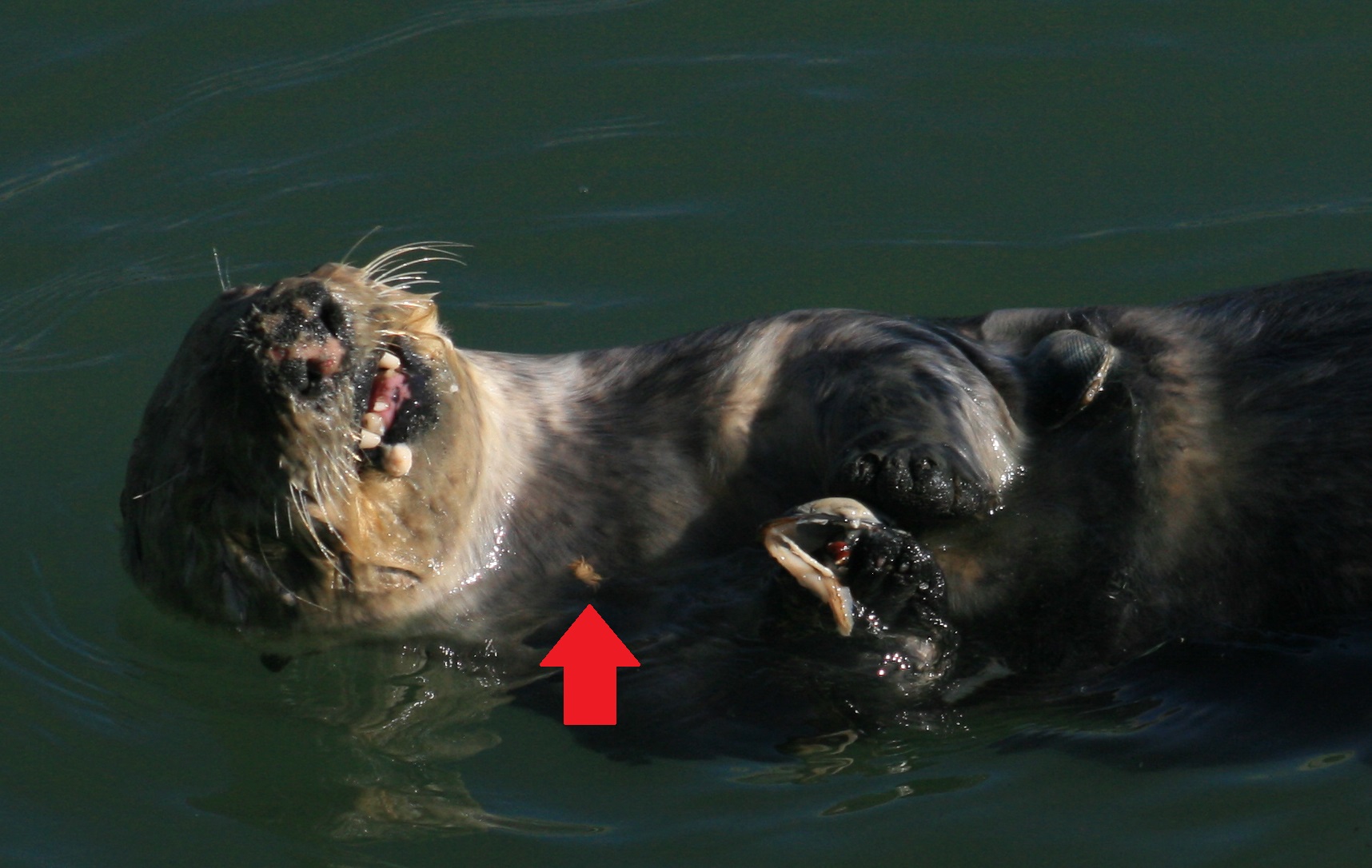
A pea crab serves as a nice side dish for this lunching sea otter. Source: Brocken Inaglory on Wikipedia