What cyborg clams can teach us about the ocean

Every clam is a door into the sea. If the “door” of its shell is open, the clam may be happily breathing, or eating, or doing other weirder things. If the door is closed, it may be hiding from a predator, or preventing itself from drying out at low tide, or protecting itself from some other source of stress. It turns out that by monitoring the opening and closing of a clam’s shell valves, a field called valvometry, scientists can learn a lot about the clam’s physiology, its ecology and the environment around it.

Valvometry involves attaching waterproof sensors to each shell valve of the bivalve, to measure the distance between them and their movement. Researchers have used valvometers to figure out that bivalves can be disturbed by underwater pollution like oil spills, harmful algal blooms, and more unexpected sources such as noise and light pollution.

A great video from Tom Scott discussing a Polish program to monitor water quality with valvometry

Giant clams are a group of unusually large bivalves (some species reach up to 3 feet long!) native to coral reefs of the Indo-Pacific, from Australia to Israel. They grow to such large size with the help of symbiotic algae living in their flesh, the same kind that corals partner with the corals that build the reefs. The algae photosynthesize and share the sugars they make with their host clam, and the clam gives the algae nitrogen fertilizer and other nutrients, a safe home from predation and even helps channel light to the algae using reflective cells called iridophores.
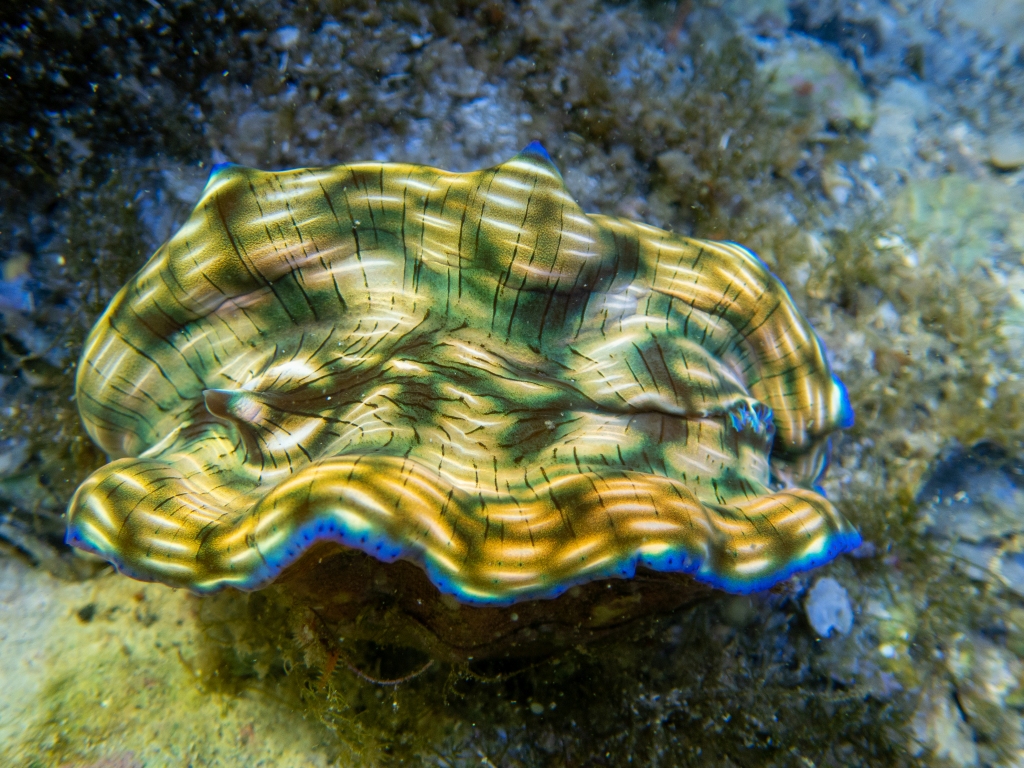
A Tridacna derasa clam in the Biosphere ocean. It has deep green flesh, covered with yellow stripes of iridophores and a blue fringe at the edge.

Previous studies have used valvometers on giant clams, but I was always perplexed by how few studies there were: only two that I know of! One study on clams in New Caledonia figured out that the clams partially close every night and bask wide open during the day. The clams’ shell opening behavior and growth was found to become more erratic at temperatures above 27 °C, and when light levels become too great. Another study showed the clams start to clam up when exposed to UV light to protect themselves from a sort of sunburn, which is a real threat in the shallow reef waters they live in.
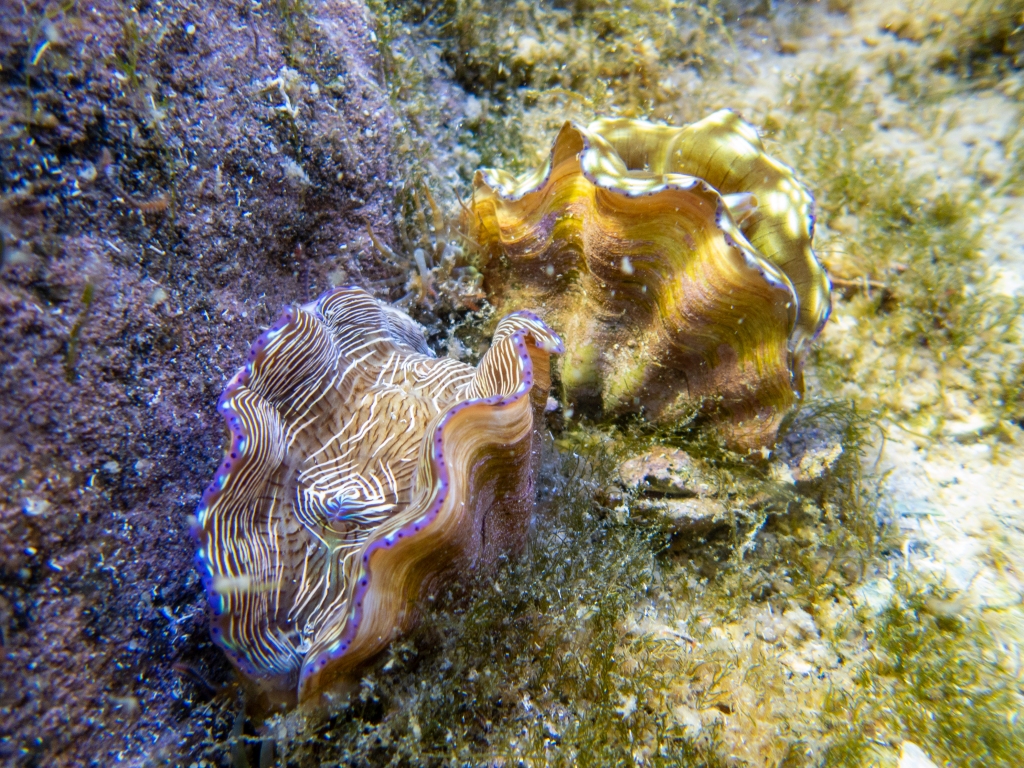
Two clams sitting next to each other in the B2 ocean. They often moved themselves to “snuggle” next to each other this way. Safety in numbers!

There is clearly a lot of information to pick up about how clams react to their environments, which can help us understand the health of the clams and also the corals around them. Coral reefs are under global stress from climate change, overfishing and pollution. Giant clams are some of the most prolific and widespread bivalve inhabitants of reefs, and represent an appealing potential biomonitor of reef conditions. Many giant clam species are threatened by the same stressors that influence the corals which build the reefs they live on, as well as overharvesting for food and their shells. For that reason, wild examples should clearly not be bothered by applying valvometric sensors. But giant clams are increasingly grown for the aquarium trade, resulting in a wealth of cultured specimens which could serve as sentinels of reef health, if they were fitted out with sensors. All of these motivators made me more and more curious of why we don’t have more literature monitoring the behavior of these clams with valve sensors.

I wondered if one of the limiting factors preventing the use of valvometry on giant clams is expense and ease of access. Giant clams live primarily in regions bordering developing countries in the Indo-Pacific, and almost all the professional aquaculture of clams for the reef trade happens in such countries, including places like Palau, Thailand, and New Caledonia. These countries are far removed from the places where most of the proprietary valvometric systems are manufactured. These systems can cost several thousand dollars even in Europe, never mind Palau, where arranging the import of electronics can be difficult.

When I started my postdoctoral fellowship at Biosphere 2 in 2020, I set out to grow two dozen smooth giant clams (Tridacna derasa, a species which can grow to about 2 feet long) in the controlled environment of the Biosphere 2 ocean, a 700,000 gallon (over 2.6 million liter) saltwater tank used to grow corals and tropical fish and kept at a stable year-round temperature of 25 °C. We suspended a series of LED lights intended to simulate the powerful light levels these clams experience in the wild (light is a lot brighter in the tropics than it is in Arizona!). The main focus of my project involved measuring the shell chemistry of the clams, to determine how their body chemistry changed as they grew from mostly getting their energy from filtering algae food from the water like other clams, to getting most of their energy from sunlight like a plant. But as a “side project” I set about measuring the behavior of the clams with custom-built valvometers based on open-source, inexpensive hardware that would be more accessible to researchers in the developing world. That work has since been published in PLoS One!

In our design, we used Hall effect sensors. Hall effect sensors generate a voltage when a change in magnetic field is detected. They are cheap, easily obtained for less than $1.50 apiece and are common in the electronics hobby trade. You might have encountered one in a home security system door/window sensor, where they help detect if a door is open or shut. We stuck a hall sensor soldered to a long copper cable to one valve of a clam, and a small magnet to the other valve. When the clam closed, we could measure exactly how closed it was. You can see why I started off by calling clams doors into the sea: we were literally measuring them that way!
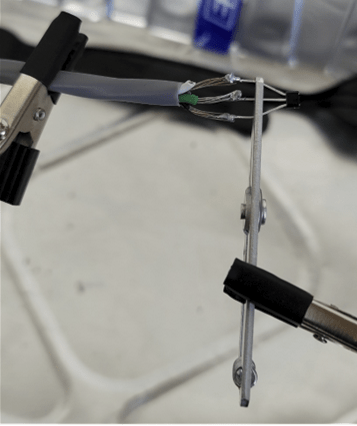
Showing the sensor soldered to the three strands of the cable.

But here the first challenge of my project appeared. The off-the-shelf Hall sensors don’t come in waterproof form, and I learned quickly that the ocean really, really loves to break my gear. After dozens of failures, I settled on coating the sensors in waterproof grease, wrapping that in heat-shrink tubing and then sealing that inside of aquarium-grade silicone. During this process, a gifted technician at Biosphere 2 named Douglas Cline helped with iterating on the first prototypes. At a certain point I taught myself to solder so I could do my part to improve the sensors.

It was also hard to figure out how to attach the sensors and magnets to the clams in a durable way. Neither of the prior studies mentioned how they attached the sensors to giant clams, and I tried and failed with literally a dozen different ways before settling on “pool putty,” a two-part adhesive often used to seal leaks in pools that can cure underwater. I found the pool putty had trouble attaching to the clams’ shells on its own, so I combined it with a special kind of cyanoacrylate superglue called “frag glue,” often used to attach pieces of corals to growth stubs. I also had to find a way to attach it to the clams without stressing them out. I determined five minutes out of the water was enough time to get the sensors attached to the clams, after which they could be returned to the water to finish curing. While giant clams are adapted to spend extended periods out of the water in their natural intertidal environment, we wanted to make sure to minimize their stress however possible, to ensure they would show natural cycles of behavior in the data.
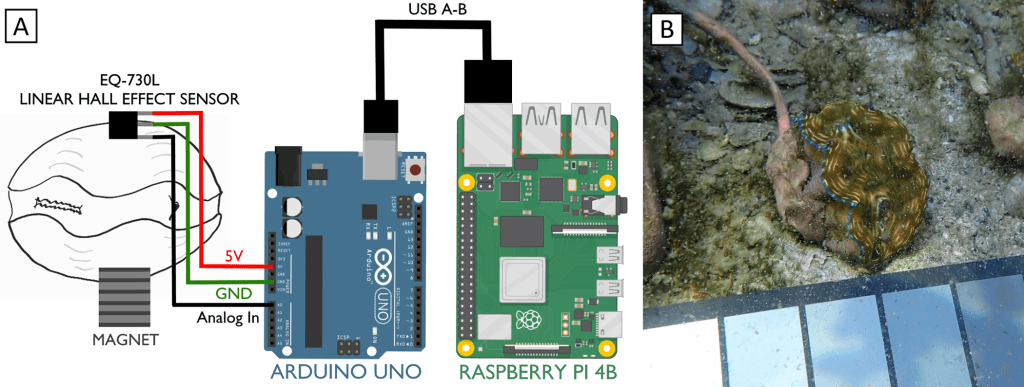
Figure from the paper showing: A) schematic of the sensor attached to the clam, linked to an Arduino microcontroller and Raspberry pi computer. B) A sensor attached to one of the clams

We were pleased to see the cyborg clams seemed to pay no mind to the sensors. Giant clams are adapted to encourage all sorts of other critters to live on their shells as a form of natural camouflage, and I think the clams interpreted the sensors as pieces of coral or anemones sticking to the side of their shell. Whatever the case, as long as we kept the cable pointing to the side away from the clams’ flesh, they opened five minutes after being returned to the water, and their behavior and growth rates were indistinguishable from the clams that didn’t have sensors attached.

One of what became many sunsets on the Biosphere 2 ocean shore troubleshooting the clam sensors! Pardon the chaos: mad scientist at work!

So how did we measure the voltages coming from the sensors? Our design featured an Arduino microcontroller, sort of like a smart circuit board which can measure the voltages coming back over the copper cables. Arduinos are very cheap, and we chose a $25 model. Even more importantly, Arduino has a huge library of plug-ins available to keep the exact time of each observation using a clock attachment, and the data can be uploaded to SD cards or an attached computer. For the attached computer, I used a Raspberry Pi computer, which are open-source Linux-based tiny computers that are very cheap! Or rather they were very cheap before the pandemic, but fortunately there a lot of open-source alternatives that can be obtained more cheaply. We logged the data on the Raspberry Pi as it rolled over from the Arduino, and I could watch the read-out on a monitor right on the Biosphere 2 beach. We set the Arduino to record every 5 seconds.

Sensors attached to four of the clams. Notice the one on top left has closed a bit, after sensing my presence! They have eyes so they were able to detect me 😀

We ran the sensors for three months. During that time, the baby giant clams grew almost an inch! What did the sensors record them doing? During the day, the clams basked wide-open, exposing as much of their tissue as possible to light (other than the times that I disturbed them by swimming above them, of course)! This schedule of opening aligned pretty closely with the times that maximum sunlight hit their part of the Biosphere 2 ocean: the mornings, because the clams were on the east side of the building. At this time of day, the clams want to expose their symbiotic algae to as much light as possible, so they can conduct photosynthesis and make sugars that the clams use as food!
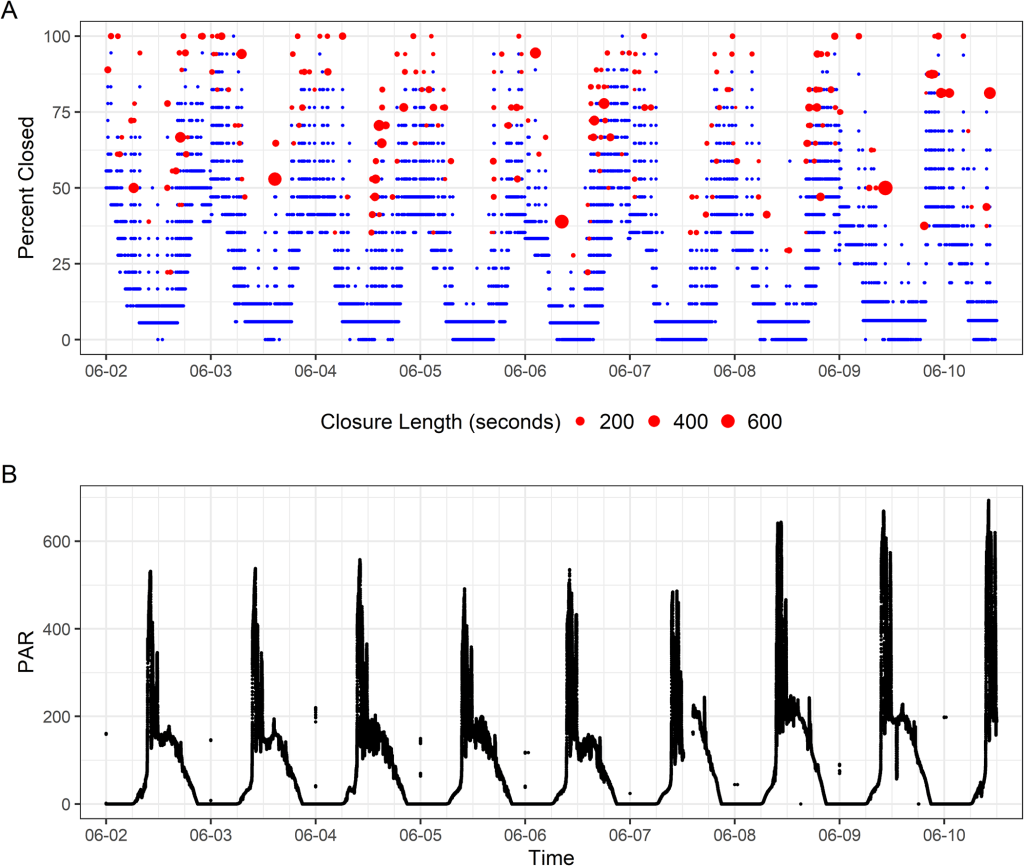
A) Plot of the valvometry data. Points higher on the plot mean the clam was more closed, up to 100% closed. The clams proceeded by opening in the early morning and then closing in the early afternoon. The big red circles represent times that the clams closed briefly, with bigger circles representing a longer time spent closed. Most of these rapid closures happened at night. B. A plot of Photosynthetically active Radiation (the amount of light the clams had to use for photosynthesis). The highest values were in the mid-morning when the clam lights were running in combination with direct sunlight hitting them from above.

Around mid-afternoon, the clams started to close partially, to about half closed. Why might that be? My hypothesis is that this posture represents a kind of “defensive crouch” to protect themselves from predators, in this case fireworms that live in the Biosphere 2 Ocean and were constantly kicking the clams’ tires. Similar nighttime behavior was observed in wild clams in a previous study, but not in a study that took place in a small predator-free terrarium tank. By remaining partially closed, the clams are prepared to rapidly close completely if they feel a predator approaching. But they only expend that energy of staying in that posture if predators are around!
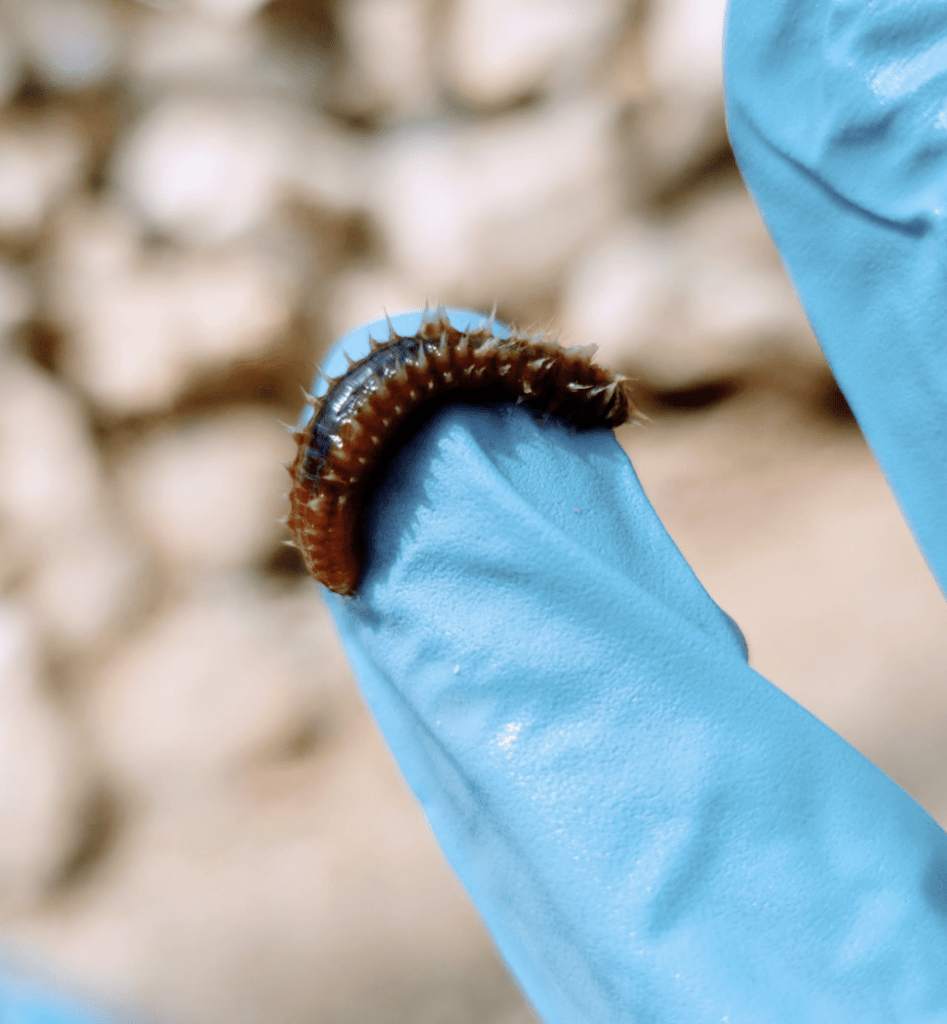
One of the fireworms that proved to be my nemesis and continually attacked the clams during the experiment

And approach the fireworms did. We observed frequent closures at night lasting anywhere from a few seconds to hours, likely partially related to the activity of the worms around the clams. But the clams were engaging in another activity at night: filter feeding! Giant clams really get to have their cake and eat it too, because during the day, they act like a plant, but at night, they eat other plants in the form of plankton that they filter feed out of the water using their gills! At regular intervals, the clams need to clear uneaten material from their gills in a process sometimes called “valve-clapping”. The clams yank their shell valves together rapidly to force water out, blowing out pseudofeces: unwanted material packaged with mucus. We measured this valve-clapping mostly at night. The clams are likely scheduling this activity for the night-time so they can prioritize staying open and filter feeding during the day!

Figure comparing how often clams closed per day to measures of how high plankton numbers were in the Biosphere 2 ocean (chlorophyll is a marker of phytoplankton while phycocyanin is a measure of cyanobacteria), and how high the light levels were. Peaks in closure activity often happened shortly after rises in algae.

We observed that the frequency of valve clapping aligned closely with the rises and falls of chlorophyll concentration in the Biosphere 2 ocean, which is a measure of how much plankton is in the water column. The clams would engage in a burst of valve clapping around 4 days on average after a bloom in chlorophyll, suggesting they were filtering out plankton after they had died and settled to the bottom where the clams could eat them. We also found that the clam’s filtering activity peaked at times of highest pH. This likely is due to the fact that higher pH means the algae around the clams are being more active, and pulling CO2 in from the water to use in photosynthesis, making the water less acidic. More photosynthesis means potentially more material for the clams to filter through! This data helps quantify how giant clams help filter the water in their native environments! Coral reefs depend on very clear transparent water to allow maximum sunlight to reach the corals, and the filtering activity of giant clams likely plays a big role in helping preserve those conditions!

So we found that by adding sensors to clams, we could record their ability to feed from the sun, their feeding on plankton around them and their avoidance of predators. How can this technique be used next? We hope that by using cheap off-the-shelf resources and open-source software, we can enable more sensors to be put on clams all over the world, such as places where giant clams are farmed in Palau, New Caledonia, Thailand, Taiwan, Malaysia and more! If we can collect data on clam activity from all these places, we can compare how their feeding patterns differ in places that have more or less plankton floating by, or have more or less sunlight available, or different predators that affect the clams’ behavior. This data would have importance to the clams’ conservation, as well as our understanding of the reef overall. In future years, I hope we can develop a global network of cyborg giant clams from the Red Sea to the Great Barrier Reef, so we can better understand how these oversized and conspicuous but still mysterious bivalve work their magic!
An open letter to Stephen Colbert from a clam expert

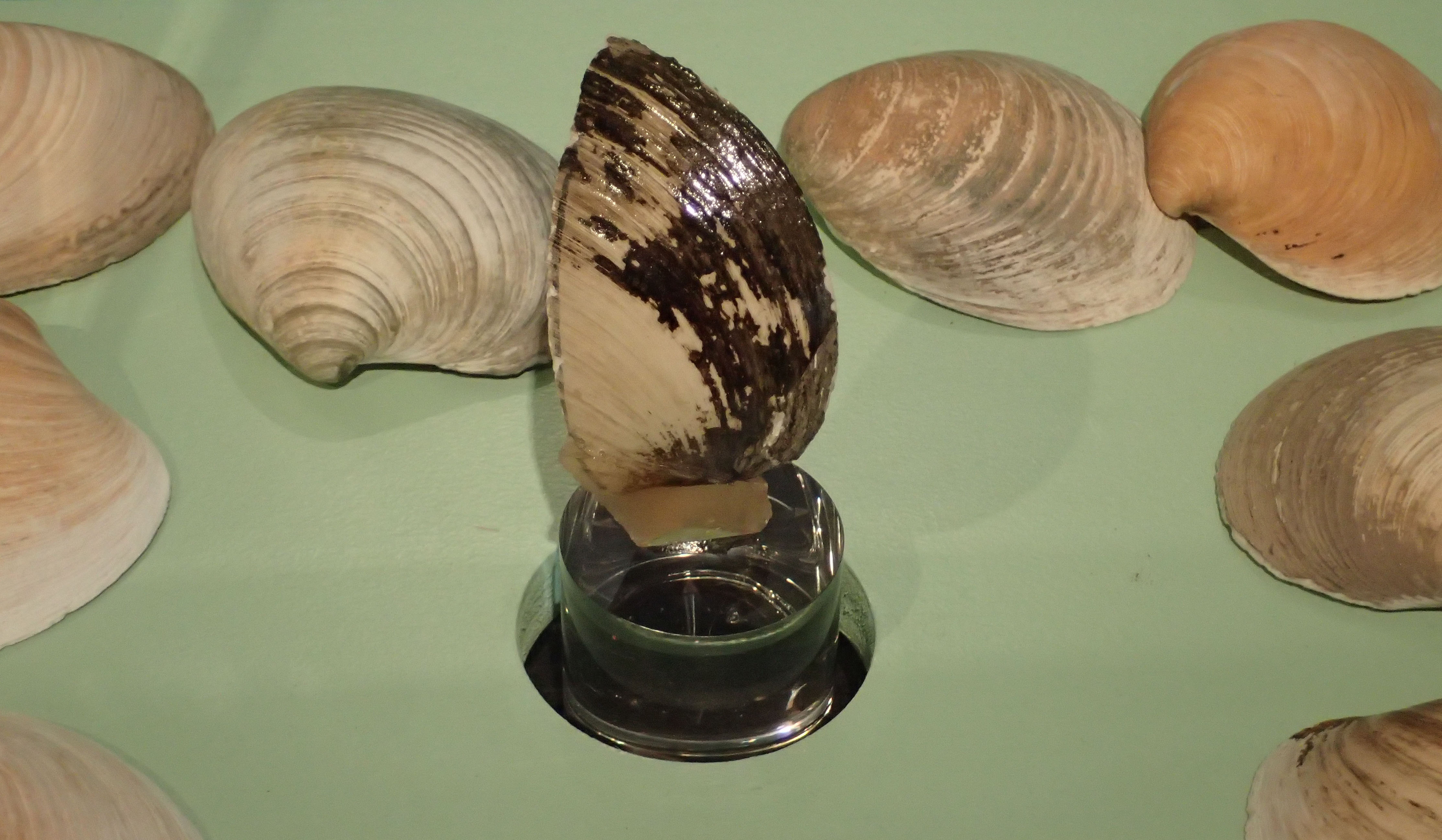
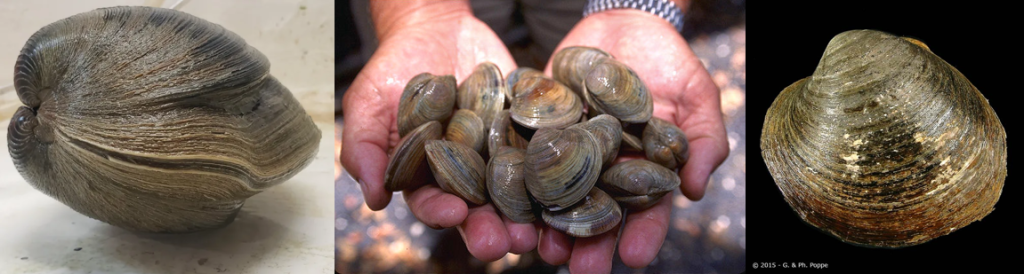
Abraclam Lincoln (photo source) next to a handful of Mercenaria mercenaria, a closely related kind of quahog (photo from Wikipedia), illustrating that Abraclam is indeed a chonker. To the right we have Arctica islandica, the famous long-lived clam, illustrating how hard it is to tell these clams apart without specialized training (photo from conchology.be).

Recently, a bit of an amusing clamfuffel arose when the Gulf Specimen Marine Lab, a research institute in Florida, began posting about a supposedly 214-year-old clam they named “Abraclam Lincoln”, in honor of potentially sharing a birth year with Honest Abe. The story went viral, and while some of their clammy claims turned out to hinge on flawed assumptions about how clams can be aged, it was still a worthwhile opportunity to communicate about the wonderful world of bivalves with people.

I was particularly impressed with how GSML went out of their way to correct the record as more info came in. Long story short, Abraclam is not the long-lived ocean quahog Arctica islandica (more on them below), but in fact a specimen of the southern quahog Mercenaria campechiensis, which lives along the Gulf coast and grows much more quickly than A. islandica. So the large clam they found was likely more like 40 years old, which is not too unusual for this species, rather than two centuries old. It also makes much more sense to find Mercenaria in Florida than Arctica. Additionally, external shell growth lines in Mercenaria are known to not be reliable for aging the species. The shell would have to be cut open to view internal lines to figure out how old Abraclam really is, which would require killing them. Fortunately, they released the clam rather than cut them in half for science.

Known range of Arctica islandica as a heatmap, compared to location of GSML on the Florida Panhandle. Source: OBIS
Slice through a Mercenaria campechiensis shell. The shell is lit from behind to show the annual growth lines. From Moss et al. 2021, written by fellow clam man David Moss, a friend of mine!
For what it’s worth, I still think Abraclam is an interesting specimen of M. campechiensis– they have a huge scar in their shell that would be interesting to learn more about (maybe they were hit by a dredge in their youth, healed the break and recovered to reach a ripe old age), and an unusual undulating margin at the edge of the shell that could be a deformity reported in the past literature for this species. Sometimes, scientists are wrong the first time, but we’re open about how we’re wrong, and everyone ends up learning more than we would have known otherwise.

So far so good. Then a bull had to wander into this delicate china shell with the entry of Stephen Colbert into the debate. I’ll let Stephen speak for himself, but needless to say, after his rant I feel a need to respond:

Before I dig into this clambake, Stephen, kudos to you for covering the whole story and not just the initial incorrect information. You addressed all the big inaccuracies, from the size not being tremendously out of the ordinary, to the incorrect species ID, to the incorrect age. Maybe it’s not so bad that people are getting their news from comedians rather than the news media these days! But while there were definitely some pearls of wisdom within your monologue, I have to point out some misconceptions here.

“The only thing more heartbreaking than the lies we were fed in this story…is growing up to be a clam expert!”

– Stephen Colbert

This is just plain false, since I’m not heartbroken, because clams are frickin’ awesome. Clams are way cooler than you or me, and that means by extension that the people who study them are pretty cool and interesting too (not really referring to myself. I’m just an eclamgelist along for the ride). So here are three facts about big old clams, and information about the clam experts who discovered these facts!

The ocean quahog lives to >500 years old!

Arctica islandica shell I saw on the beach in Massachusetts. This individual was likely several decades old when it died based on its fairly large size!

The ocean quahog Arctica islandica (which Abraclam was initially misidentified as) is tremendously long-lived, one of the longest-lived animals on earth! It has been confirmed to live to at least half a millenium! One individual caught off the coast of Iceland was aged to ~507 years by counting tiny growth lines in its shell via microscope, combined with radiocarbon dating. This clam was named Hafrún (meaning “ocean mystery” in Icelandic), but is sometimes called Ming due to it being born in the Ming dynasty of China. So put that in your Ming vase and smoke it Colbert!

https://museum.wales/media/48824/Ming-blog1image1.jpg
Part of the shell of Hafrún, which was cut open to determine its age via internal growth lines. Source: Museum Wales

Several scientists worked on aging Ming, but Alan Wanamaker at Iowa State was a lead author on the original work. He uses growth lines in the shells of many clam species as records of climate change and is generally one of the nicest people you could have the opportunity to meet.

Tridacna gigas grows to over 4 feet long and hundreds of pounds!

Large specimens of giant clams that are around 3 feet long at the California Academy of Science collection.
The author sitting in a scale model of Tridacna gigas at the Monterey Bay Aquarium

Abraclam might be only 6 inches long (which is respectable as he/she is quite girthy; length isn’t everything, Stephen!), but there are other types of clams that are bigger than one Colbert in mass. The giant clam Tridacna gigas grows to over 4 feet long and weighs hundreds of pounds. They live on tropical coral reefs and use the power of the photosynthetic algae in their flesh to speed up their growth. So basically these clams are bigger and way more interesting than you, Stephen, since they get to go out and tan in the sun for lunch while you have to gobble down a slice of pizza.

Mei-Lin Neo at University of Singapore is considered the world’s leading expert on Tridacna, and has done more than almost anyone I know to describe all twelve currently known species of giant clams found around the world. She’s a tremendous advocate for giant clam conservation and gave an outstanding TED talk about them to boot. You should have her on your show to be honest.

Geoducks: they looked like that first!

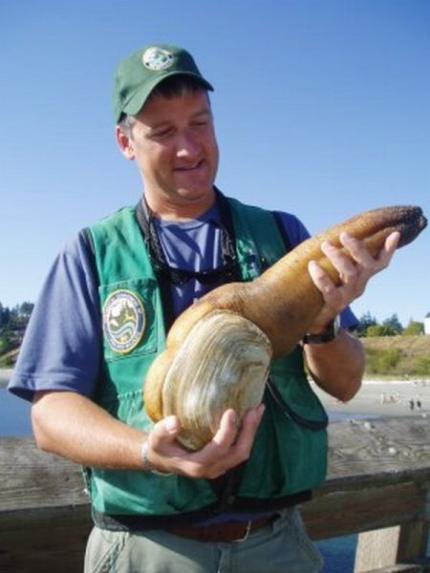
WDFW employee holds large geoduck
A 6.5 pound geoduck and admiring Washington Department of Fish and Wildlife Volunteer (Source)

Speaking of girthy, long clams, I’d be remiss not to mention the geoduck, Panopea generosa. Pronounced “gooey-duck,” these clams looked like this long before any part of human anatomy existed, having been around in various forms since at least the Jurassic. They have a long siphon that they use like a snorkel when they dig deep in the mud, and they can live for almost 200 years.

Brian Black at the University of Arizona is an expert in using their shells as a record of climate change. He was part of a group that was able to stitch together the growth line records from multiple geoduck shells to make a continuous record of climate change going back to 1725. Seems appropriate to note that 1725 was the year that Casanova was born…a man who may have channeled some qualities of geoducks.

Local experts on Abraclam

I’d like to mention two of the experts who corrected the record about Abraclam Lincoln and provoked Stephen’s attack in the first place. Dr. Dan Marelli wrote an op-ed correcting the record on how Mercenaria clams are aged for the Tallahassee Democrat. He’s an expert scientific diver and has published papers on clams ranging from endangered scallops to invasive mussels. Scientific diving is crucial to understand clams in their native environment, and to assist in their conservation. If I had to choose who had more interesting stories at the bar, it’d be an easy decision to listen to the swashbuckling diver over the late-night TV host!

Dr. Edward Petuch at Florida Atlantic University reached out to GSML to make sure they knew the correct species ID for Abraclam. He is well-known for his work describing the change in ecology of mollusks in Florida and the Caribbean over the last several million years. GSML expressed interest in working with Dr. Petuch in the future, and I can confirm that I’ve had fruitful scientific collaborations start when other scientists have reached out to me about how I was totally, embarrassingly wrong. Being wrong in science is part of the job, and that’s why I’m glad this Abraclam story came out in the first place.

“So what does your son do? He’s a marine biologist. Does he work with dolphins? …I’m gonna say yes.”

-Stephen Colbert

To close out, I’d like to address Stephen’s assertion that my mom isn’t proud of me for being a clam expert. Stephen, I’ll have you know that my mom is the most enthusiastic patron of my clam science. She reached out to the local paper to anonymously tip them to interview me about my clam work, had me give a speech about clams at the local women’s group she’s a part of, and when I defended my PhD thesis, she made t-shirts to commemorate the occasion. I can confidently say I wouldn’t be Dan the Clam Man if it weren’t for her support. Thanks Mom!

Research Explainer: How I learned to stop worrying and trust the clams

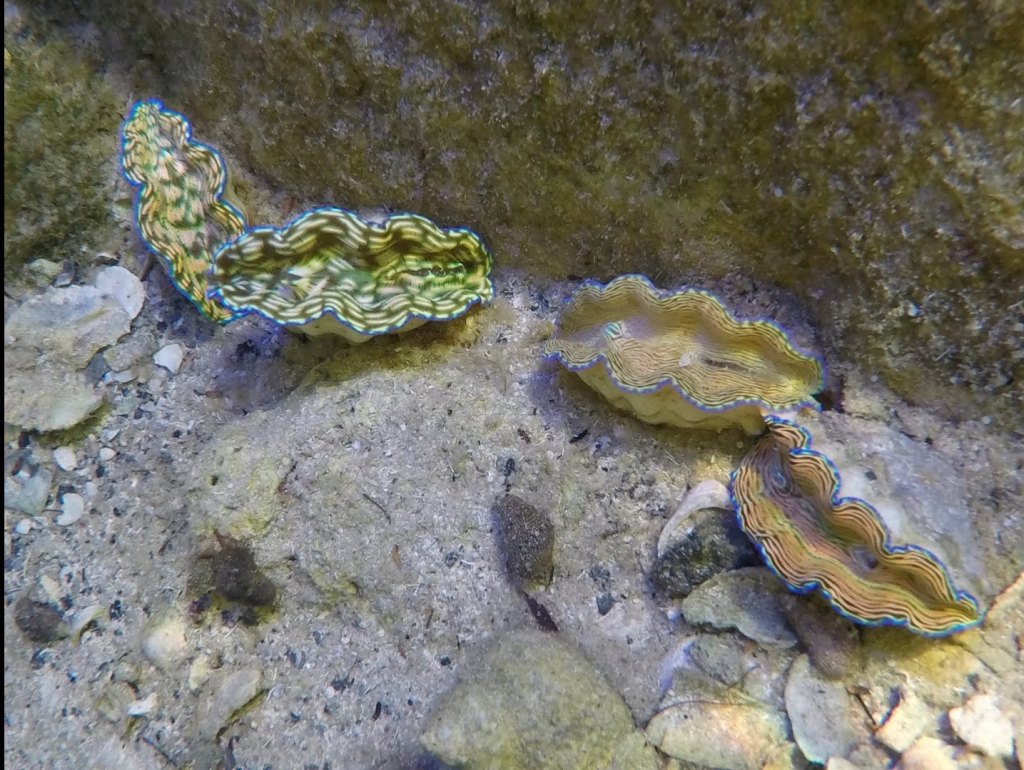
Two giant clams off the coast of Israel. Left: Tridacna maxima, the small giant clam. Right: Tridacna squamosina

Another year, another new paper is out, another clamsplainer to write! The fourth chapter from my PhD thesis was just published in Proceedings of the Royal Society B. This study represents five years of work, so it feels great to finally have it leave the nest. In this study, we investigated the comparative growth of fossil and modern giant clams in the Gulf of Aqaba, Northern Red Sea. Back in 2016 during my PhD, I knew I wanted to study giant clams because they are unique “hypercalcifying” bivalves that grow to huge sizes with the help of symbiotic algae living in their bodies. The clams are essentially solar-powered, and use the same type of algae that reef-building corals depend on! Unlike corals, which are the subject of a ton of research related to how they are threatened by climate change, habitat destruction and pollution, comparatively little is known of how giant clams will fare in the face of these environmental changes. Are they more resistant than corals, or more vulnerable?

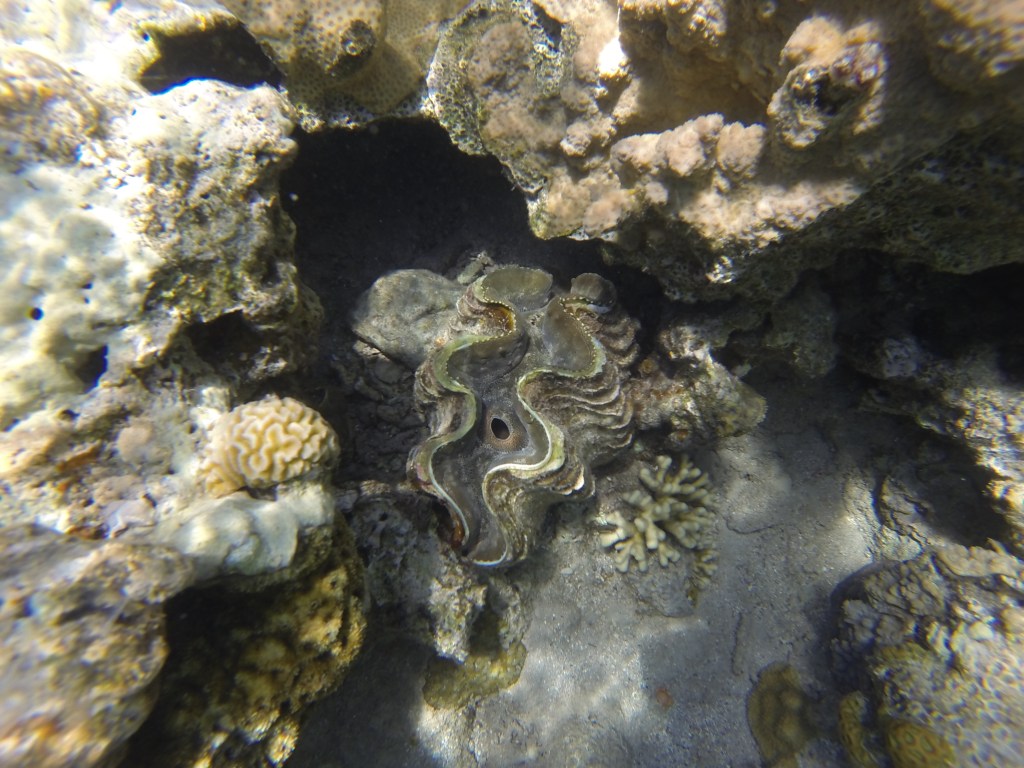
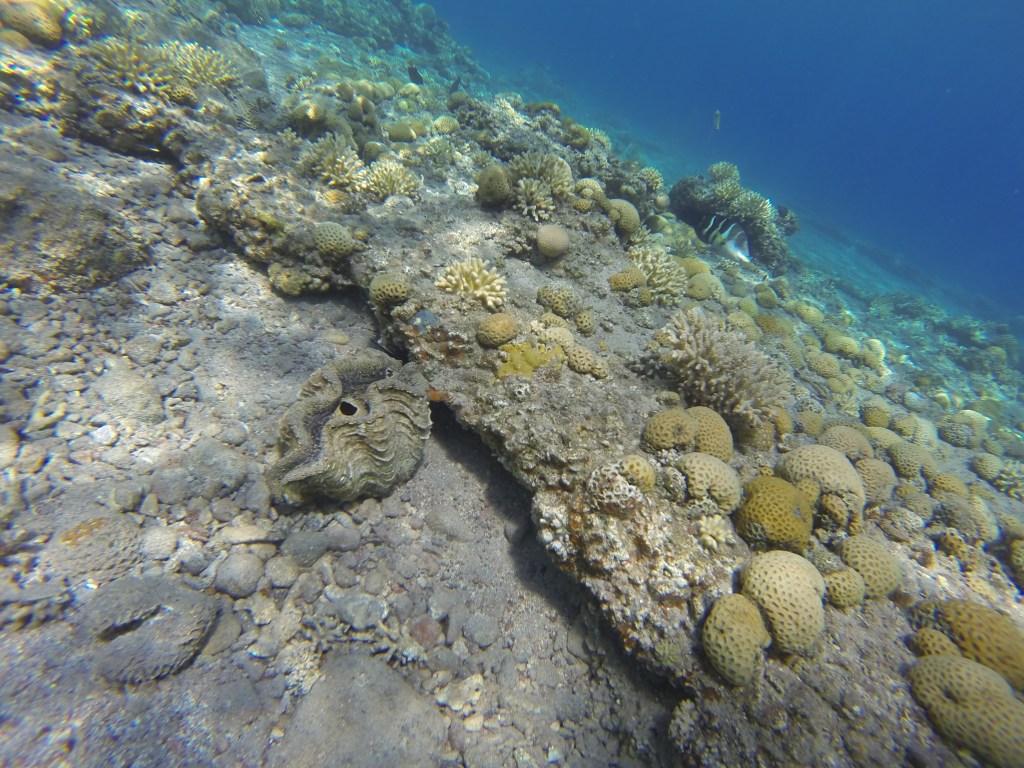
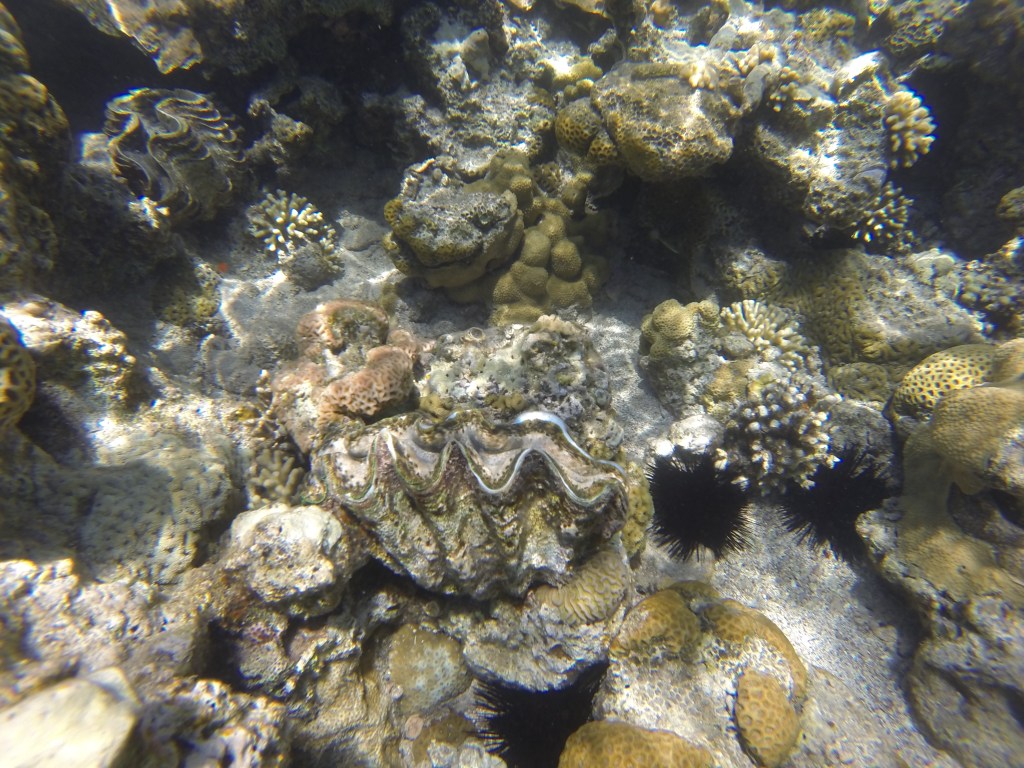
T. squamosa on the reef off the coast of Eilat.

I had strong reason to suspect that the clams are struggling in the face of human changes to the environment. They can bleach like corals do when exposed to warm water, and have been observed to be harmed when waters are less clear since they are so reliant on bright sunlight to make their food. But I need a way to prove whether that was the case for the Red Sea. I needed to travel to a place where fossil and modern giant clams could be found side by side, so their growth could be compared using sclerochronology. We would count growth lines in their shells to figure out how fast the grandaddy clams grew before humans were around, and compare that ancient baseline to the growth rate of the clams in the present. Giant clams make growth lines every day in their shells, giving us the page numbers in their diary so we can figure out exactly how fast they grew! We can also measure the chemistry of their shells to figure out the temperatures they experienced from the oxygen isotopes, and even what they were eating from the nitrogen isotopes.

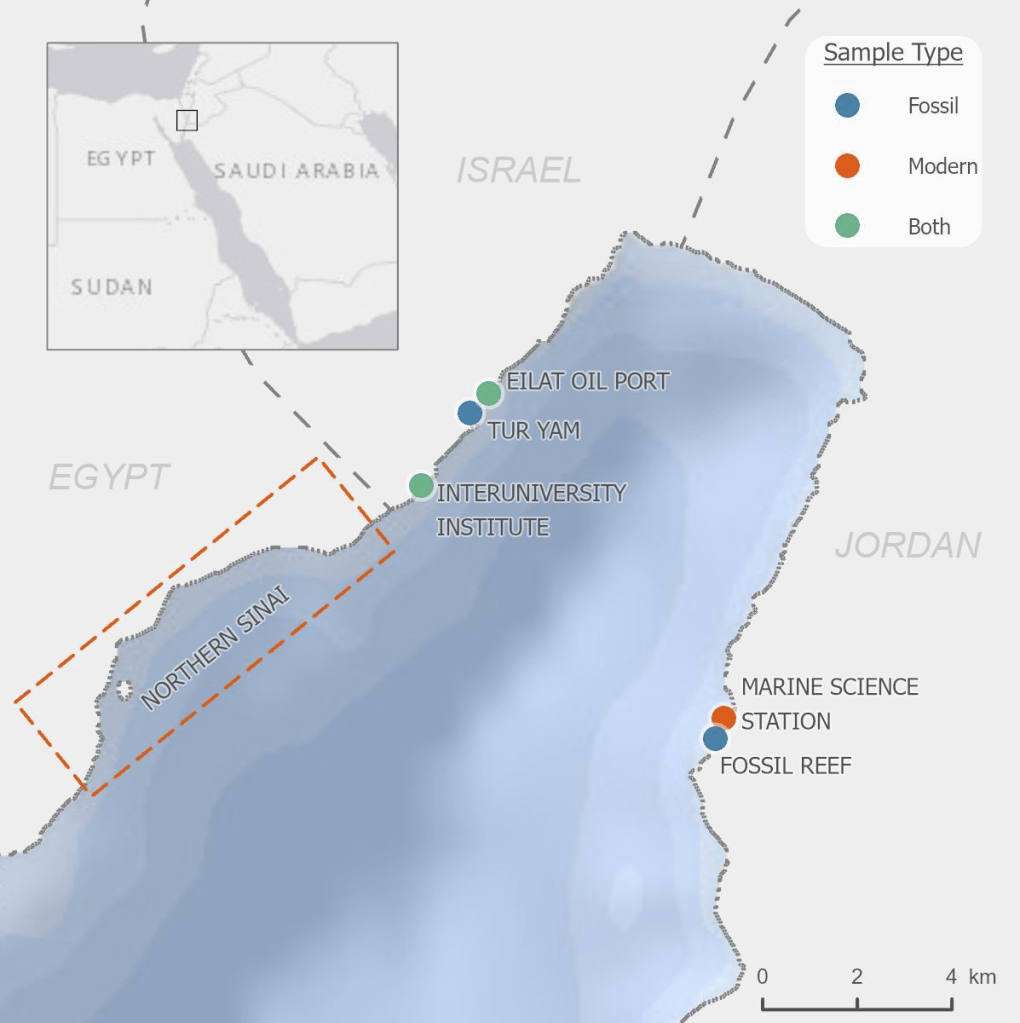
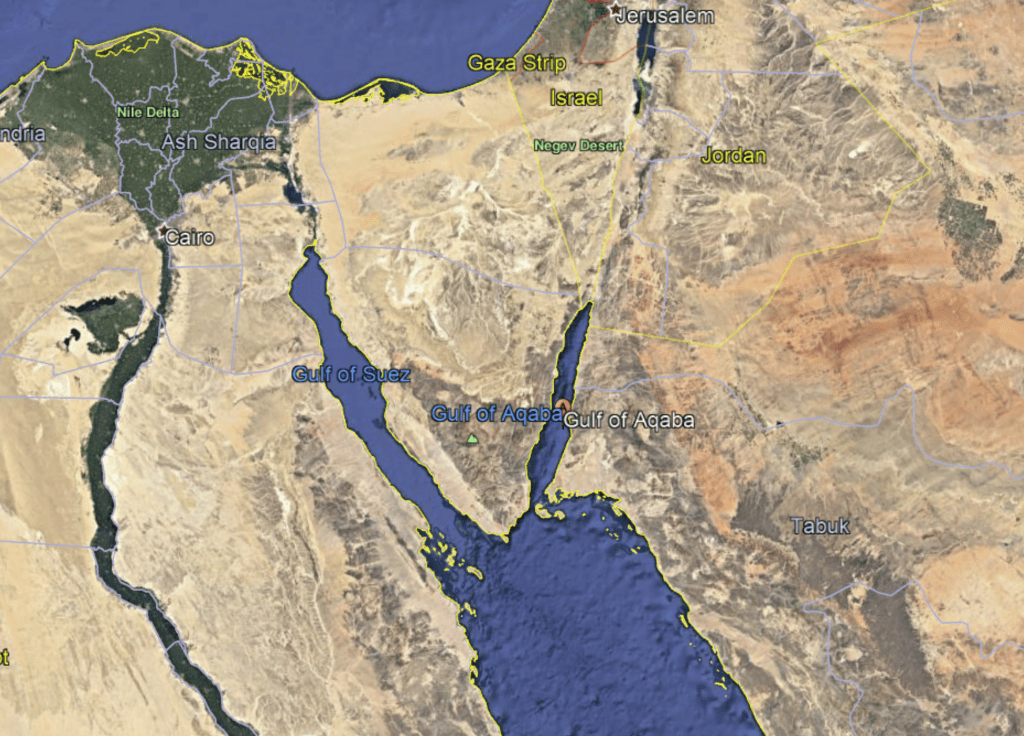
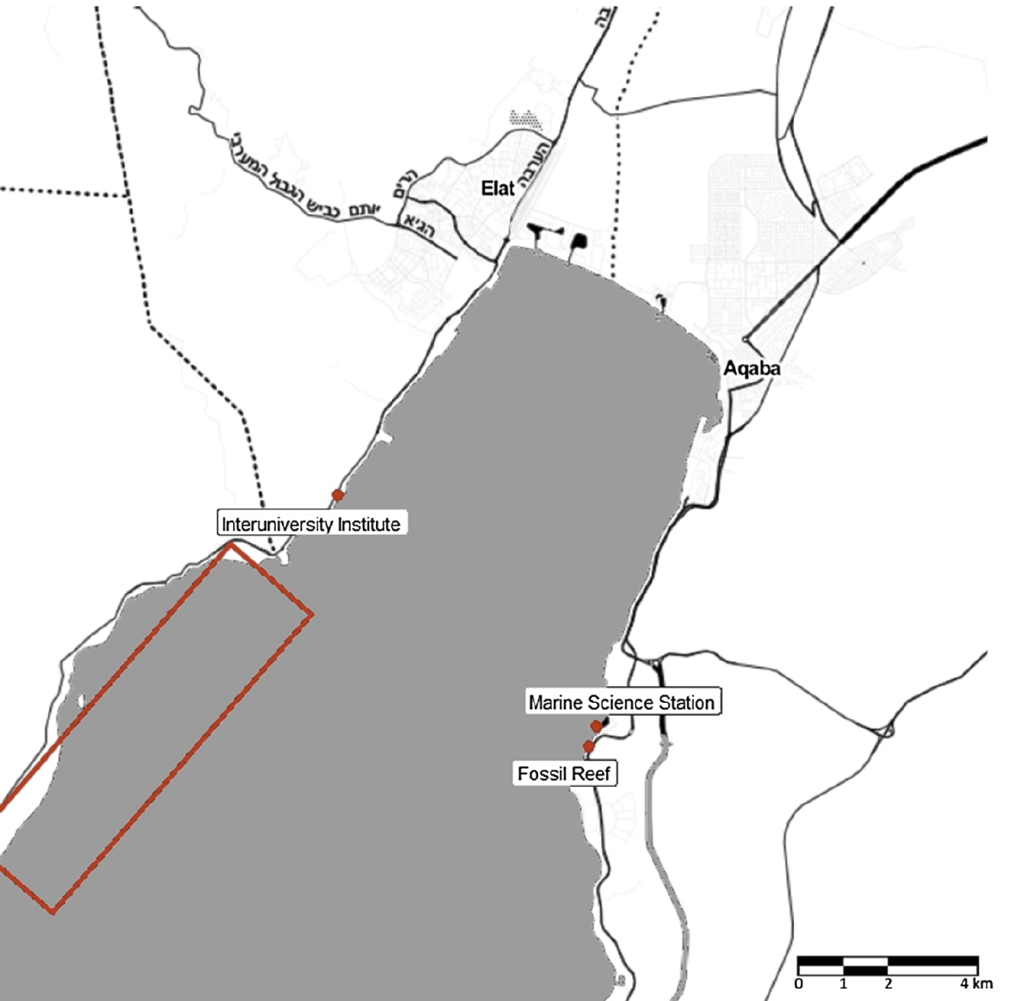
A map of the Gulf of Aqaba, where our study took place. My talented marine scientist partner Dana Shultz made this map!

It just so happened that UCSC’s Dr. Adina Paytan was leading an NSF-funded expedition to the Red Sea in summer 2016, which represented a perfect place to do this work. There are many age dated fossil reefs uplifted onto land around the Gulf of Aqaba on the coasts of Israel and Jordan, and there are three species of giant clam living in the Red Sea today: Tridacna maxima (the small giant clam), Tridacna squamosa (the fluted giant clam), and Tridacna squamosina. Tridacna squamosina is particularly special because it is only found in the Red Sea, making it an endemic species. It is extremely rare in the modern day, with likely only dozens of individuals left, making it potentially endangered.

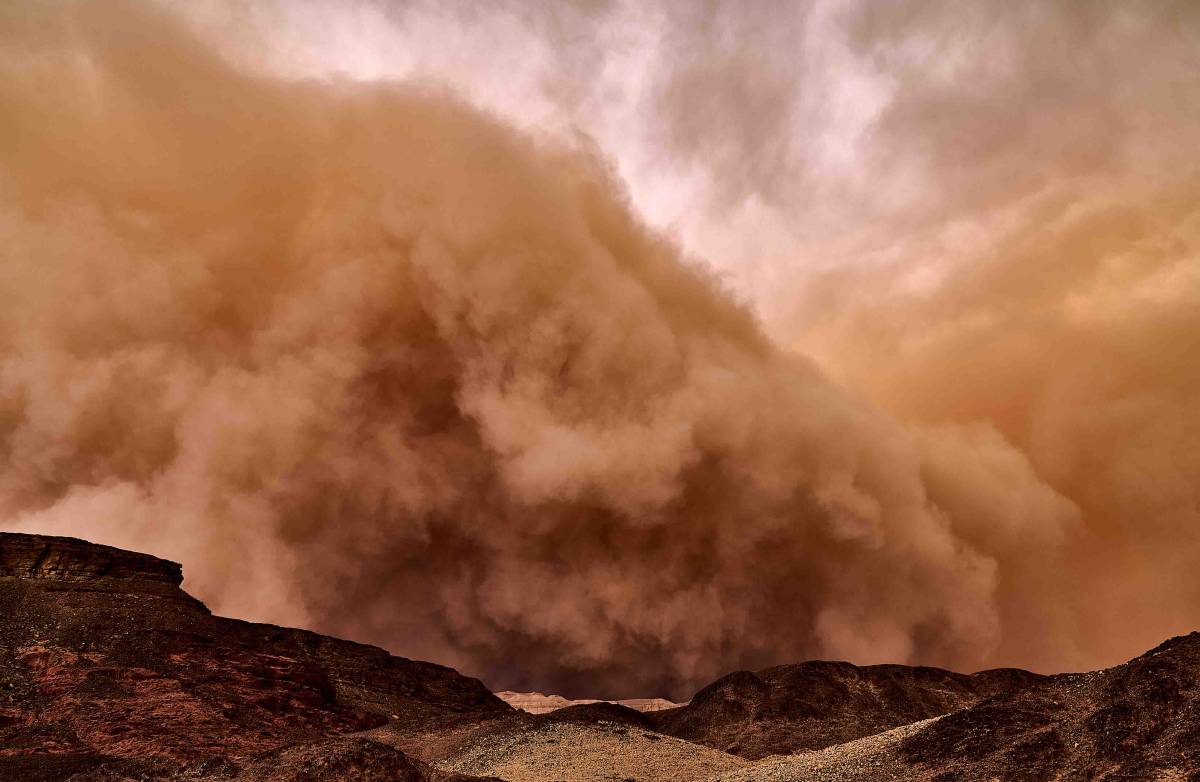
So I set off with Adina and two other students to live for two months in in the blazing hot desert resort town of Eilat, Israel, working at the famous Interuniversity Institute. Getting a permit from the Israeli National Parks Authority, I collected dozens of empty giant clam shells (no clams were harmed in the course of this study!) from the surf zone and from ancient reefs ranging from a few thousand years to almost 180,000 years old. I also spent a week over the border in Aqaba, Jordan where I worked with Dr. Tariq Al-Najjar, my coauthor and director of the University of Jordan Marine Science Station. Tariq is a specialist in algal productivity in the Gulf and was an excellent resource in trying to understand how water quality has changed in the area through time. He pointed out that over the years, the Gulf of Aqaba has had an increased nutrient supply far above what it received in historic times. For nearly 20 years the Gulf was subjected to excess nutrients from Israeli fish farms, which caused tremendous damage to the reefs of the area with their releases of fish waste. The farms were finally forced to close after a long lobbying campaign from Israeli and Jordanian scientists and environmentalists. But even after the farm pollution stopped, there was still increased nutrient supply from runoff and even carried into the Red Sea by dust in the form of nitrate aerosols. These aerosols are produced when our cars and power plants release nitrogen oxide gases, which react in the atmosphere to form nitrate and fall during periodic dust storms that hit the Red Sea a few times per year.

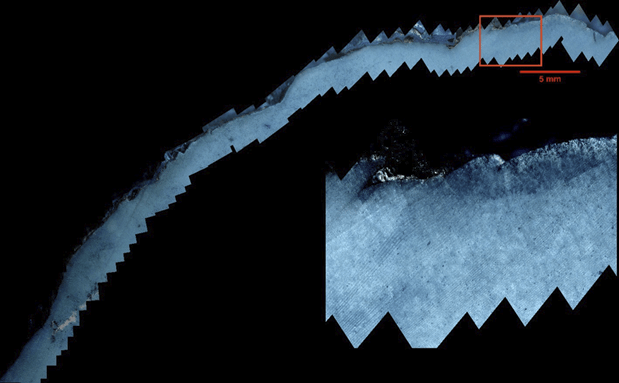
All of these sources of nitrogen are fertilizer for plankton, causing what scientists call “eutrophication.” When plankton blooms, it literally causes the water to be less transparent, which could reduce the clams’ ability to gather light and lead to them growing more slowly. At least that was my hypothesis, but I had to prove if it was true or not. So during that summer and over the next few months, I cut dozens of clam shells into cross-sections, used a special blue dye called Mutvei solution to make their growth lines visible, and took pictures of those lines with a microscope. Then I counted those lines to figure out how many micrometers the clam was growing per day.

A picture showing some of the fine daily lines visible in a blue-stained shell

Here I hit my first challenge: it turned out some clams were putting down one line per day as expected, but some were putting down twice as many! But the way I was using to discern between the two was to measure the oxygen isotopes of the clams’ shells, which forms a record of temperature. By counting how many lines appear between each annual peak of temperature, we confirmed some were daily and some were twice daily. But the oxygen isotope approach is expensive would not be scalable across the dozens of shells I had collected.

Annual growth lines in the shell of a Tridacna maxima clam

Then I remembered that I could measure the lines in the inner part of the clams’ shells, which are formed annually. By counting those lines and then measuring the length of the clam, I could get an approximate measure of how much it grew per year on average. This would allow me to calibrate my band-counting and discern which records represented daily lines and which were twice daily! What a relief.

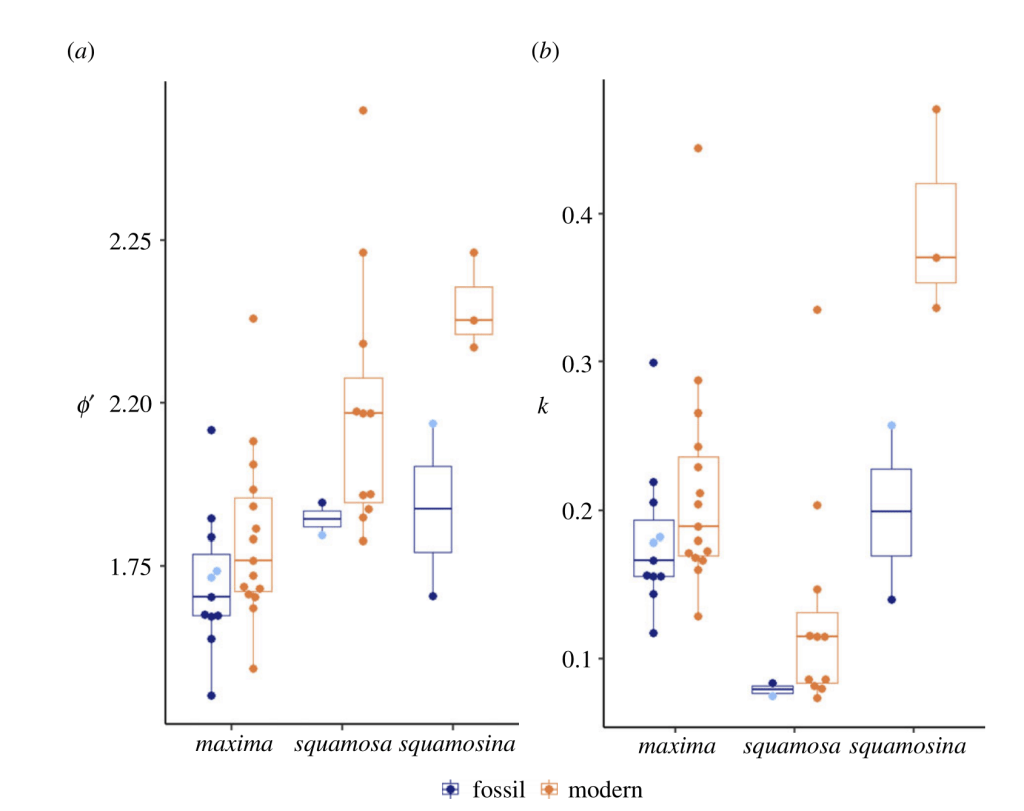
So I went through all of the shells, counting lines and gathering growth info for as many shells as I could muster. It meant many hours staring at a microscope, taking pictures and stitching the pictures together, then squinting at my computer screen highlighting and measuring the distance between each growth line. I had hoped to come up with an automated way to measure it, but the lines turned out to be faint and difficult for the computer to distinguish in a numerical way. So instead I just powered through manually. When I had the raw growth data, I then transformed them to a pair of growth constants commonly used in the fisheries literature to compare growth across populations. When I put the data together across all 55 shells, I was surprised to discover that my hypothesis was totally incorrect. The clams were growing faster!

Growth constants for all three species, comparing fossils and modern shells. We used two growth constants (phi prime and k) to help control for the fact that our clams were at different sizes from each other. You wouldn’t compare the growth rate of babies and teenagers and try to make any broader assumptions of their relative nutrition without some additional attempts to normalize the data!

Science rarely goes according to plan. The natural world is too complex for us to follow our hunches in understanding it, which is the main reason the scientific method came about! But at a human level, it can still be shocking to realize your data says you were totally wrong. So after a few days sitting and ruminating on these results and what they meant, I remembered what Tariq and other scientists had said about nitrates. The clams are essentially part plant. They use photosynthetic symbionts to gain most of their energy. And much as nitrate pollution can fertilize plankton algae growth, maybe it could do the same for the algae within the clams! It had previously been observed that captive giant clams grew faster when “fertilized” with nitrates or ammonia. But such an effect had never before been observed in the wild. We needed a way to demonstrate whether the Red Sea clams were experiencing this.

Fortunately, the clams also keep a chemical record of what they’re eating within the organic content of their shells. Shells are a biological mineral, made of crystals of a mineral called calcium carbonate. But within and between those crystals, there’s a network of proteins the clam uses like a scaffold to build its shell. Those proteins are made of amino acids that contain nitrogen. That nitrogen comes in different “flavors” called isotopes that can tell us a lot about what an animal eats and how it lives. The ratio of heavier nitrogen-13 and lighter nitrogen-12 increases as you go up the food chain. Plants and other autotrophs have the lowest nitrogen isotope values because they use nitrate directly from the environment. For every level of the animal food chain, nitrogen isotope values increase. Herbivores are lower than carnivores. If you live on only steak, your nitrogen isotope values will be higher than a vegetarian. The same will be true for clams. If the clams were taking in more nitrogen from sources like sewage or fish farms, they would show higher nitrogen isotope values in the modern day.

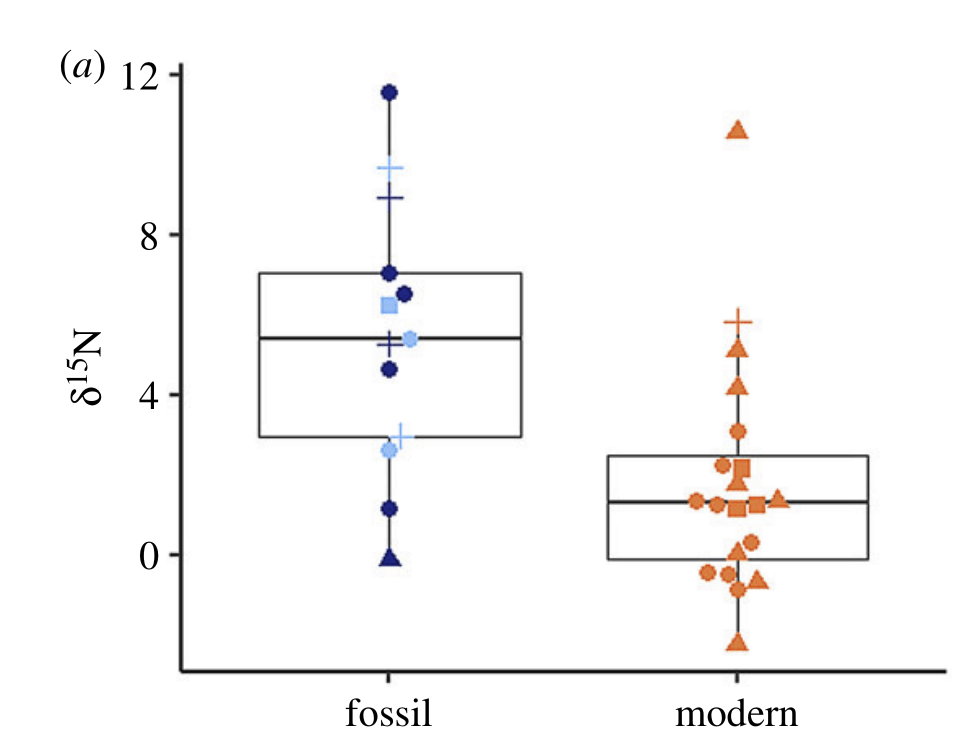
We found that nitrogen isotope values were lower in the modern day!

Taking bits of powder from several dozen of the shells, we worked with technician Colin Carney at the UCSC Stable Isotope Lab to measure the nitrogen isotopes of the shell material. A machine called an Elemental Analyzer literally burns the shell material to release it in a gas form. A carbon dioxide scrubber absorbs the CO2 and carbon monoxide gas, leaving only the nitrogen gas behind. That gas is measured by a mass spectrometer, which essentially separates out the different isotopes of nitrogen and tells us what fraction is nitrogen-13 or nitrogen-12. Plotting all the shell data together, I discovered that my hypothesis was…totally wrong. The nitrogen isotope values of the modern shells were lower than the fossils. The clams had moved down in the food chain, but how?

https://www.israelscienceinfo.com/wp-content/uploads/2017/09/timna-park.jpg
A dust storm rolling over the Israeli Negev Desert. Source

After ruling out a bunch of other explanations including the preservation of the shells, we propose that this represents a human-related change in the environment that the clams are recording. As I mentioned before, the Red Sea these days is regularly hit by huge dust storms which are conduits for nitrate aerosols. Our cars emit nitrogen-containing gases which, through a complex web of chemical reactions in the atmosphere, end up in the form of nitrate particles called aerosols. These nitrate aerosols bind to the dust delivered by strong windstorms called haboobs, which carry the dust long distances, with some of it being deposited several times of year. This deposition of nitrate has been found to form up to a third of the nitrate supply hitting the Red Sea, and was a source of nitrogen that wasn’t available to the clams in historic times. These nitrate aerosols are extremely low in nitrogen isotope value, and would be very likely to explain the lower nitrogen isotope value in our clams! If the clams ate the nitrate, their symbionts would grow more quickly, providing them with more sugars through photosynthesis and accelerating clam growth!

Some additional factors probably also have influenced giant clam growth in the region. The Red Sea historically had regular monsoon rains which likely slowed growth in fossil clams, as storms are known to do for giant clams in other areas, but such monsoons no longer reach the area. The Red Sea also had much higher seasonal range of temperatures in the past, with colder winters and warmer summers. Both factors (storms and extremes of temperature) have been previously shown to depress giant clam growth, and so the modern Red Sea may be a goldilocks environment for the clams: a consistent year-round not too cold or hot temperature.

However, as we discuss in the paper, these factors don’t necessarily mean that the clams are healthier. Faster giant clam growth has been found in other research to lead to more disordered microstructure in their shells, which would have uncertain effects on their survival against predators like fish, lobsters and humans. Additionally, a higher nutrient supply to reefs often causes the corals that build the reefs to lose out to competition from algae that block sunlight and crowd out coral colonies. If the reefs are harmed by the climatic changes that have potentially helped the clams, the clams will still lose. Giant clams are adapted to live only where coral reefs are found, and nowhere else. So more research will be needed in the Red Sea to determine if the health of clams and corals is hurt or harmed by these nitrate aerosols, and what that will mean for their long-term survival in the area.

Over the course of working on this research, the giant clams taught me a lot about life. They taught me that my hypotheses are often wrong, but that’s alright, because my hypotheses can still be wrong in a way that is interesting. I learned to go with the flow and trust the clams to tell me their story through the diaries they keep in their shells. I have followed their lessons wherever they led. Now I am doing follow-up work growing giant clams in a giant coral reef tank at Biosphere 2 in Arizona, to directly observe how the clams’ symbiosis develops and create new forms of chemical records of their symbiosis! The work described in my paper here has led to a suite of different ongoing projects. The clams have many more lessons to teach me. Thank you clams!

Research Explainer: The chemistry across a “forest” of giant clams

T. squamosa near Eilat, Israel, 2016

Another one of my PhD chapters is published in the journal G-cubed, resulting from work I did in the summer of 2016 in Israel and Jordan around the Red Sea. This is my first geochemistry article in a journal, so it is a big deal to me! I thought I’d write up a clamsplainer about what I was looking for and how we went about achieving the paper.

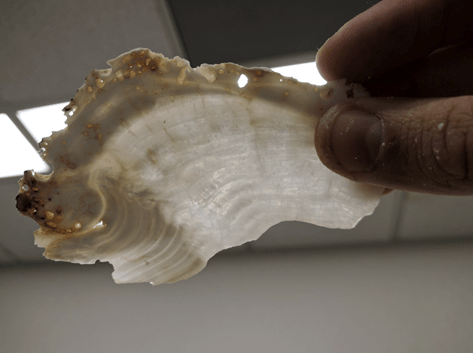
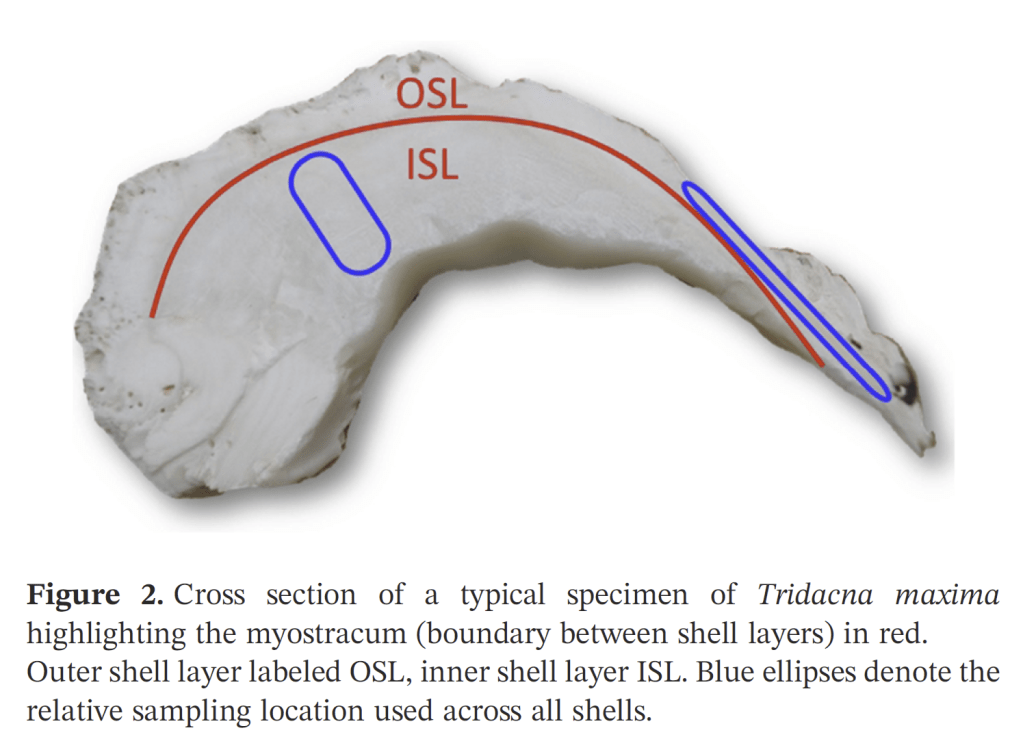
A slice of giant clam shell. You can see the difference between the inner and outer layers. The inner layer has visible annual growth lines.

I study the chemistry of giant clam shells. You might already be familiar with the concept of tree rings, a field called dendrochronology. It’s like reading the diary of a tree, where every “ring” is a page in the record of its life. The related field of sclerochronology looks at rings in the hard parts of shelled organisms. We can count those rings to figure out the ages of clams, or their health, and we can measure the chemistry of those rings to understand the temperature the clam grew at, and even what it ate.

A giant clam growing on the reef flat in Eilat

Giant clams are bivalves of unusually large size which achieve a very rapid growth rate through the help of symbiotic algae in their flesh. The clams are farmers, and their crop is inside their tissue! They grow their shells very quickly (sometimes up to 5 cm a year, equivalent to if a six foot tall man grew a foot every year from birth), and live a very long time, up to 100 years (their growth slows later in life). A whole bunch of talented researchers have measured the chemistry of giant clams all around the world to reconstruct past climate and even measure historic storms!

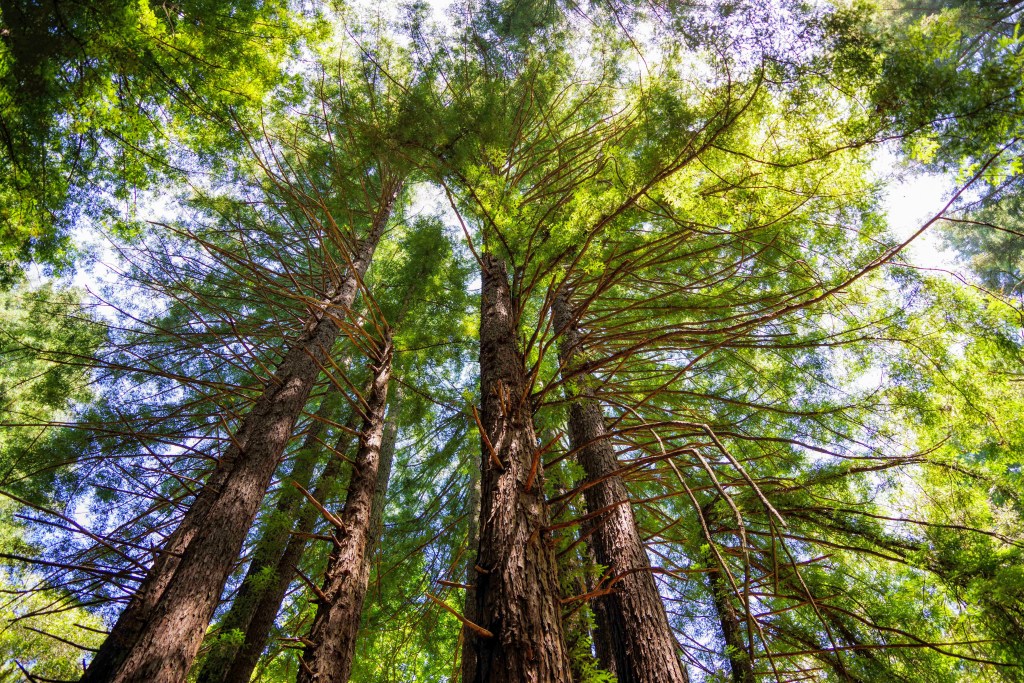
If we want to understand the ecology of a forest, we can’t measure just one tree!

But if you come back to the analogy of tree rings, we essentially have measured the rings and chemistry of individual “trees” in a bunch of different places, but don’t have as good an idea of how the chemistry varies within a “forest” of giant clams in a particular place. In our new study, we set out to describe exactly that, focusing on the Northern Red Sea.

A map of the Northern Red Sea. The right “toe” is the Gulf of Aqaba
Sites where we sampled shells along the northernmost tip of the Gulf of Aqaba

The Gulf of Aqaba represents the northernmost toe of the Red Sea, bordered by Egypt, Israel, Jordan and Saudi Arabia. It hosts some of the northernmost coral reefs in the world, aided by tropical temperatures and clear waters due to the lack of rainfall in the surrounding deserts. Here, we can find three species of giant clams including the small giant clam Tridacna maxima, the fluted giant clam T. squamosa and the very rare T. squamosina, which is found only in the Red Sea and nowhere else (as far as we know). In summer 2016, I went all around the Gulf of Aqaba collecting shells of clams from the beaches, fossil deposits, and even were able to work with shells confiscated from smugglers at the Israel-Egypt border. We cut these shells into slices and used tiny drill bits to sample powder from the cross section of their shells, which we could then conduct geochemistry with! We sampled large areas in bulk from the inner and outer portions of the shell (more on why later) using a Dremel tool, and also sampled more finely in sequential rows with a tiny dental drill bit (same brand your dentist uses!) to see how the measured temperatures varied through seasons. By “we”, I mean my coauthor and friend Ryan Thomas, who spent every Friday morning for several weeks milling out most of the powder we needed for this study. This data became part of his senior thesis at UCSC!

Two giant clams thriving on the shallow reef near Eilat, Israel

What kind of chemistry did we measure? The shells of clams are made of calcium carbonate, the same stuff Tums is made of. Calcium carbonate contains one calcium atom, one carbon atom, and three oxygen atoms. It turns out that all of those atoms come in “flavors” that we call isotopes, relating to the weight of those atoms. When you take the shell powder and put it into a machine called a mass spectrometer, you can figure out the proportions of isotopes of different elements present in the samples

The first isotope “flavors” we were interested were carbon-12 and carbon-13. The ratio of the two is thought to relate back mostly to the action of the algae inside (its symbionts) and outside the clam’s body (the floating algae the clam filters out of the water as an additional meal). This happens because as algae take carbon from the environment and bind it into sugars through photosynthesis, they naturally weight the dice in favor of carbon-12 making it into the sugars. So carbon-13 is left out in the water, and potentially in the clam’s shell. When photosynthesis is more active, it would leave the shell with proportionally more carbon-13. At least that’s what other researchers have confirmed happens in corals, and suspect happens in clams. In the world of isotope chemistry, this phenomenon is called “fractionation,” when a process causes isotopes to form fractions separated by mass. We wanted to test if that was true for giant clams, and could do so by comparing T. squamosina and T. maxima, which have more active photosynthesis, to the less photosynthetic T. squamosa.

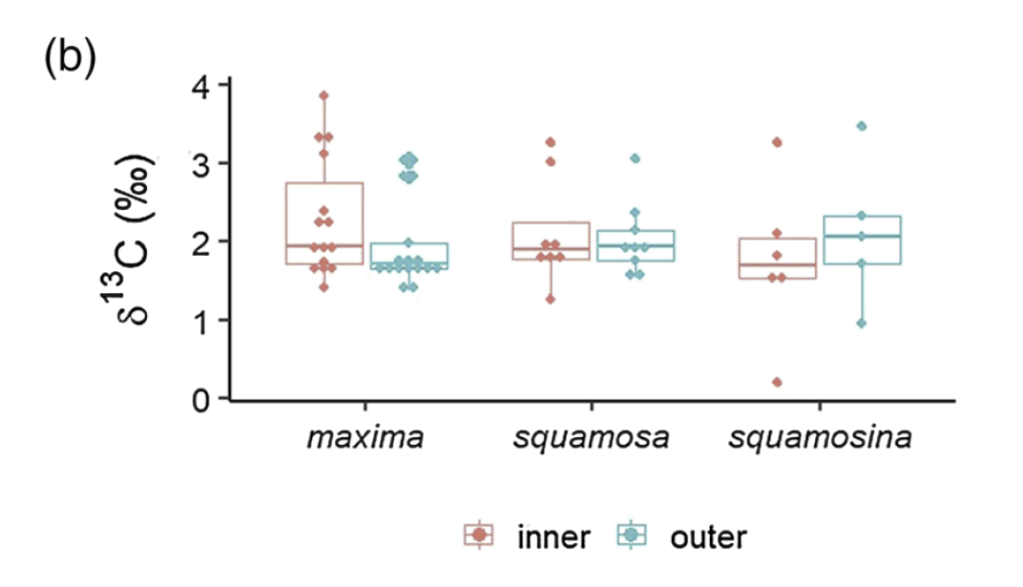
Comparing carbon isotopes across different species and shell layers. The results are fairly flat all the way across.

It turns out that the more symbiotic species don’t have more carbon-13 in their shells. We set out several reasons that might be the case, including that the symbionts of these clams are actually more carbon-limited than many researchers might expect. Essentially, the algae lack an excess of carbon atoms to choose from, so they can’t be picky with which isotopes they use to make sugars. Therefore, the fractionation effect weakens and becomes possibly too subtle to manifest in the shell, even in the best-case scenario of three closely related species living the same area. This represents what I’d term a “null result.” We had a hypothesis and we demonstrated that hypothesis was not the case in our data. It was important to publish this result, because other researchers will know not to try the same thing. This means that when we try to search for evidence of symbiotic algae in fossil clams, we will likely need to use other types of chemistry to figure it out. But don’t worry, as finding such a “smoking gun” for algal symbiosis in fossil bivalves is part of my life’s work! I have a few projects in the works looking for exactly that kind of evidence! 😉

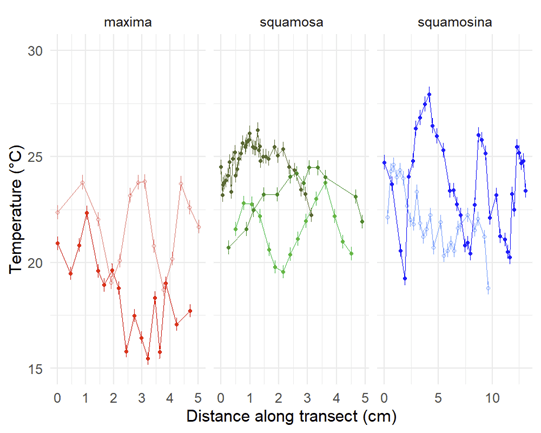
A look at how temperatures measured via oxygen isotopes vary through the lives of the animals. This is how scientists can use very old shells to figure out how temperatures varied through a year in prehistoric times!

But we had additional data we collected in addition to the carbon isotopes which actually turned out to provide some interesting results. This other type of measurement regarded the oxygen isotope ratio of the shells. Previous research has shown that the ratio of oxygen-18 to oxygen-16 in carbonate skeletons directly relates to temperature, a principle that has birthed a field known as paleothermometry. There are thousands of papers which use shells of corals, clams, cephalopods, microbes and more to reconstruct temperatures in ancient times. Giant clams have proven to be effective weather stations going all the way back to the Miocene epoch, millions of years ago! Because they grow so quickly (putting down a new layer every day), live for a long time, and don’t stop growing, they form very complete, high-resolution, and long records of past climate.

But no past studies had ever compared different species of giant clams from the same place. There would be interesting new lessons to draw from such a comparison, including seeing if one species preferred to grow at warmer parts of the reef. As complex, three dimensional structures, there are many remarkably different micro-environments throughout a reef, from the hot, sun-exposed reef flat and crest to the cooler, current-swept, deeper fore-reef. Do any of the species of giant clams show a consistently higher temperature than the others, and what would that mean if they did?

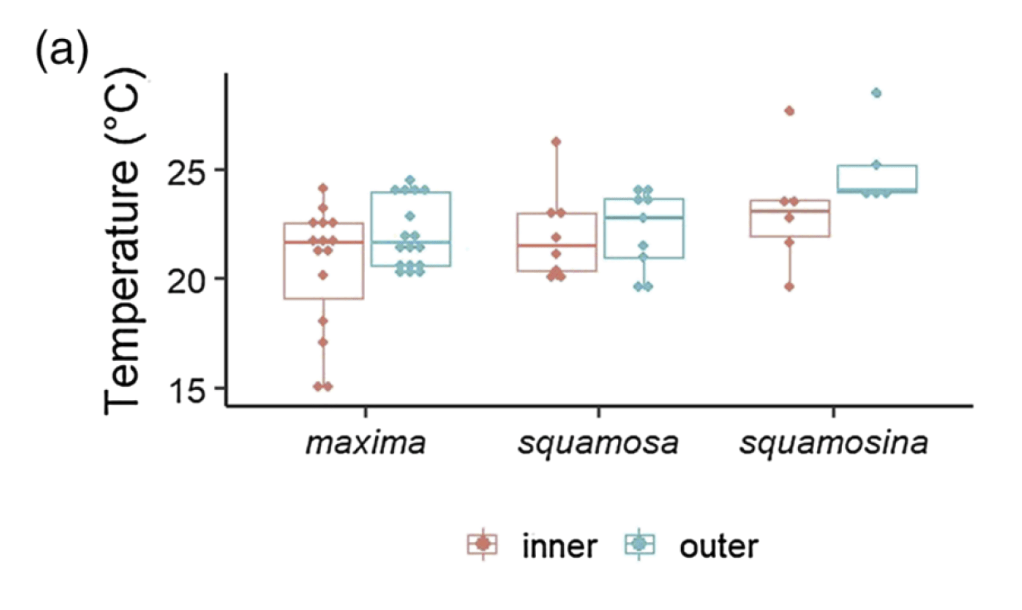
T. squamosina records higher temperatures than the other species. Outer shell layers also record higher temperatures than inner shell layers. More on that later in the post 😀

It turns out that the rare T. squamosina, only found in the Red Sea, does record a higher average temperature, almost 3 degrees C higher than the other two species. This is of interest because this species had been proposed by prior researchers to only live on the sun-drenched reef crest, at the shallowest part of the reef. We believe these results corroborate that observation. The previous research on the habitat of T. squamosina was limited to a single study which only was able to find 13 live animals along the coast of the Red Sea. But by independently confirming this life habit, we can ask further questions that may be borne out by further research.

An example of T. squamosina showing signs of possible bleaching (light parts at the center of its body).

Being restricted to the shallowest waters, is T. squamosina at greater risk of harvesting by humans along the shores of the region than its counterparts? Illegal poaching of giant clams along the Red Sea is believed to be a major stressor on their population size in the area. Could this explain why T. squamosina is so rare today, despite being proposed to have been more common in the past? In addition, being restricted to the top few feet of depth in the water could leave the species more vulnerable than the others to atmospheric warming. As with corals, when giant clams overheat they will “bleach”, expelling their symbiotic algae as a stress response. While the clams can recover, it is sometimes a fatal form of stress that leads to their death.

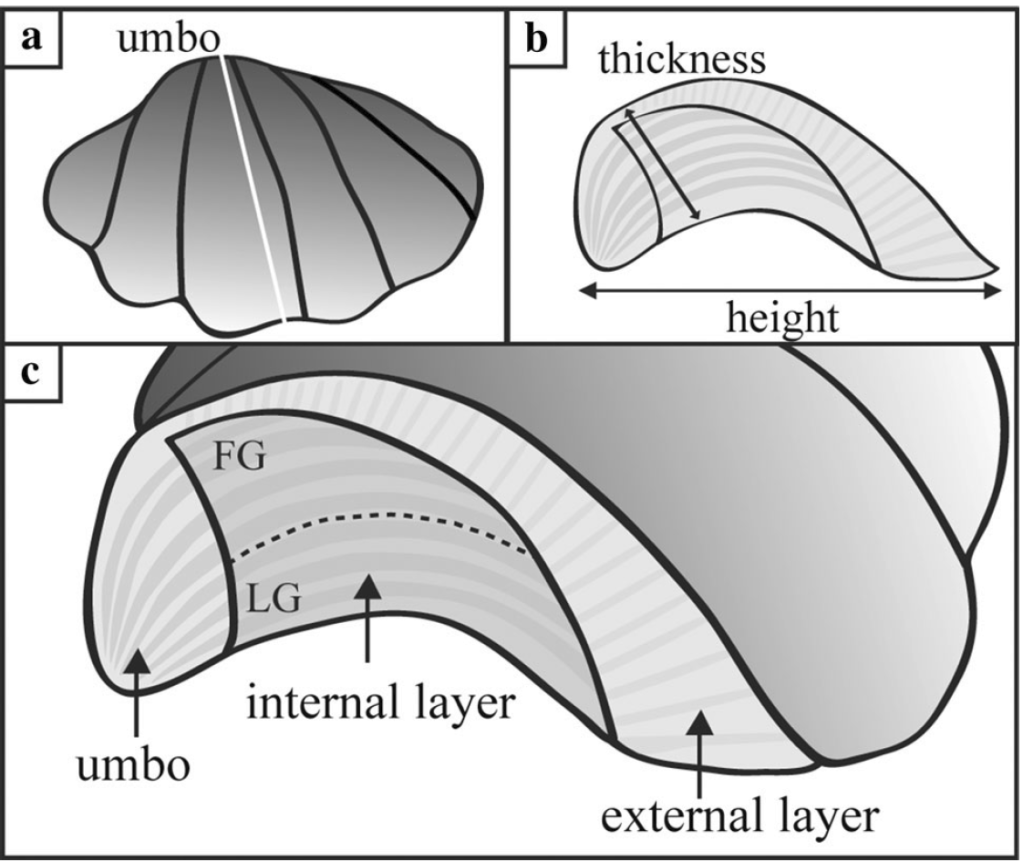
An excellent cartoon of the different shell layers in giant clams. From a peer of mine who also studies them, Michelle Gannon!

More research is needed to answer those questions. But the last aspect of this study relates to what is happening inside of the bodies and shells of the clams themselves. Giant clam shells have two layers. The outer layer grows forward away from the hinge, increasing clam’s length. The clam also makes an internal layer, growing inward to thicken the shell and add weight. We can read the growth lines of the clam’s diary within either layer, and different studies have used one or the other to make records of climate change. But very few studies have compared the two layers of the same individual. Do they record the same temperatures? Figuring it out would be important to determine how studies with just the inner layer or outer layer can be compared to each other across time and space.

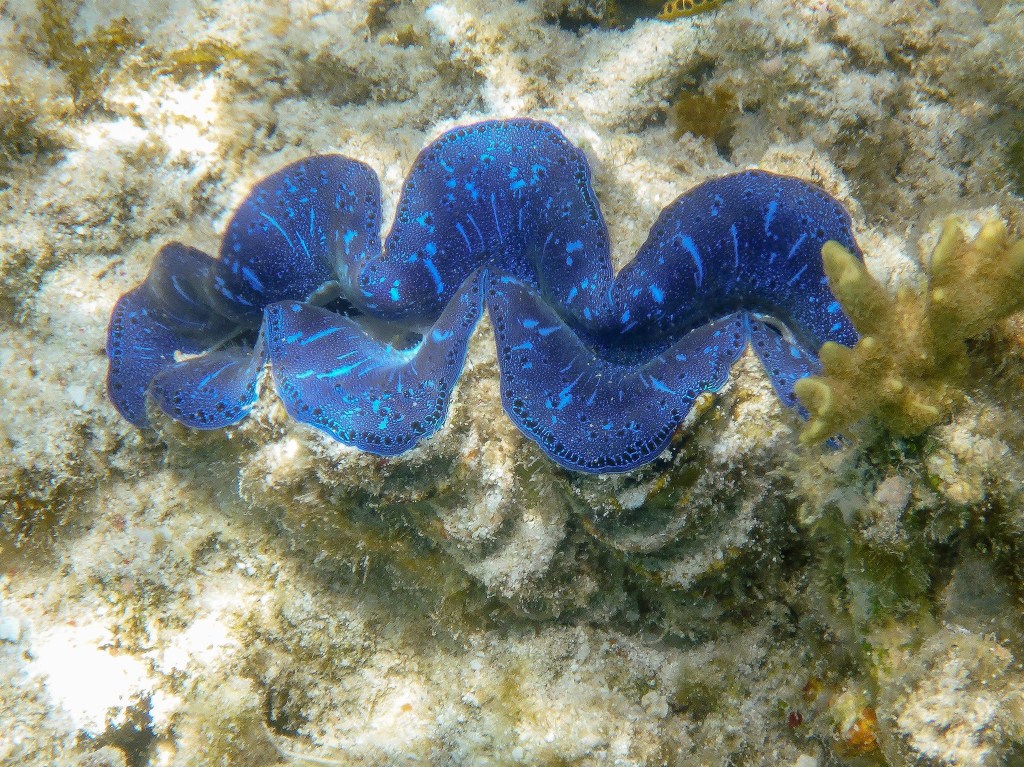
A vividly blue example of the small giant clam, T. maxima. From user arthur_chapman on iNaturalist

In our studied clams, it turns out that the outer layer records warmer temperatures on average than the inner one! After ruling out other possible explanations behind this difference (the details are complicated and hard for even shell nerds to wrap our heads around), we settled on the idea that the outside of the clam is indeed warmer on average than the inside! This means that the outer layer, recording temperatures of the outer mantle, is indeed forming at a higher temperature than inside! Why is this?

Unlike us, clams are ectothermic. They generally stay the same temperature as their surrounding environment and don’t use their metabolism to generate internal heat. But that doesn’t mean that the clam doesn’t have hotter and cooler spots in its body. It makes sense that it would be hotter at the outer part of its body, facing the sun, as the solar rays hitting its outer mantle would then radiate out again as heat. The outer mantle is also darker in color than the inner mantle, allowing it to absorb more solar energy, much as you might feel hotter wearing a darker t-shirt in the sun than a white one. Photosynthesis itself produces a warming effect, a phenomenon known as non-photochemical quenching, and so the outer mantle, which contains the vast majority of the symbiotic algae, may be partially warmed by the activity of the symbionts!

More research is needed to confirm if this is true. As of yet, no researcher has ever stuck a temperature probe in multiple parts of a clam to see if the outside of it is indeed warmer than the inside. But until that day, it is interesting to think of how this would influence comparisons of diaries from the inner and outer layers of different bivalves. The effect is on the small side, so it doesn’t really mean one layer or the other should be preferred for future shell-based studies of climate change. But it could be an additional aspect to consider in the future as a way to record temperature differences within the body of an animal, and look into how those differences influence its overall level of stress.

Examples of juvenile smooth giant clams, T. derasa, that we’re growing at Biosphere 2. Photo by Katie Morgan.

So I hope this long explanation of my paper helps you to have a better idea of the work I did during my PhD thesis. There were other aspects to the paper that are too wonkish to get into here, particularly concerning the correlation we found between carbon and oxygen isotope ratios, but if you have questions or want a copy of the PDF, please message me! I have more clam papers in the pipeline, and my new postdoc at Biosphere 2 involves growing three species of giant clams in a controlled environment, where I hope to answer some of the physiological questions I mentioned above! But until then, stay hinged and happy as a clam (as much is possible in this chaotic time), and take comfort knowing there are colorful bivalves out there all at this very moment, harvesting sunlight for food and growing huge shells.

The Mystery of the Giant Clams of the Red Sea and Indian Ocean

I have always been fascinated by scientific discoveries that are hanging right in front of our noses. Cryptic species are one such surprise. Sometimes, researchers using genetic sequencing are surprised to discover that a group of animals that all look the same from the outside are actually reproductively isolated from each other; separate twigs on the tree of life. This surprise has happened over and over in the history of natural science.

It turns out such puzzles are frequent among the giant clams. These unusual bivalves are specialists in coral reef environments, growing to large size with the help of symbiotic algae that create sugars through photosynthesis. Within the genus Tridacna there are ~10 accepted species which vary in size, shape, color and mode of life.

Tridacna squamosina (right) sitting next to the small giant clam T. maxima (left) on the Israeli Red Sea coast

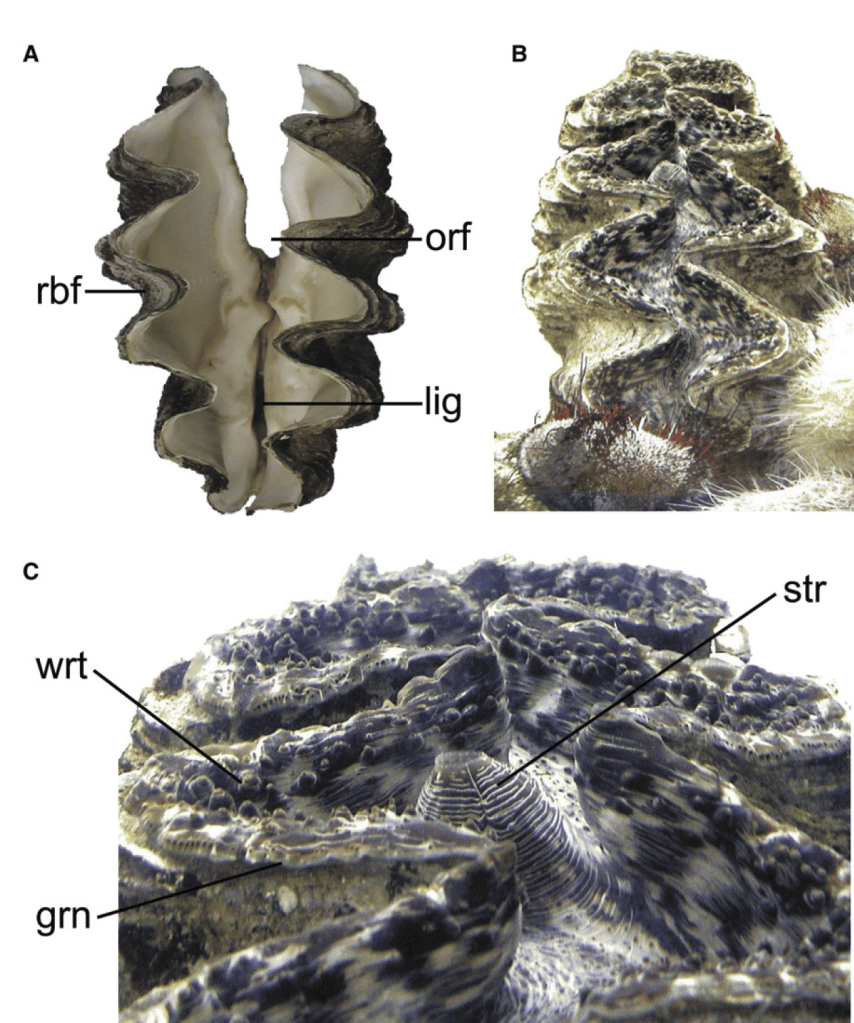
I specialize in the three species known (so far) from the Red Sea, including the small giant clam Tridacna maxima and the fluted giant clam T. squamosa, which are both found worldwide, all the way from the Red Sea to down past the equator along the Great Barrier Reef. The third local species, T. squamosina is more unusual, so far being only known from the Red Sea (an endemic species). T. squamosina is an example of a cryptic species, having previously been assumed to be a local variant of T. squamosa. It looks pretty similar, with long scutes (flap-like appendages) protruding from its shell, thought to help stabilize it on the flat bottom of loose coral rubble. But unlike T. squamosa, T. squamosina lives exclusively at the top of the reef in the shallowest waters closest to the sun. It has a very angular, zig-zag pattern in its plications (the wavy shapes at the edge of the shell) and a characteristic pair of green stripes where the soft tissue meets the edges of the shell. The soft tissue is covered with warty protuberances.

Pictures of details of T. squamosina from Richter et al. 2008

It was only first described in detail in the early 2000s, when an international team of researchers figured out using genetic sequencing that it was a distinct species and named it T. costata. They noted that in their surveys all around the shores of the Red Sea, they only found 13 live specimens, making it an extremely rare and possibly endangered species. Fossil specimens on local reefs appeared to be much more common, suggesting it had a much larger population in the past. Then in 2011, another team at the Natural History Museum in Vienna discovered a shell of one had been forgotten in its collection for over 100 years. Rudolf Sturany, the researcher on the 1895 research cruise who had originally collected the clam, had called it T. squamosina.

The T. squamosina shell in the collection of the Museum of Natural History in Vienna (from Huber and Eschner, 2011)

In taxonomy (the science of naming and classifying organisms), the first team to name the species wins, so the name T. costata was synonymized (retired) in favor of the earlier name T. squamosina, which became the name of record. It must be annoying to spend so much time working to name a species and then discover you had been scooped over a century before! But such is science.

A mystery clam thought to be T. squamosina, later identified as T. elongatissima found off of Mozambique by iNaturalist user bewambay

The strange part was that there were some murmurs over the last few years that T. squamosina was not only found in the Red Sea, but also had been seen along the coast of Africa as far south as Kenya, Mozambique and Madagascar. Divers and snorkelers had taken pictures of a giant clam that did indeed look strangely like T. squamosina, with a zigzag shell opening and green stripes at the edge of its tissue. But some aspects of these individuals seemed off. In the Red Sea, T. squamosina lives freely, not embedded in the coral as these pictures showed, and the geometry of the angles of the shell seemed a bit different. It also would be difficult for T. squamosina to be connected in population from the Red Sea all the way South to Mozambique, as there are natural barriers which would prevent its planktonic larvae from riding currents to intermix between the two regions. When populations are separated by a barrier, the flow of genes between them is cut off and evolution begins to separate the populations from each other until they are separate species, a process called allopatric speciation.

A large specimen of T. elongatissima observed by iNaturalist user dawngoebbels off of Kenya

I figured that someday, researchers would collect tissue samples from these mystery clams to settle whether they were actually T. squamosina or something else. And this year, a team did just that, traveling along the coast of Mozambique, Madagascar, Kenya and other places, collecting samples of tissue to compare how all the different clams they saw were related in a family tree. They genetically sequenced these “clamples” and in the process, found that the mystery clams were a new cryptic species, which they called T. elongatissima!

Shells of T. elongatissima from the Fauvelot et al. 2020 paper
For comparison, a shell of T. squamosina collected off of Sinai, Egypt. You can see why they’re easy to mix up!

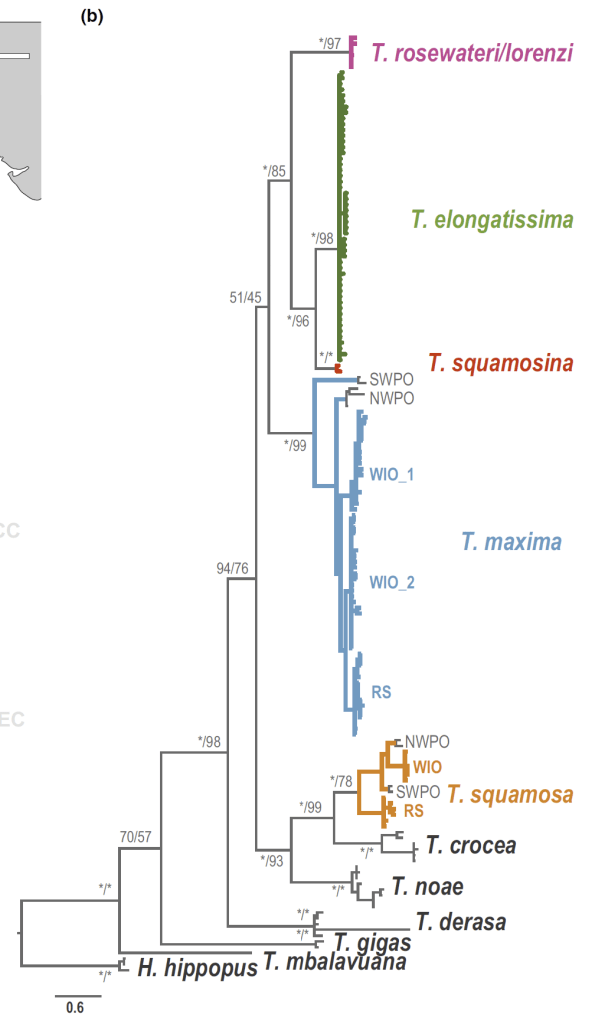
T. elongatissima closely resembles T. squamosina, and they are sister species on the bivalve family tree. It’s hard to tell them apart without training. Even a professional would probably mix some of them up if they were all placed sitting next to each other. The major differences appear to relate to shell shape, with T. elongatissima having a less symmetrical shell than T. squamosina, and a bigger opening at the rear hinge for a foot to poke through. The symmetrical shell and closing of the foot opening may represent changes that T. squamosina took on to adapt to be able to sit freely on the bottom, rather than embedding in the coral like T. elongatissima seems to prefer. If you’ve read this far, you may be thinking “Who cares? A clam’s a clam and these look practically the same. Aren’t you just splitting clams at this point?” At the end of the day, a species is a man-made concept; an organizing tool for use by us humans. Species are the characters in our reconstruction of the history of the world. What can we learn about the world by having identified this species T. elongatissima?

A giant clam family tree! Notice T. squamosina and T. elongatissima right next to each other.

The researchers behind the new paper discuss that based on statistical analyses of the genetic differences between the species, the most recent common ancestor for T. elongatissima and T. squamosina probably lived more than 1.4 million years ago! Some researchers have previously suggested that T. squamosina probably began its development as a separate species due to geographic isolation by low sea level, caused by repeated glaciations. With so much water trapped as ice on land during this period, the narrow Strait of Bab al Mandab, currently the gateway to the Red Sea, became a land barrier as sea level fell (kind of like opposite of the Bering Sea land bridge that formed allowing humans to migrate to the Americas). Ancestral clams trapped on the Northern end of this barrier were proposed to have evolved to become the rare T. squamosina.

This has occurred with a variety of species that became Red Sea endemics (meaning they are unique species that evolved in the Red Sea and are found nowhere else), including a unique crown of thorns starfish. The issue is that during this time of low sea level, the Red Sea went through periods where it was a rather unfriendly place for clams to live. All sorts of creatures went extinct in the period when the sea was repeatedly cut off, because the water became extremely salty, along with other unfriendly changes. So it’s unlikely T. squamosina would be present for us to see today if it only lived in the Red Sea throughout the entire length of time.

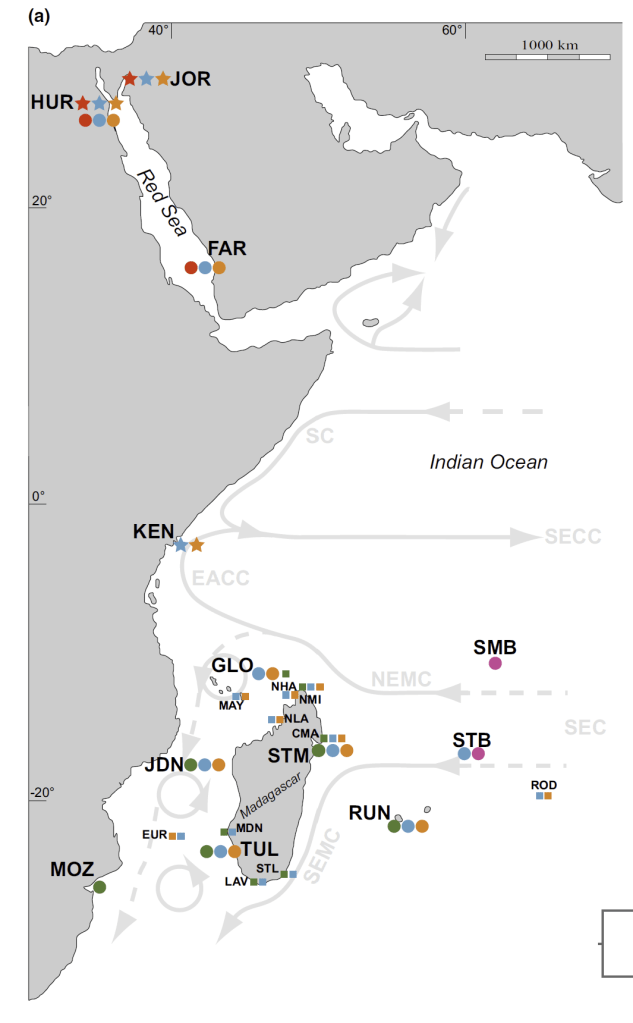
A map from Fauvelot et al. 2020 showing the distributions of different giant clams the researchers identified along the coasts of Africa and the Red Sea. Notice the bright red dots representing T. squamosina, only found in the Red Sea, while green dots represent T. elongatissima. Notice how the currents (arrows) seem to meet and then go offshore from Kenya. More on that in the next paragraph.

The researchers of this new paper propose that T. squamosina was more likely to have initially branched off due to the barrier of the Horn of Africa. The seas off of Kenya and Somalia harbor a meeting of southward and northward currents which then group and head offshore, away from the reefs that giant clam larvae are trying to get to. So any tiny floating planktonic clam larvae would experience a strong “headwind” preventing them from crossing that point. It would also mean that during times that the Red Sea was not a happy place to be a clam, T. squamosina may have found refuge on the coasts of places like Eritrea, Oman and possibly even as far as Pakistan. During times when sea levels rose and Red Sea conditions became friendlier, it recolonized the area.

As far as we know, the Red Sea is the only place T. squamosina is now found, but it may well be present elsewhere like Yemen or Oman. If T. squamosina was found in other regions, it would be tremendously important for its conservation. Right now, the species is thought to be extremely rare, with a very small native range. If it inhabited a broader area, that would mean more reservoirs of genetic diversity. This would reduce the odds that it will go extinct as reefs are put under stress from climate change, pollution and overharvesting. To survive as a species, it helps to not put all your eggs in one basket. If you’re only found in one small place, it increases the chances that a disaster (like climate change) will wipe you out.

The only way we will know for sure is to visit reefs in understudied places like Yemen, Oman, Pakistan, Eritrea and Somalia, to understand the richness of the giant clams present. These areas are understudied for various reasons: lack of research funding for non-Western researchers, lack of interest from the scientific community too focused on familiar places, and geopolitical situations that make it difficult to conduct research. But I hope someday to collaborate with people in these countries to better understand the giant clams present in such understudied regions of the globe. It is virtually certain that there are more species of giant clams, both alive and as fossils, waiting to be discovered.

Thoughts of a clam

To us active, dynamic mammals, the humble clam can appear positively…inanimate. Their nervous system is decentralized relative to ours, lacking any sort of brain, and to the untrained eye, it can appear that their only discernible reaction to the outside world is opening or closing. Open = happy, closed = not happy; end of story, right? Some vegans even argue that the clams are so nonsentient that it is okay to eat them and think of them as having no more agency than a vegetable!

You might already have predicted I intend to tell you about just how animate and sentient clams can be. But let’s start out by describing the nuts and bolts of their nervous system. As with many invertebrates, their nervous system is distributed throughout their body as a system of ganglia. Ganglia are clumps of nerve cells which may have local specialization, and transmit messages within neurons using electrical potentials. At the connection between cells (called a synapse), neurotransmitters are used to pass signals to the next cell. Researchers have found that bivalves use “histamine‐, octopamine‐, gamma‐aminobutyric acid‐ (GABA)…like immunoreactivity” in their central and peripheral nervous systems, much like us vertebrates do, and other studies have even found that the response to serotonin and dopamine is localized in nervous tissue linked to different organ systems.

veligernerve.PNG
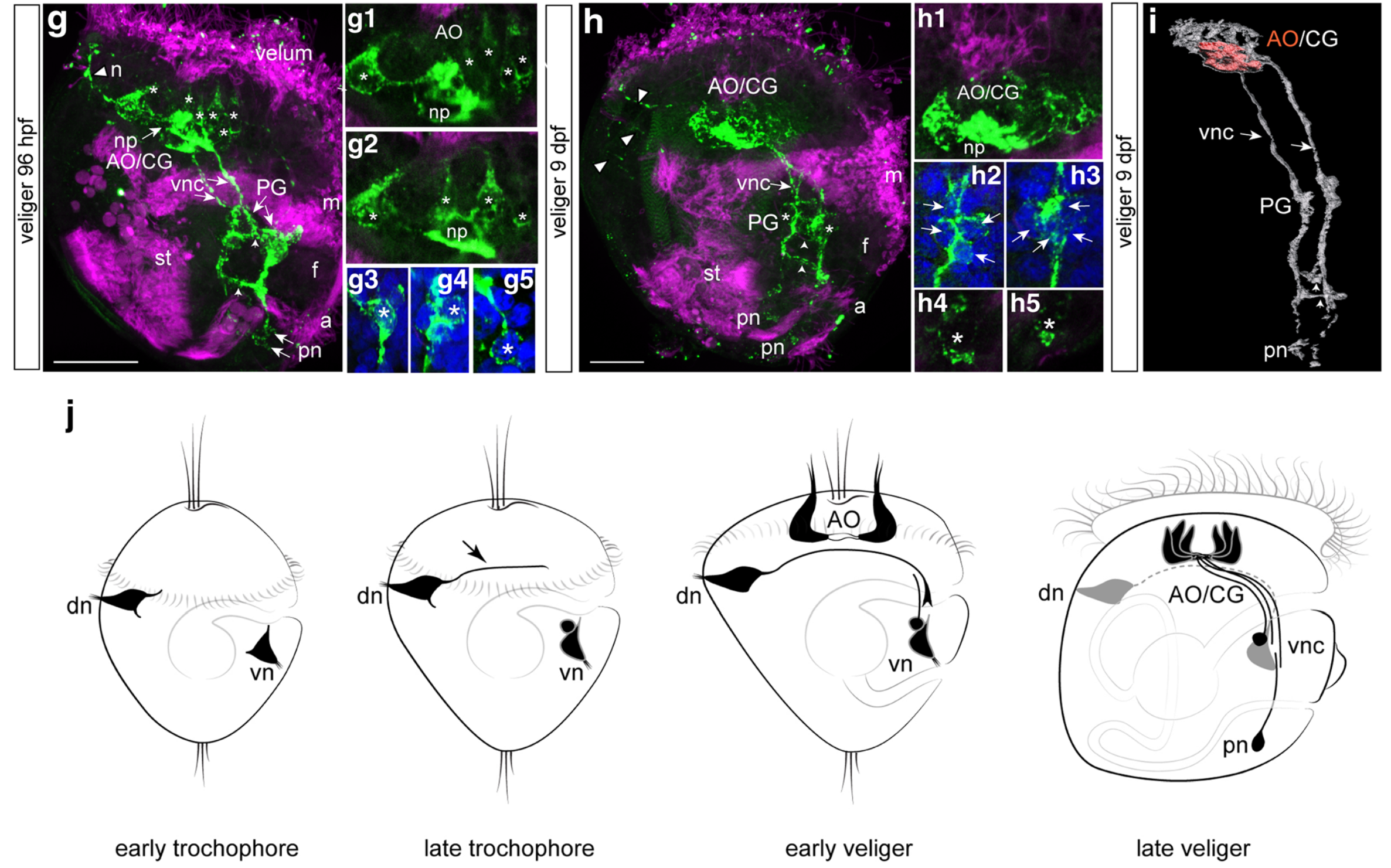
Nerve cells (bright green) highlighted in a larval oyster with fluorescent dye (from Yurchenko et al 2018)

These systems of chemical nerve transmission are truly ancient, likely dating back to the formation of complex animal body plans in the earliest Cambrian. Researchers have great interest in studying these nervous and hormonal signaling systems in mollusks because they can shed light on the relative flexibility and limitations of these systems throughout the animal tree of life. Characterizing these systems can also allow us to understand the mechanisms that bivalves and other animals use to react to environmental stimuli.

poly-gill-detailsem
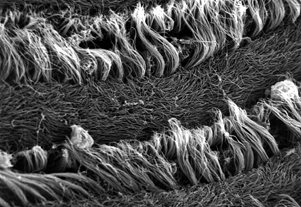
Electron microscope view of gill cilia, zoomed in 1000x (from Dan Hornbach)

Like humans, bivalves spend a lot of time and effort eating. Most bivalves eat by filtering food from passing water with tiny cilia on their gills. These cilia work to capture food particles and also act as a miniature rowing team moving water along the gill surface. The bivalve needs a way to control this ciliar activity, and researchers found they could directly control the speed at which oysters move their cilia by dosing them with serotonin and dopamine, which respectively increased and decreased activity.

Bivalves also work very hard to make babies. Most bivalves reproduce by releasing sperm and eggs to fertilize externally in the water column. To maximize their chances to find a mate, they typically save up their reproductive cells in gonads for multiple months and release them in a coordinated mass spawning event. It appears that this process is controlled by hormonal releases of dopamine and serotonin. Researchers have determined that serotonin concentrations vary through the year, with mussels in New England using it to regulate a seasonal cycle of feeding in summer, followed storing of that energy for winter. During the winter when food is less available, they use that stored energy to bulk up their gonads in time for reproductive release in spring months, when their larvae have plentiful access to food and oxygen, ensuring them the best chance of survival. In recent decades, aquaculturists have learned to use serotonin injections to induce spawning in cultured clams, to ensure they will have a harvest ready at a certain time of year.

So bivalves are very sensitive to the seasons. How about shorter term sources of excitement? You might have observed this yourself through the clam’s most iconic activity: opening and closing its shell. Clams close their shells with powerful adductor muscles which pull the two valves together. A springy ligament at the hinge pulls the shell open when the muscles relax. Just like us, the clam needs to use nerve cells to signal the muscle to do its thing. In addition, two different sets of ganglia act to control the foot that some bivalves can extend to dig into sand, with one ganglion acting to extend the foot and the other causing it to contract. While clams don’t have a centralized brain with specialized regions for different uses like we have, this represents a sort of specialization of neural systems with a similar result.

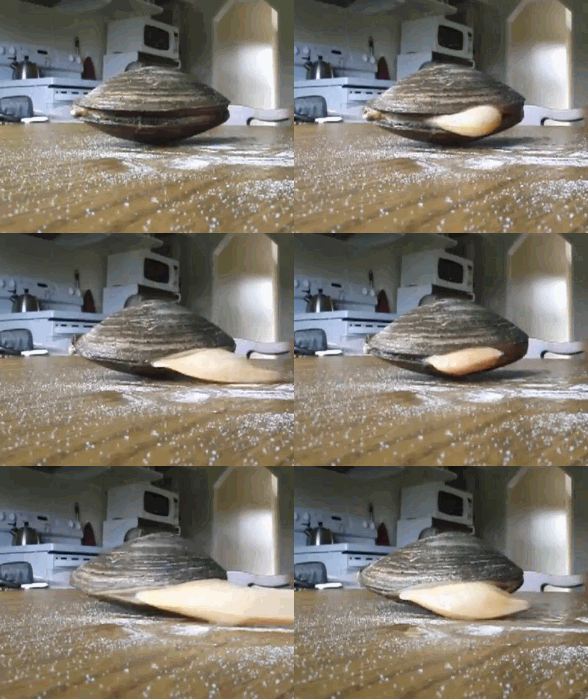
Clam licking salt - Imgur
This iconic gif is often shared along with the claim it shows a clam “licking” salt. It is actually using its foot to search for a place to dig. The salt was not needed.

When a certain neuron is used repeatedly, it can form a cellular memory allowing the organism to acclamate (ugh sorry) and moderate its response to a particular stimulus over time. Giant clams, for example, close their shells when their simple eyes detect a shadow overhead. This behavior can protect them from predation. When I conducted some of my PhD research, sampling body fluid of aquarium and wild giant clams with a syringe, I noticed that captive clams didn’t close up in response to my shadow overhead, while wild clams required me to sneak up and wedge their shells open with a wooden block to do my work. I suspected that after exposure to frequent feedings and water changes by aquarists, the clam had “learned” that there was no reason to expend energy closing its shell. Meanwhile, in the process of proving that our sampling technique was not harmful to the animal, I discovered that clams which detected my shadow would quickly reopen within seconds when I hid from them, while those that were stuck by a syringe would stay closed for minutes before opening and beginning to feed again. Makes sense!

Other researchers noticed this phenomenon as well. One group found that giant clams repeatedly exposed to shadows of different sizes, shell tapping and even directly touching its soft tissue began to habituate (become accustomed) to the stress, opening more quickly and staying open longer each time the stimulus occurred. Even more interestingly, they did not transfer that habituation between stress types; for example, the clams that saw a shadow again and again would still react strongly to a different stress like tapping its shell. This suggests the animal can distinguish between different threats along a spectrum of seriousness, with touching of tissue (similar to a fish pecking at its flesh) being the most serious threat with the most dramatic response.

Another study determined that larger giant clams stayed closed longer than smaller ones in response to the same threat. They proposed this was related to the greater risk large clams face as they have more tissue area vulnerable to attack. While the clams might not have made a “conscious” decision in the way we do as thinking creatures, they were able to place their individual risk in context and vary their response. This ability to tailor a response to different risk levels is a sign of surprisingly complex neurology at work.

Inside the Scallop
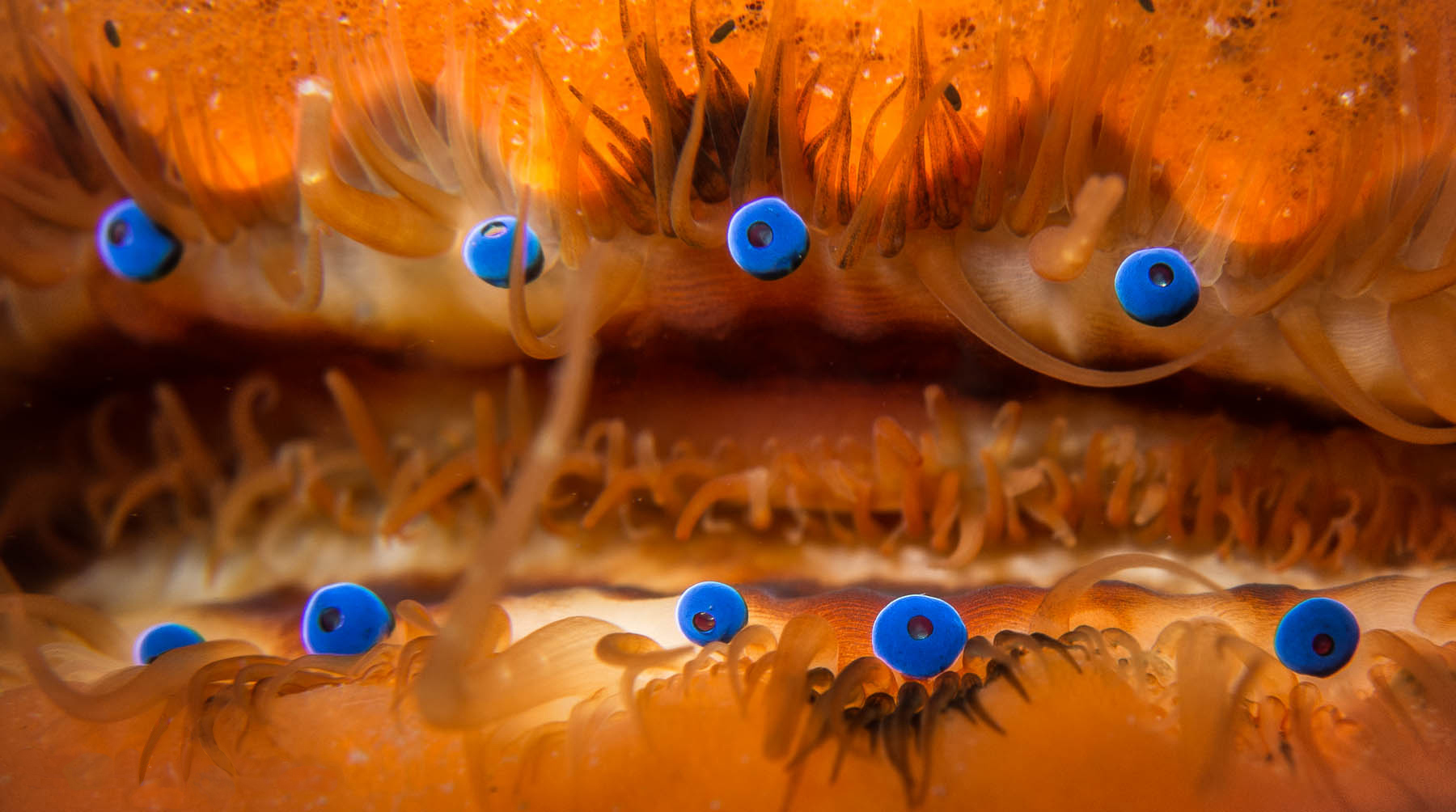
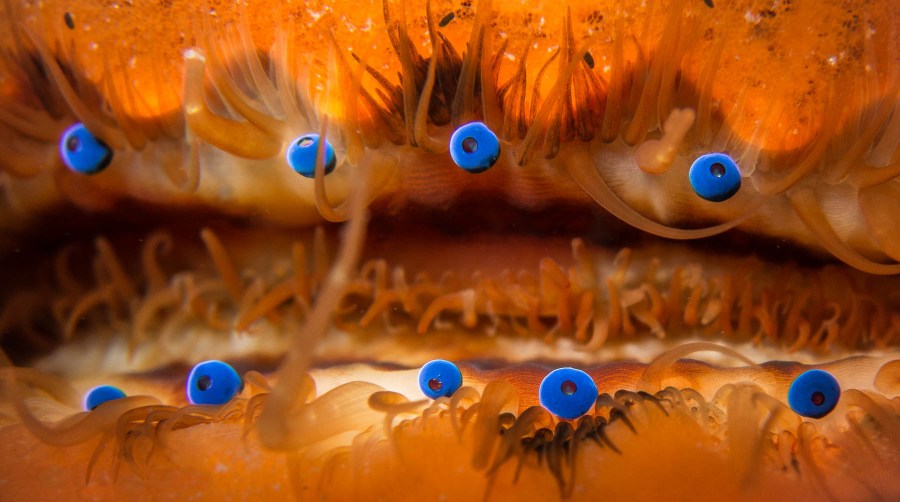
Close up of the eyes of a scallop. Each is a tiny crystalline parabolic mirror (photo by Matthew Krummins on Wikipedia)

Scallops show some of the most complex bivalve behaviors. This relates back to their unique adaptations, including simple eyes that can resolve shapes and the ability to swim away from danger. Scallops have been found to discern between predator types by sight alone, to the extent that they did not initially recognize an invasive new predatory seastar as a threat. When swimming, they are capable of using this vision to navigate to places where they can hide, such as seagrass beds. It would be very interesting to compare the behavior of scallops in marine protected areas to those that can be freely harvested. Do they vary their behavior in response?

I hope I’ve made clear that while clams are not exactly intellectual powerhouses, their behavior is much more complicated than simply sucking up water and opening or closing their shells. Like us, they inhabit a complex environment that requires a multitude of responses. Their nervous systems have evolved to allow them to survive and adopt nuanced behaviors which they can vary on the fly, and which us “higher” animals are only just beginning to comprehend.

The boring giant clam is anything but.

crocea2
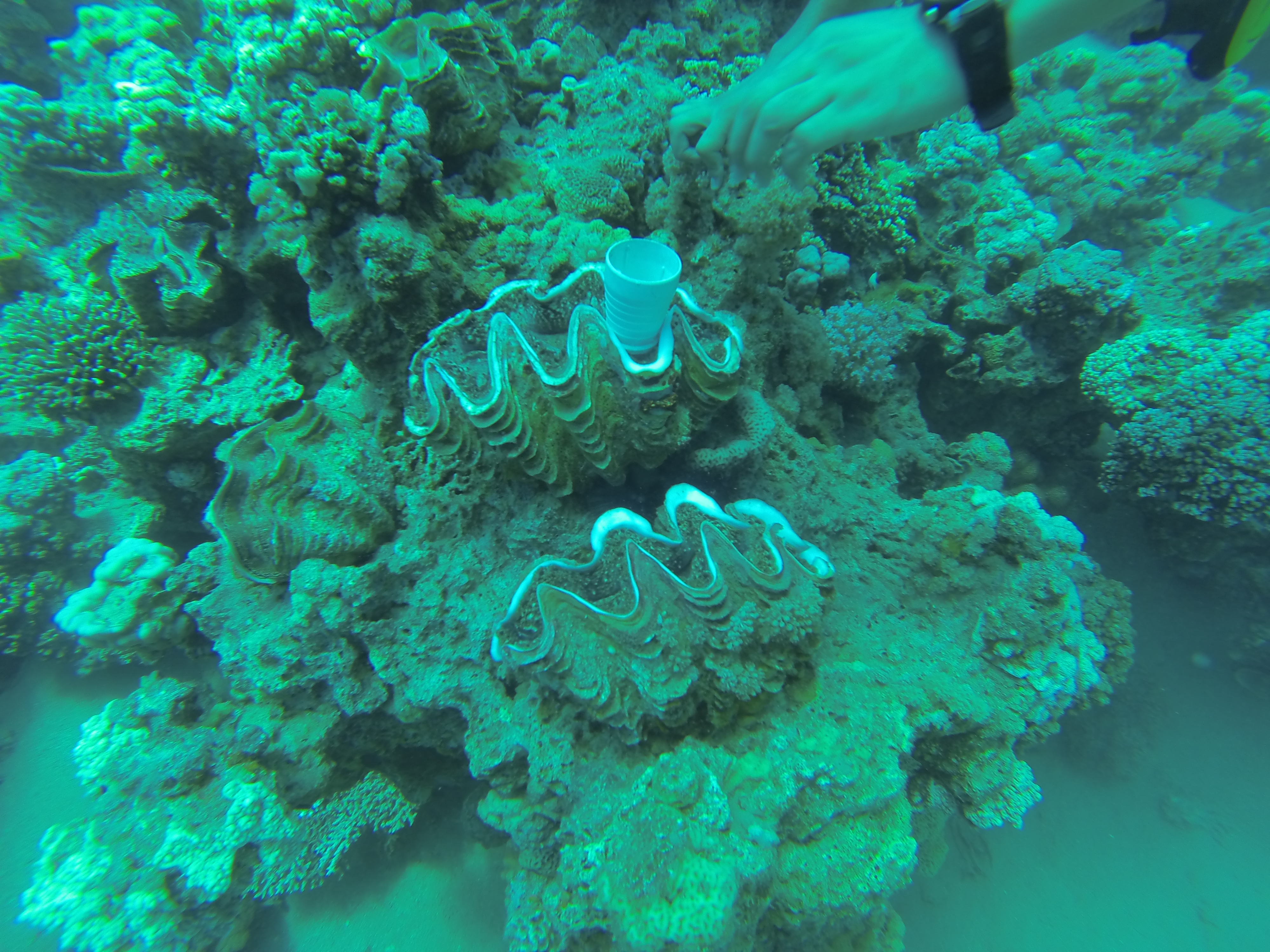
Tridacna crocea, bored into a coral head on a reef in Palau

There are many types of giant clam. Not all of them are giant; the boring giant clam, Tridacna crocea, only grows to 10 cm long or so. The boring giant clam is not so named because it’s dull; its main skill is its ability to bore into the coral of its coral reef home and live with its entire shell and body embedded in the living coral. They sit there with their colorful mantle edge exposed from a thin opening in the coral, harvesting energy from sunlight like the other giant clams. When disturbed by the shadow of a human or other such predator, they retract their mantle and close their shell, encased by an additional wall of coral skeleton. It’s a clever defensive strategy, and they are some of the most numerous giant clams in many reefs in the Eastern and Southern Equatorial Pacific.

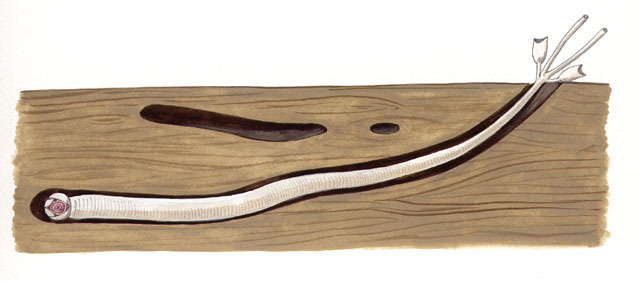
But it’s always been a mystery of how they bore away at the coral so efficiently, and how they continue to enlarge their home as they grow their shell. There are other bivalves that are efficient borers, including the pholad clams (“piddocks”) which use sharp teeth on their hinge to carve their way into solid rock, and the shipworms, which have abandoned their protective shell and instead use their two valves as teeth to burrow into wood. Both of these methods of boring are pretty straightforward.

bivalve_pholas_dactylus_common_piddock_24-08-10_shells_1

Piddocks in next to holes that they made in solid rock. Source: Aphotomarine

medium

Shipworm embedded in wood. Source: Michigan Science Art via Animal Diversity Web

But the boring giant clam has no such adaptation. It does not have large teeth on its hinge to carve at the coral. Such abrasion of the coral would also not explain how they widen the opening of their cubby-holes to allow their shell to grow wider. This mystery has long confounded giant clam researchers. I myself have wondered about it, and was surprised to find there was no good answer in the literature about it. But now, a team of scientists may have cracked the problem once and for all.

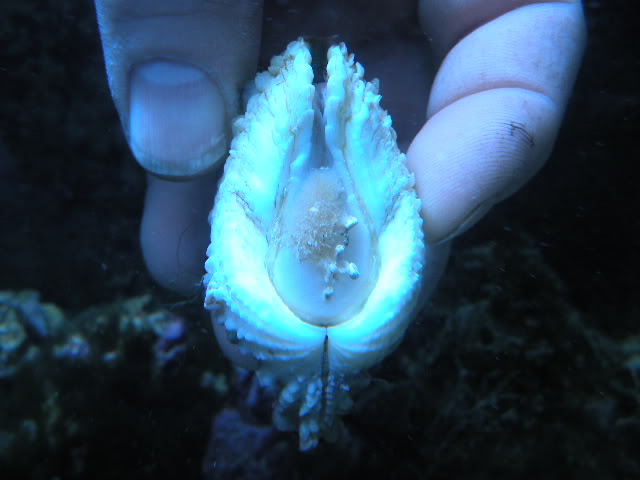
At the back of T. crocea‘s shell at the hinge, there is a large “byssal opening” with a fleshy foot which they can extend out of the opening to attach themselves to surfaces. Giant clams that don’t embed in coral (“epifaunal,” resting on the surface of the coral rather than “infaunal,” buried in the coral) lack this opening. The researchers suspected that the foot was the drilling instrument the clam used to create its home.

dscn0083

Byssal opening of T. crocea with the foot retracted. Source: NickB on Southwest Florida Marine Aquarium Society

How could a soft fleshy foot drill into the solid calcium carbonate (CaCO3) skeleton of corals? I can confirm from experience that my own foot makes for a very ineffective drilling instrument in such a setting. But T. crocea has a secret weapon: the power of acid-base chemistry. CaCO3 can be dissolved by acids. You may well have taken advantage of this chemistry to settle your acid stomach by taking a Tums, which is made of CaCO3 and reacts with the excessive hydrochloric acid in your stomach, leaving your tummy with a more neutral pH. pH is a scale used to measure acidity, with low numbers indicating very acidic solutions like lemon juice, and high pH indicating a basic solution like bleach.

Scientists are well aware of the hazards corals face from decreasing pH (increasing acidity) in the oceans. All the CO2 we are emitting, in addition to being a greenhouse gas, dissolves in the ocean as carbonic acid and gets to work reacting and dissolving away the skeletons of corals and any other “calcifying” organisms that make shells. It makes it harder for corals to form their skeletons and is already worsening die-offs of corals in some areas. The researchers suspected that the clams use this phenomena to their advantage at a small scale, lowering the pH with their foot somehow to dissolve away the coral to make their borehole.

GOPR2264.JPG
Using a wedge to keep open a Tridacna shell in my Red Sea work. We took a small blood sample with permission of local authorities. This caused no lasting effects to the clams.

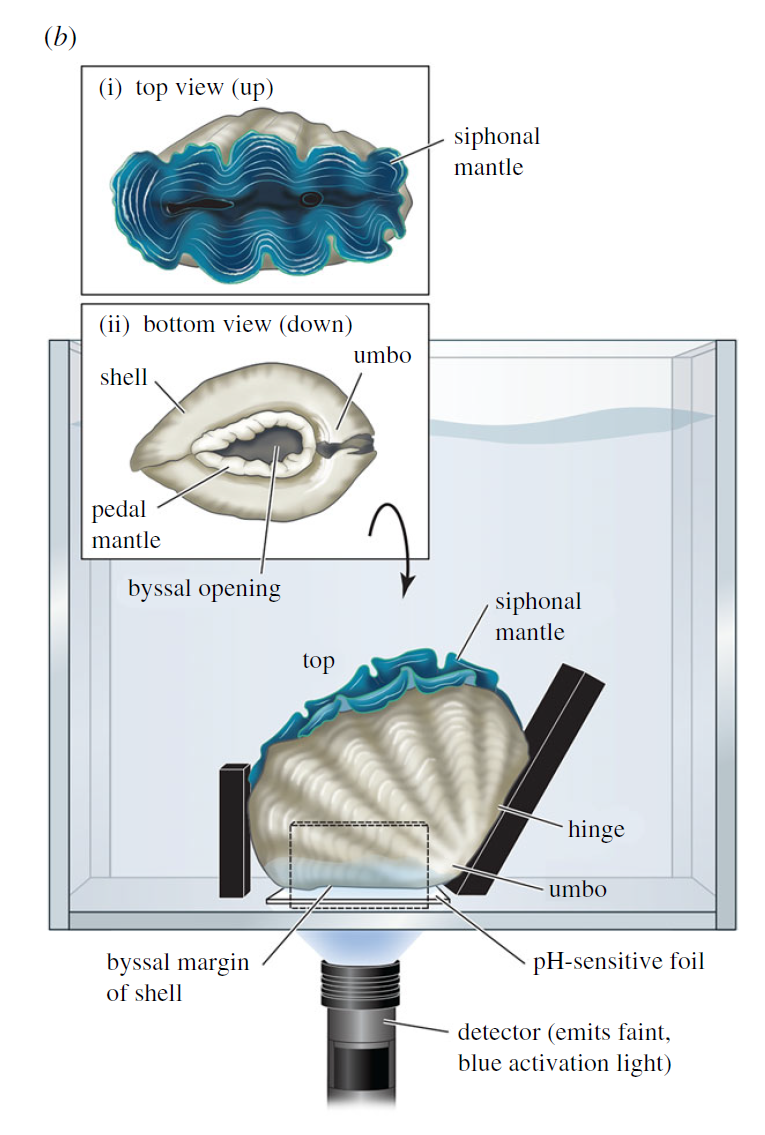
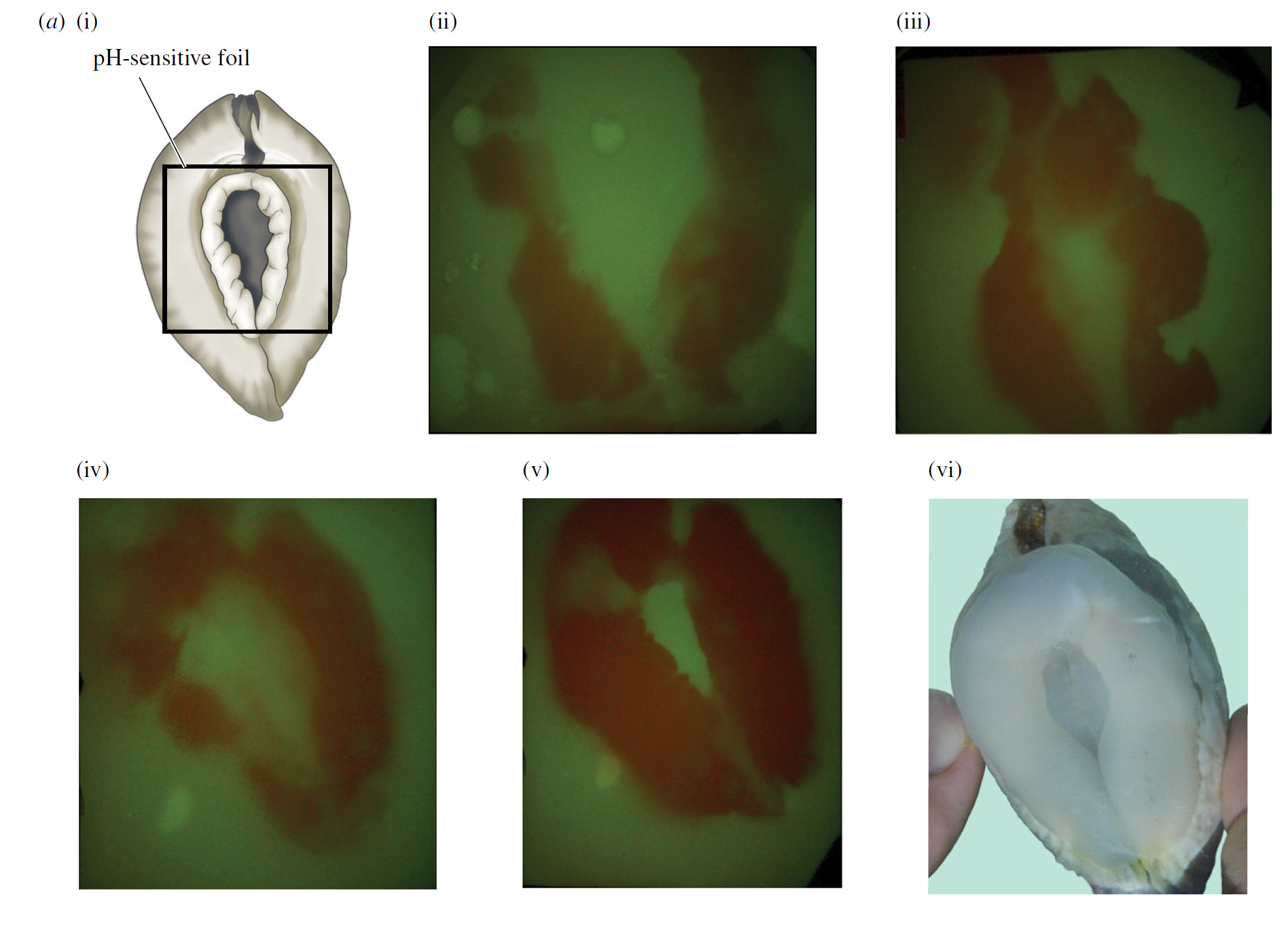
But they needed to prove it, and that was a challenge. Giant clams can be unwilling research participants. I myself have observed this in trying to take samples of their body fluid for my own research. When they sense the presence of a predator, they immediately clam up in their protective shell. I used a small wedge to keep their shells open to allow me to take a sample of their body fluid, but the researchers working on T. crocea needed to convince the clam to place its foot on a piece of pH-sensitive foil, keep it there and do whatever acid-secreting magic allows it to burrow into coral. They would then be able to measure whether it indeed is making the water around its foot more acidic, and by how much.

clam
Diagram from Hill et al., 2018 showing their experimental design.

In what I can only assume was an extended process of trial and error and negotiation with a somewhat unwilling research subject, the researchers found exactly the right angle needed to convince the clam that it was safe enough to try making a coral home. But it was not in coral, instead sitting in an aquarium, on top of a special type of foil that changes color when exposed to changing pH, like a piece of high-tech litmus paper. The researchers discovered that their suspicions were correct: the clams do make the area around their feet significantly more acidic than the surrounding seawater, as much as two to four pH units lower. Where seawater is around a pH of around 8, the clams were regularly reducing pH to as low as 6 (about the level of milk) and sometimes as low as 4.6 (about the pH of acid rain). Small differences in pH can make a big difference in the power of an acid because each pH unit corresponds to 10x more protons (hydrogen ions, H+) in the water. The protons are the agent that dissolves CaCO3. Each proton can take out one molecule of coral skeleton. The clams are dissolving away coral skeleton to make holes with only their feet!

clam2.PNG
Footage of the pH- sensitive foil, with darker areas corresponding to lower pH. The areas of low pH (high acidity) correspond exactly to the “footprint” of the clam!

But what in T. crocea‘s foot allows them to make acid? I know that my foot does not do this, though that would be a very entertaining and obscure superpower. The researchers found the enzymes called vacuolar-type H+-ATPase (VHA) present in great quantities in the outermost cells of the clam’s feet. These enzymes are found throughout the tree of life and are proton pumps that can quickly reduce pH through active effort. Other prior researchers like the influential Sir Maurice Yonge, a legendary British marine biologist who worked extensively with giant clams, had suspected that the clams had used acid but had never been able to detect a change in pH in the seawater around the clams’ feet through more conventional methods. It was only because of new technologies like the pH paper that this research team was able to finally solve this issue. And now, I suspect other groups will want to re-investigate the importance of VHA in their study organisms. Many branches of the tree of life may be utilizing acid-base chemistry to their advantage in ways we never had previously imagined.