Revenge of the Clams

primary_sfreeviana-1024x769
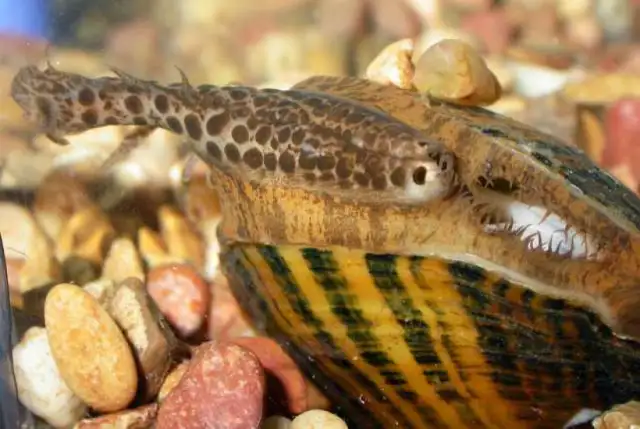
Lampsilis showing off its convincing fish-like lure. Photo: Chris Barnhart, Missouri State.

Clams are traditionally the victims of the aquatic realm. With some exceptions, clams are generally not predatory in nature, preferring to passively filter feed. When they are attacked, their defenses center around their protective shell, or swimming away, or just living in a place that is difficult for predators to reach. They are picked at by crabs, crushed in the jaws of fish, and pried apart by sea stars. But some clams are sick of being the victims. They have big dreams and places to be. For these clams, the rest of the tree of life is a ticket to bigger and better things. These clams have evolved to live inside of other living things.

Pocketbook mussels, for example, have a unique problem. They like to live inland along streams but their microscopic larvae would not be able to swim against the current to get upstream. The mussels have adapted a clever and evil strategy to solve this problem: they hitch a ride in the gills of fish. The mother mussel develops a lure that resembles a small fish, complete with a little fake eyespot, and invitingly wiggles it to attract the attention of a passing fish. When the foolish fish falls for the trick and bites the mussel’s lure, it explodes into a cloud of larvae which then flap up to attach to the gill tissue of the fish like little binder clips. They then encyst themselves in that tissue and feed on the fish’s blood, all the while hopefully hitching a ride further upstream, where they release and settle down to a more traditional clammy life of filter-feeding stuck in the sediment.
mytilus
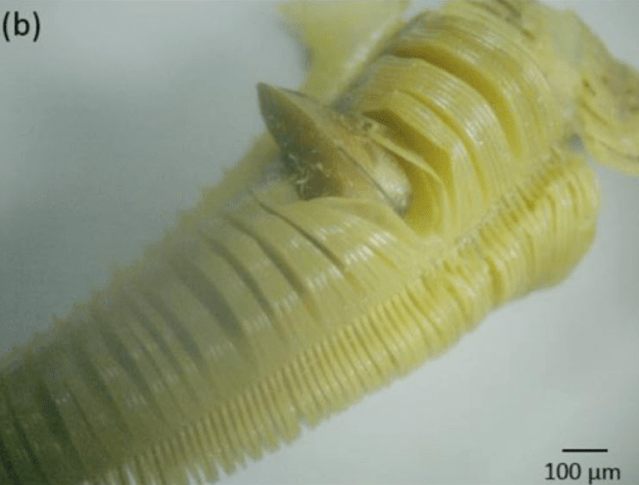
Very tiny Mytilus edulis living in the gills of a crab (Poulter et al, 2017)
crableg
The tiny 2.5 mm long Mimichlamys varia, living on the leg of a crab (Albano and Favero, 2011)


Clams live in the gills of all sorts of organisms. Because they broadcast spawn, any passing animal may breathe in clam larvae which find the gills a perfectly hospitable place to settle. Sure, it’s a bit cramped, but it’s safe, well oxygenated by definition and there is plenty of food available. They also may just settle on the bodies of other organisms. Most of these gill-dwelling clams are commensal: that means that their impact on the host organism is fairly neutral. They may cause some localized necrosis in the spot they’re living, but they’re mostly sucking up food particles which the host doesn’t really care about. In addition, in crabs and other arthropods, these clams will get shed off periodically when the crab molts away its exoskeleton, so they don’t build up too heavily.
kurtiella.PNG
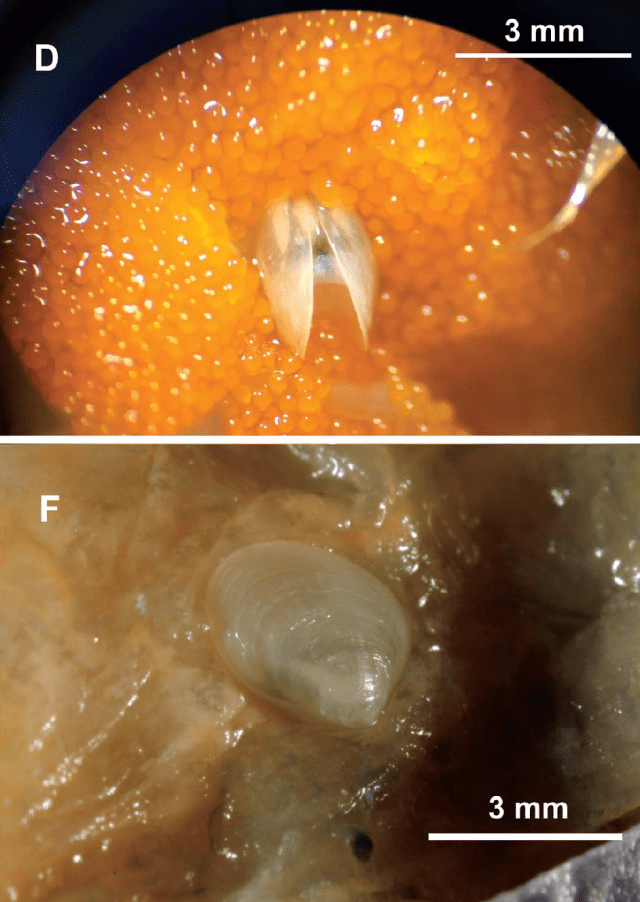
Top: Kurtiella attached among the eggs of the mole crab. Bottom: aberrant Kurtiella living within the tissue of the crab (Bhaduri et al, 2018)

While being a parasite is often denigrated as taking the easy way out, it is actually quite challenging to pursue this unusual lifestyle. Parasitism has evolved a couple hundred times in 15 different phyla, but it is rare to find some organism midway in the process of becoming a true parasite. One team of researchers just published their observations of a commensal clam, Kurtiella pedroana, which may be flirting with true parasitism. These tiny clams normally live in the gill chambers of sand crabs on the Pacific coasts of the Americas. They attach their anchoring byssal threads to the insides of the chambers and live a comfortable life until the crabs molt, when they are shed away. The crabs mostly are unaffected by their presence, but the researchers noticed that some of the clams had actually burrowed into the gill tissue itself. This is an interesting development, because the clams would not be able to filter feed in such a location, so they must have been feeding on the crab’s hemocoel (internal blood). These unusual parasitic individuals are currently a “dead end” as they haven’t figured out how to get back out to reproduce, but if they ever do, they could potentially pass on this trait and become a new type of parasitic clam species. The researchers have potentially observed a rare example of an animal turning to the dark parasitic side of life, with some living in a neutral commensal way and other innovative individuals seeking a bit more out of their non-consensual relationship with their host crabs.  Considering the irritation that other bivalves suffer at the claws of pesky parasitic crabs, this seems a particularly sweet revenge.


The Snails that Farm

File:Marsh periwinkle 001.jpg
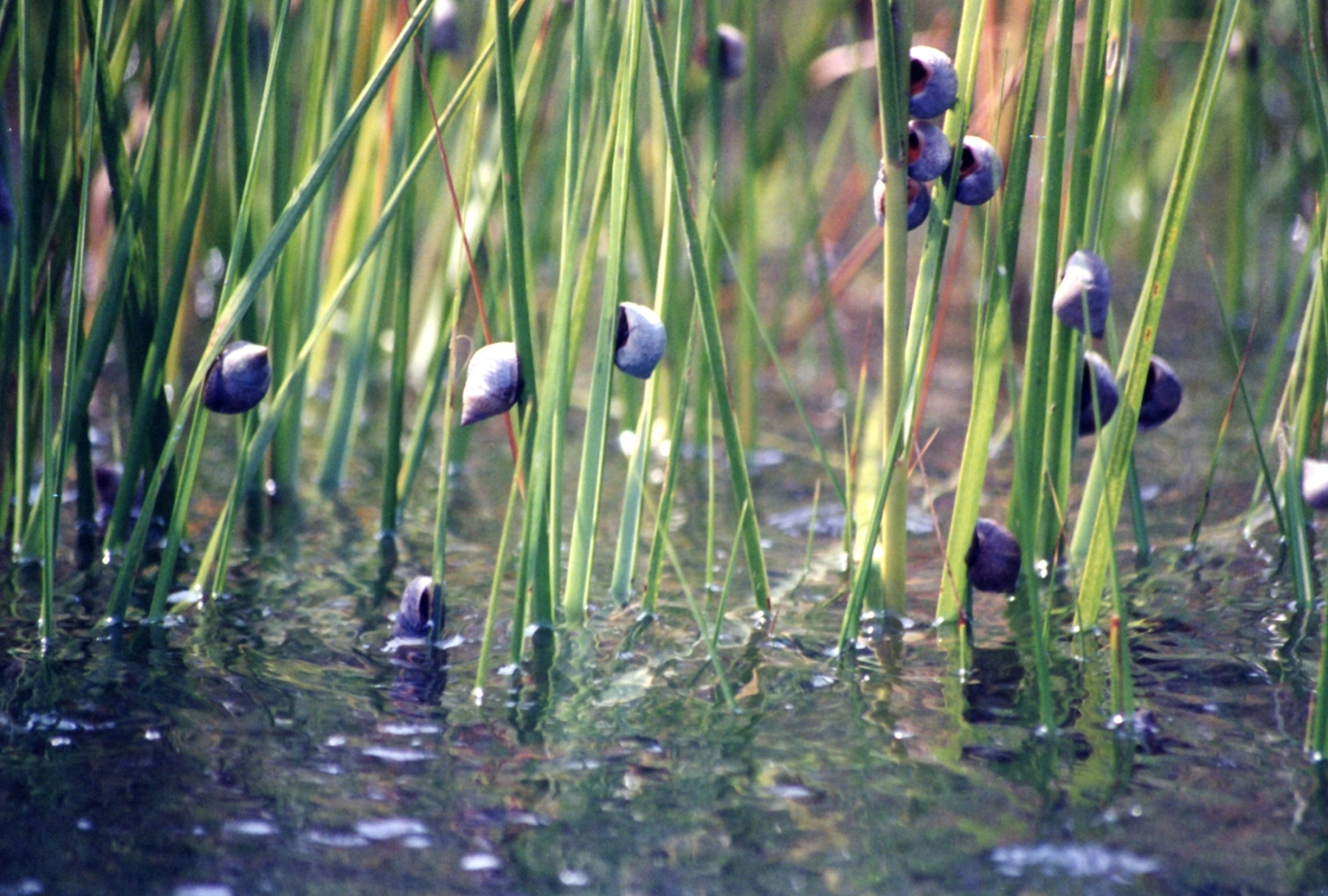
Littoraria grazing on Spartina marsh grass. (source)

Us humans really like to talk up our skills at farming. And while it’s true that we have domesticated animals and plants to a degree not seen in other life forms, the act of nurturing and harvesting food is actually not really that special, and is broadly observed throughout the animal kingdom. Perhaps the most iconic invertebrate farmers are insects. Leaf-cutter ants, termites, and some beetles have been observed to actively cultivate fungus by gathering plant material to feed it, growing the fungus, protecting the fungus from competition, and then harvesting the fungus to feed themselves and their young. Ants are also known to keep livestock in the form of aphids, which they lovingly protect and cultivate for the sweet nectar they excrete. Such practices are called “high-level food production” because, like human farmers with their seeds and fertilizer, insects have evolved a highly complex symbiosis with their fungus. The fungus has shaped their behavior as much as the ants cultivate the fungus. 

https://upload.wikimedia.org/wikipedia/commons/f/fc/Littoraria_irrorata.jpg
The marsh periwinkle Littoraria irrorata (source)

Less well understood is the “low-level food production” that may occur more broadly throughout the tree of life. There is less direct evidence of such behavior because it is more indirect and less specialized than high-level food production, but it may be equally advantageous for the cultivator and the cultivated. One study published in 2003 uncovered a simple but powerful relationship between marsh periwinkles of the genus Littoraria and fungus which they cultivate and harvest.

https://c1.staticflickr.com/8/7346/9871468314_19017d6484_b.jpg
Close-up of a snail’s radula (source)

Marsh periwinkles are small and not particularly charismatic creatures. Like many snails, they are grazers with a shell, a fleshy foot and a rough, abrasive organ called a radula which they use like sandpaper to graze on pretty much whatever they can get into. Snails are not known as picky eaters. But researcher Brian Silliman of Brown University and Steven Newell of University of Georgia noticed that these innocuous snails regularly undertake the risky, low reward activity of grazing above the water on the blades of swamp grass, stripping off the surfaces of the blades of grass. The researchers were confused why the snails would expose themselves to predation and the harmful open air for such a low-nutrition food.


fungus
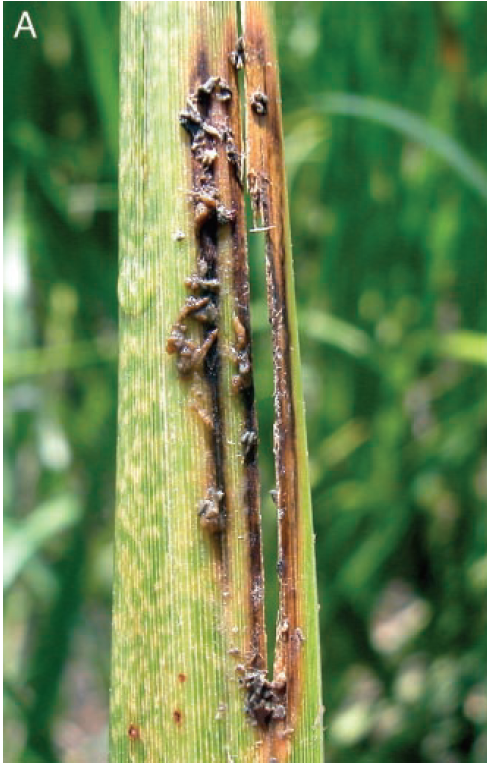
A typical snail farm, complete with liberally applied fertilizer. Yum.

They discovered that the snails were investing in the future. By stripping away the protective surface of the swamp grass blades and liberally fertilizing the surface of the grass with their droppings, the periwinkles are ensuring that the swamp grass will be infected with an active and very prolific fungal infection. The fungus, unlike the plant it lives on, is of high nutritional value. The researchers demonstrated the active partnership between the snails and fungus by conducting caged experiments where they showed that snails which grazed on grass but not the resulting fungus did not grow as large as snails which were allowed to return and chow down on the fungus. The fungus loves this deal as well. They grow much more vigorously on grass that is “radulated” (rubbed with the snail’s sandpapery radula) than uninjured grass. The fungus grows even faster if the snails are allowed to deposit their poop next to the wounds. The researchers found that this same relationship applies at 16 salt marshes along 2,000 km of the Eastern Seaboard.

The periwinkles don’t really know what they’re doing. They aren’t actively planting fungus and watching proudly like a human farmer as their crop matures. But over millions of years, the snails have been hard-wired to practice this behavior because it works. Snails that abrade a leaf of swamp grass, poop on the wound and come back later to eat the yummy fungus do a lot better than snails which just stick to the safe way of life below the surface of the water. The fungus loves this relationship too. The only loser is the swamp grass, which the researchers unsurprisingly found grows much more slowly when infected with fungus. But marsh grass is the largest source of biomass in swamp environments, and the snails that partner with fungus are able to more efficiently use this plentiful but low-nutrient food source, to the extent that it is now the dominant way of eating for swamp periwinkles on the East Coast of the US, and probably in a lot more places too. The researchers noted that there are likely far more examples of low-level food production that we simply haven’t noticed.

Since this work was published, other teams have discovered that some damselfish like to farm algae, fiddler crabs encourage the growth of mangrove trees, and even fungus get in on the action of farming bacteria. We love to talk up our “sophisticated” high-level food production techniques, but such relationships probably got started at a similarly low level. Our activities as hunter-gatherers encouraged the growth of certain organisms, we stumbled upon them, ate them, kept doing what we were doing and eventually our behavior developed into something more complex. Next time you see a snail munching its way up a blade of grass, consider to yourself whether it knows exactly what it’s doing. Come back later to see the fruits of its labor.